False Move-in Report to Another Location Without Tenant's Knowledge
Landlord Obtains Mortgage Loan and Sets Up Mortgage on House
The Seoul Metropolitan Government recently announced on the 8th that it discovered suspected criminal cases where third parties unrelated to tenants and landlords secretly filed false change-of-address reports for tenants, after which the landlords used the housing as collateral to obtain loans and set up mortgages. Special caution is required because if the move-out is processed before the lease contract ends, tenants may lose their 'opposability'?the right to claim their security deposit.
The suspicious case involved a person A, who on January 27 secretly registered as a cohabitant at a residence where A was the head of household, without the consent of B (head of household) and C. Then, on January 31, D, the owner and landlord of the building where B and C’s actual address was registered, moved into the residence and helped secure a loan and set up a mortgage through a lending company.
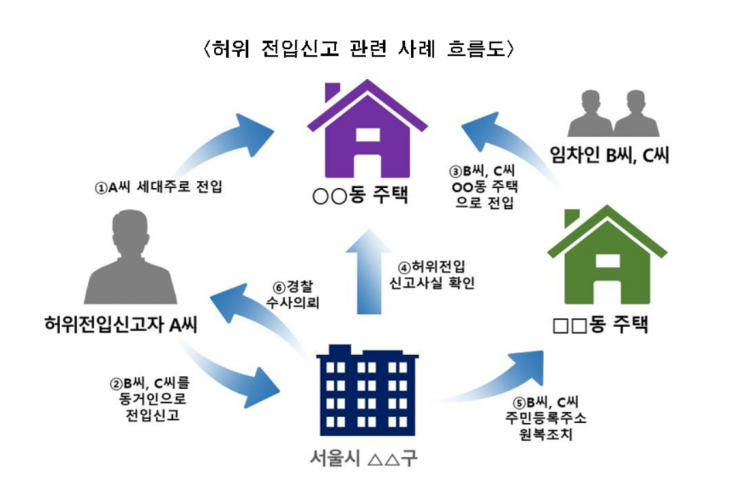
Later, it was confirmed that A used the same method in a neighboring area to falsely register existing tenants as having moved to other residences, after which the owner (landlord) moved into the original residence and set up a mortgage. It was also found that only A, the head of household of the residence in a certain area, visited the local community service center to file the change-of-address report, which was accepted without issue.
Upon discovering the suspicious cases, Seoul immediately requested a police investigation, disseminated the cases to the 25 autonomous districts responsible for resident registration in the city, and promptly took measures such as recommending related legal amendments to the government.
The city emphasized that if tenants move out from their original residence before the lease contract ends, they lose the 'opposability' that allows them to claim their security deposit, which can cause significant difficulties in recovering the deposit.
Opposability is the legal effect that allows asserting an existing legal relationship against third parties, granting tenants the right to recover their housing security deposit. According to Article 3 of the Housing Lease Protection Act, “Even if the lease is not registered, opposability against third parties arises from the day after the tenant receives the house and completes resident registration, and the resident registration is deemed to have been made at the time of the change-of-address report.” Therefore, if a tenant moves to another address during the lease, opposability disappears, and in the worst case, the tenant may not be able to recover the deposit.
Seoul considers this case a malicious criminal attempt to collect and use tenants’ personal information without consent for economic gain and has decided to respond strongly. The city also instructed the relevant districts to take measures to prevent harm to falsely registered tenants and requested related legal amendments from the government.
The relevant districts, including all 25 districts in the city and nationwide city, county, and district offices, were instructed to thoroughly verify identities during change-of-address registrations. The resident registration addresses of tenants falsely registered were restored to their original addresses (deleting address change history), and the police were immediately requested to investigate. Additionally, the city recommended that the government revise Article 23, Paragraph 2 of the Enforcement Decree of the Resident Registration Act to prevent confusion regarding identity verification methods when accepting change-of-address reports.
Han Byung-yong, Director of the Seoul Housing Policy Office, stated, “This case is regarded as a malicious criminal attempt involving unauthorized use of tenants’ personal information, and we are responding strongly. We ask citizens to actively cooperate in verifying the identities of both the reporter and the person moving in during change-of-address registrations, and to pay close attention when receiving administrative contacts related to resident registration from public institutions.”
© The Asia Business Daily(www.asiae.co.kr). All rights reserved.

















