Korea-Japan Temporarily Suspend WTO Dispute Settlement Procedure
Significantly Reduce Japan's Dependence on Materials and Components After Regulation
"No Immediate Major Changes Expected"
South Korea and Japan have agreed to hold consultations to resolve export restrictions, but the immediate benefits for our semiconductor industry are expected to be limited. This is because domestic semiconductor companies have been working to diversify their supply chains and reduce dependence on Japan since Japan imposed export restrictions on semiconductor materials to South Korea in 2019. However, there is a sense of relief in terms of procedural simplification and supply chain stabilization.
The government announced on the 6th that it has decided to temporarily suspend the World Trade Organization (WTO) dispute resolution procedures during the period of consultations with Japan regarding export restrictions on key semiconductor materials. The two governments agreed to swiftly conduct bilateral consultations to restore the situation to the state before Japan implemented the restrictions in July 2019.
Previously, in July 2019, the Japanese government tightened regulations on exports to South Korea of three essential materials for semiconductor and organic light-emitting diode (OLED) manufacturing: photoresist (PR), high-purity hydrogen fluoride (etching gas), and fluorinated polyimide (FPI), by requiring individual export permits. In August of the same year, South Korea was removed from Japan’s whitelist of preferred trading partners. In response, the South Korean government filed a complaint with the WTO, arguing that Japan’s export restrictions violated WTO agreements.
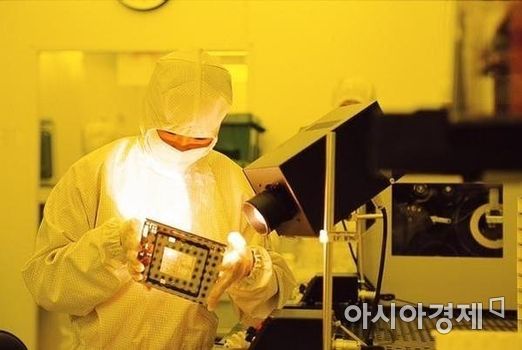
Immediately after Japan’s export restrictions, the domestic semiconductor industry, which had a high dependence on Japanese materials, was thrown into turmoil. According to data from the Korea International Trade Association at the time of the export restriction announcement, 44% of hydrogen fluoride imports and 92% of photoresist imports were from Japan.
However, following the export restrictions, domestic companies actively pursued localization of materials, parts, and equipment (SoBuJang) and diversified their suppliers, steadily reducing their dependence on Japanese products. As a result, the share of imports from Japan in the top 100 core strategic SoBuJang technologies decreased by 10.7 percentage points from 32.6% in 2018 to 21.9% in 2022. In particular, the share of Japanese imports in the semiconductor sector among the top 100 core strategic SoBuJang technologies dropped by 9.5 percentage points from 34.4% in 2018 to 24.9% in 2022.
Therefore, even if South Korea and Japan hold consultations to resolve export restrictions on semiconductor materials, the immediate positive effects for domestic semiconductor companies will be limited. Domestic semiconductor companies also responded shortly after the government’s announcement that "there will be no significant changes." However, they expect positive effects in terms of supply chain stabilization. An industry insider explained, "At the time of the export restrictions, companies had to consider shutting down factories, but they resolved the issues through steady diversification of supply chains," adding, "Although operations are currently running smoothly, this measure will create more capacity to receive Japanese products more reliably."
Another insider said, "If Japan’s export restrictions are lifted, the preparation of export documents may be simplified," adding, "It remains to be seen whether there will be dramatic impacts such as the arrival of previously unavailable materials." They also drew a line regarding concerns that domestic SoBuJang companies might be excluded following the lifting of Japan’s export restrictions.
© The Asia Business Daily(www.asiae.co.kr). All rights reserved.

















