On-site Guidance Nine Times in Three Sessions a Day
The Cultural Heritage Administration and the Seoul Metropolitan Government will open the excavation site of Yukjo Street to the public for three days from the 16th to the 18th. Yukjo Street refers to the main road in front of Gwanghwamun where six central government offices of the Joseon Dynasty were located. Since 2018, the 'Gwanghwamun Woldae Restoration and Surrounding Area Maintenance Project' has been underway. The Cultural Heritage Administration has been in charge of excavating the Gwanghwamun Woldae site (1,620㎡), while the Seoul Metropolitan Government has handled the excavation of the surrounding area (4,487㎡).
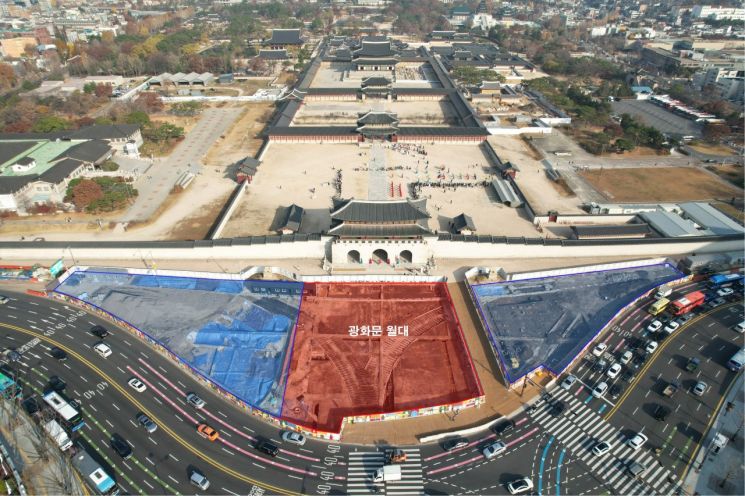
At the Gwanghwamun Woldae, remains from the reign of King Gojong measuring 8.3m in length and 29.7m in width were partially confirmed in 2007. The current investigation has revealed the full scale of the Woldae (48.7m in length and 29.7m in width). The structure of the Woldae was also uncovered, including the construction of the foundation using long, finely dressed granite blocks and the presence of the Eodo facility. Eodo refers to the path built from the Hongsalmun gate to the Jeongjagak pavilion in front of the royal tomb, allowing the king to pay respects to the tombs of his predecessors. Jangdaeseok are long, finely dressed stones used for building staircases or retaining walls.
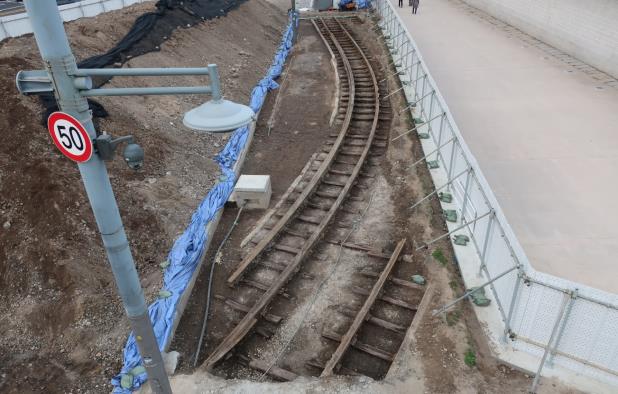
In the surrounding area of the Woldae, foundation facilities of the Hangnang related to the Samgunbu and Uijeongbu of the Joseon Dynasty, as well as drainage channels, were discovered. Remains of tram tracks installed by the Japanese during the Japanese colonial period, which damaged the Woldae and Samgunbu, were also confirmed.
The Cultural Heritage Administration and the Seoul Metropolitan Government will open to the public not only the current excavation status but also the Hangnang sites related to the Uijeongbu of the Joseon Dynasty, the foundation of the Hangnang related to the Samgunbu, and the drainage channels. The site will be guided nine times a day, three times each day. Reservations will be accepted on a first-come, first-served basis starting at 2 p.m. on the 8th through the Seoul Public Service Reservation website. Each session can accommodate thirty participants.
© The Asia Business Daily(www.asiae.co.kr). All rights reserved.
![Clutching a Stolen Dior Bag, Saying "I Hate Being Poor but Real"... The Grotesque Con of a "Human Knockoff" [Slate]](https://cwcontent.asiae.co.kr/asiaresize/183/2026021902243444107_1771435474.jpg)

















