Seoul City and Cultural Heritage Administration, Open for 3 Days
The Seoul Metropolitan Government and the Cultural Heritage Administration announced on the 6th that the excavation site of the Gwanghwamun Woldae and its surrounding area will be open to the public for three days from the 16th to the 18th. They plan to directly hear the opinions of citizens interested in the excavated buried cultural assets and reflect them in the preservation and maintenance plans of the remains.
The two organizations have been jointly conducting excavation investigations to protect buried cultural assets since September last year, while simultaneously restoring the Woldae and maintaining the surrounding area as part of the Gwanghwamun Historical Plaza creation project.
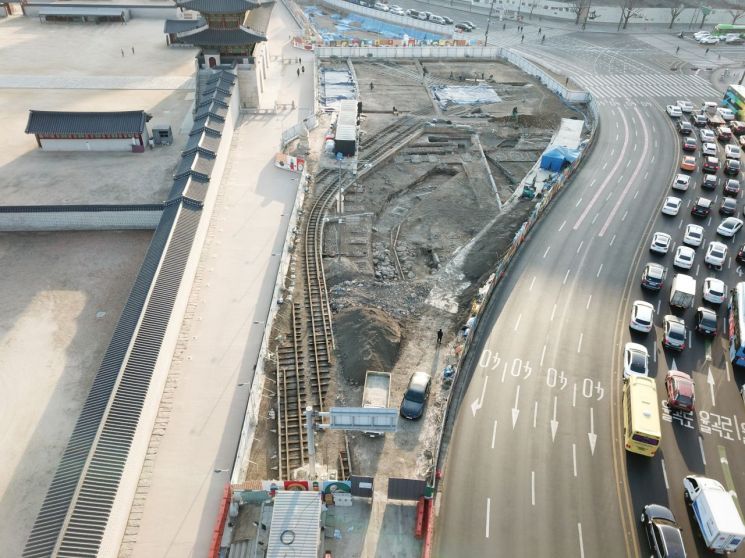
A distinctive feature of this excavation is that visitors can visually confirm the tram tracks installed during the Japanese colonial period. The tram tracks existed from 1917 to 1966 and meet in a 'Y' shape on the east and west sides of the Gwanghwamun Woldae, connecting toward Sejong-ro. In other words, it is the section where the tram tracks from Anguk-dong and Hyoja-dong connect toward Sejong-ro.
Additionally, at a depth of 70cm below the tram tracks, building sites presumed to be the outer corridors of the Samgunbu on the west side of Gwanghwamun and the outer corridors of the Uijeongbu were excavated. The remains related to the outer corridors consist of 21 structures, all featuring rubble strip foundations and square-shaped packing facilities (compacted stones to support the load of large buildings).
Along with this, a ‘Gwanghwamun Woldae and Surrounding Area Excavation Interpretation Program’ will be held for citizens interested in the excavation. It will take place over three days from the 16th to the 18th, with three sessions per day (a total of nine sessions), each accommodating about 30 people.
In April, a video will also be produced. It will include explanations about Gwanghwamun and the surrounding historical cultural assets, documentary materials, vivid stories from the excavation site, and various opinions from citizens regarding the preservation of the remains, which will be shared online.
© The Asia Business Daily(www.asiae.co.kr). All rights reserved.

















