Strengthening Child Abuse Prevention and Early Detection of At-Risk Children through a 24-Hour Child Abuse Response System
Expansion of Age Range for Comprehensive Survey of High-Risk Child Abuse Groups and Introduction of AI Child Emotional Care System for Proactive Prevention
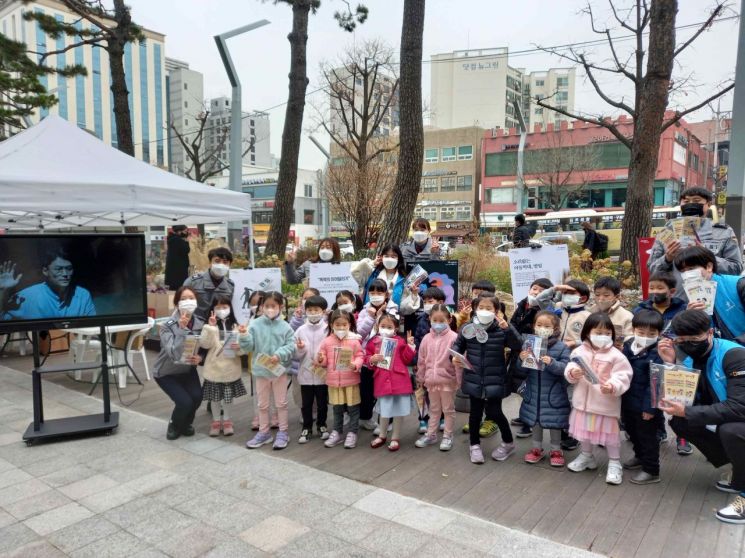
Gwanak-gu (Mayor Park Jun-hee) is making every effort to create a ‘Child Abuse ZERO Gwanak’ by establishing a 24-hour emergency response system for child abuse so that children can grow up safely and happily.
Last year, the district conducted a total of 230 child abuse investigations and referred 148 cases of victims to specialized child protection agencies. The number of child abuse cases has been steadily increasing every year, making the prevention of child abuse and protection of victimized children more urgent.
Accordingly, Gwanak-gu plans to actively identify victimized children and strengthen child abuse prevention projects through various initiatives such as ▲regular meetings of the Child Abuse Response Information Coordination Council ▲comprehensive survey of high-risk children aged 3 to 5 ▲‘AI Child Happiness Support Project’ through the introduction of an AI child emotional care system ▲child abuse prevention campaigns.
To ensure rapid initial response to child abuse and active protection of victimized children, the number of dedicated child abuse public officials has been increased from three to four, and a 24-hour continuous response system has been established in cooperation with the police station and specialized child protection agencies.
Even during nights and holidays, when a child abuse report is received, the police accompany the response team to the scene for investigation, establish a protection plan including temporary care by child psychological and emotional experts, and connect the case management to specialized child protection agencies.
Additionally, the ‘Child Abuse Response Information Coordination Council,’ which was previously convened only when there were agenda items, has been regularized to meet once a month to operate child protection and support measures systematically and substantively.
Using social security big data such as non-participation in infant health checkups, the comprehensive survey of high-risk children has been expanded from age 3 to ages 3 to 5 to actively identify victimized children in welfare blind spots.
Beyond simply protecting and responding to victimized children, a preventive system for proactive response is also being established. In the second half of this year, an AI child emotional care system will be introduced targeting 5,014 children aged 3 to 5 in the district to assess not only the children’s emotions but also parental parenting stress, focusing more on preventing child abuse caused by parental stress.
Furthermore, the district designates November 19 every year as ‘Child Abuse Prevention Day’ and the week following as ‘Child Abuse Prevention Week,’ conducting child abuse prevention campaigns targeting Gwanak Police Station, Good Neighbors, Seoul Yeongdeungpo Child Protection Agency, and local residents, advancing child abuse prevention through various projects.
Park Jun-hee, Mayor of Gwanak-gu, said, “We will spare no support for strengthening treatment for abused children as well as for preventing child abuse,” adding, “We will continue to do our best to create an environment where children can grow up healthily and make Gwanak a ‘Child Abuse ZERO’ district.”
Gwangjin-gu ‘Raon Community’ Selected as Seoul-Style Moa Daycare Center in Final Round!
A community consisting of four daycare centers was finally selected in the additional public contest held last February
The third community following Junggok Community and Jayang Community, with a total of 13 daycare centers participating
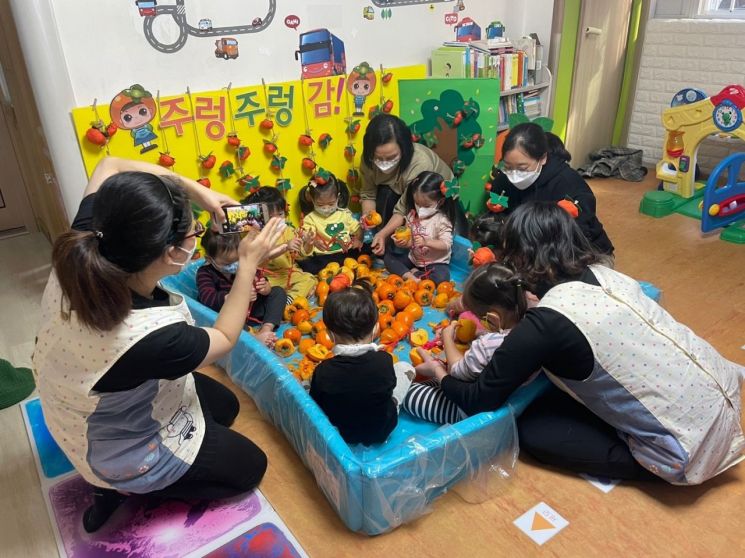
Experience programs such as Raon Forest Expedition and Raon Spring Seasonal Customs planned for this spring
Gwangjin-gu (Mayor Kim Kyung-ho)’s ‘Raon Community’ has attracted attention by being finally selected in the additional public contest for Seoul-style Moa Daycare Centers.
The Seoul-style Moa Daycare Center is a future-oriented integrated childcare model that shares childcare programs, ideas, personnel, and spaces among public, private, and home daycare centers. It was launched in 2021 to eliminate childcare disparities between centers, promote cooperation and coexistence, improve the quality of childcare services, and enhance operational efficiency. Currently, 40 communities and 162 daycare centers participate in the Seoul-style Moa Daycare Center project.
In February, Seoul City selected 20 communities and 83 daycare centers for the Seoul-style Moa Daycare Center project from all autonomous districts. Among them, ‘Raon Community,’ consisting of four daycare centers in Gwangjin-gu, was also finally selected. This contest saw 454 daycare centers apply, recording a higher competition rate of 5.4 to 1 compared to last year.
Gwangjin-gu already has ‘Junggok Community’ selected in 2021 and ‘Jayang Community’ selected in 2022 through the Seoul-style Moa Daycare Center contest. Including the newly selected ‘Raon Community,’ a total of 13 daycare centers will be operated under the Seoul-style Moa Daycare Center model. They will receive support for ▲work consultations and autonomous research meetings within or between communities ▲development of joint programs ▲monitoring and performance management ▲subsidies.
Gwangjin-gu is creating a nature-friendly childcare environment by promoting various community-linked programs utilizing local natural and cultural resources such as Achasan Mountain, Ecological Park, and Children’s Grand Park. In particular, ‘Raon Community’ plans to conduct several experiential programs with daycare parents this spring, including the Raon Forest Expedition and Raon’s Spring Seasonal Customs.
Kim Kyung-ho, Mayor of Gwangjin-gu, said, “Congratulations on the additional selection of Raon Community as a Seoul-style Moa Daycare Center. I hope it will greatly contribute to improving the quality of childcare services,” adding, “I believe that through collaboration and sharing of information and know-how among daycare centers within the community and among the three selected communities, they will take the lead in making Gwangjin a happy place for children.”
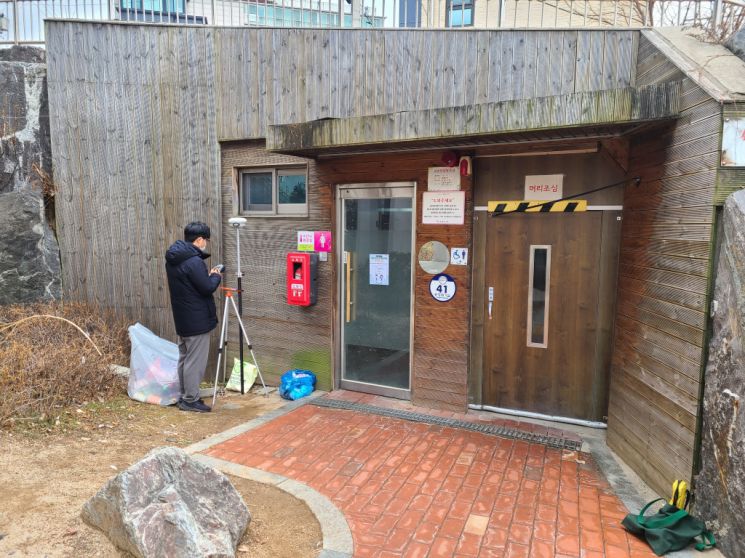 A Seongdong-gu official is surveying the locations of 396 safety facilities, including emergency bells (safe restrooms), using satellite surveying equipment.
Seongdong-gu Establishes Location Information System for Safety Facilities Including Emergency Bells
Unified Location Information of 396 Safety Facilities Previously Managed by Address or Number into National Coordinate System
Provision of Location Coordinates to Related Agencies Such as Police and Fire Stations Enables Rapid Response through Coordinate Tracking in Emergencies
Seongdong-gu (Mayor Jung Won-oh) has built an integrated system containing location information of 396 safety facilities such as emergency bells and smart crosswalks using smart technology (satellite surveying).
The targeted facilities include ▲emergency bells (safe restrooms) ▲life-saving boxes ▲smart traffic notification devices ▲smart crosswalks, etc. Until now, the location information of these facilities was individually managed by lot number addresses, road name addresses, or specific numbers by institution, and when land boundaries were wide, road name addresses were not assigned, making it difficult to accurately identify locations during emergencies.
Accordingly, Seongdong-gu improved the management method by integrating safety facility location information into national coordinates using X and Y axes. To this end, precise location information was secured through professional surveying using satellite surveying (GPS) equipment. In particular, by using its own satellite surveying equipment to conduct direct surveying, the district saved about 100 million KRW in budget required for satellite surveying.
Since 2018, Seongdong-gu has been conducting direct satellite surveying to integrate safety facility location information into national coordinates and has registered location information of 2,098 sites in the integrated system to enable systematic management of safety facilities.
The established facility location information can be checked through Smart Seoul Map and Smart Seongdong Map. In addition, location coordinates of safety facilities are provided to related agencies such as Seongdong Police Station and Seongdong Fire Station to enable rapid response in emergencies.
Mayor Jung Won-oh said, “By establishing a precise location information system for safety facilities widely used by residents in the district, we expect the disaster safety response system to be further improved,” adding, “We will continue to expand the construction of safety facility location information.”
© The Asia Business Daily(www.asiae.co.kr). All rights reserved.



















