The Yeongsangang River Basin Environmental Office announced on the 2nd that, as part of a full-scale response to the occurrence of high-concentration fine dust in spring, it will intensify monitoring of illegal fine dust emissions using advanced monitoring equipment such as mobile measurement vehicles.
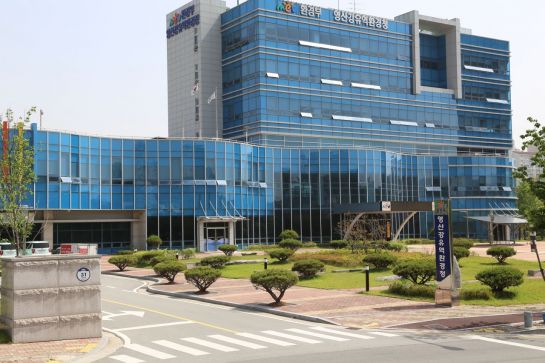
This inspection is conducted jointly by the Yeongsangang River Basin Environmental Office, Jeonnam Health and Environment Research Institute, Yeosu City Hall, Gwangyang City Hall, and the Private Drone Association, focusing on industrial complexes such as Yeosu Industrial Complex and Gwangyang Industrial Complex, with concentrated joint inspections carried out until the end of March.
The inspection activities utilize four mobile measurement vehicles and eight drones. The mobile measurement vehicles are equipped with internal analysis equipment that can operate over a wide area and measure about 60 types of VOCs substances in real time without preprocessing.
Drones are used for pollutant measurement and remote monitoring of facilities that are difficult to access on-site from above the industrial complexes.
In particular, this inspection method allows for rapid inspection around multiple emission sites within the industrial complexes with minimal personnel, enabling efficient inspection of companies illegally emitting high concentrations of fine dust.
The Yeongsangang River Basin Environmental Office plans to concentrate on cracking down on suspected illegal emission sites by mobilizing all available personnel and monitoring equipment. The main enforcement items include whether unauthorized air emission facilities are installed, whether air pollution prevention facilities are operating normally, and compliance with management standards.
Strict measures such as prosecution, fines, and administrative actions will be taken against violating businesses.
Jeong Seon-hwa, head of the Yeongsangang River Basin Environmental Office, stated, “This concentrated inspection period in March is when the ultrafine dust concentration is the highest throughout the year due to spring weather conditions.” She added, “We will utilize advanced monitoring equipment that measures pollutants such as fine dust in real time on-site and strengthen joint inspections with local governments to prevent high concentrations of fine dust during the winter season.”
© The Asia Business Daily(www.asiae.co.kr). All rights reserved.

















