With Samsung Electronics entering the OLED (Organic Light Emitting Diode) TV market dominated by LG Electronics, consumers can now purchase OLED TVs at more affordable prices. The sales competition has intensified due to Samsung Electronics, the world's number one in overall TV sales, actively targeting the OLED market.
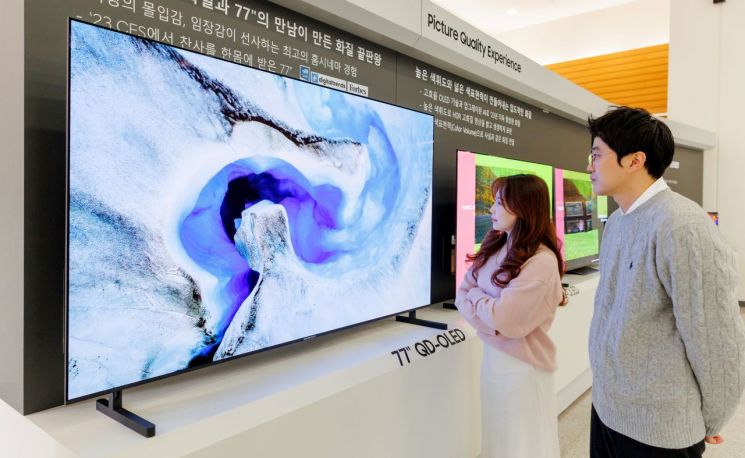
On the 9th of this month, Samsung Electronics officially began selling its 2023 new OLED TV models in 77-, 65-, and 55-inch sizes. Samsung Electronics Chairman Lee Jae-yong personally visited the TV production site and paid close attention to every detail, even down to the buttons on the remote control of the upcoming new TV. This marks Samsung's first domestic OLED TV release in 10 years since 2013. Samsung first introduced a 55-inch OLED TV in 2013 but ultimately did not release any follow-up OLED TV models. At that time, the OLED market was in its infancy, and Samsung judged that there were issues with technology, yield, and profitability.
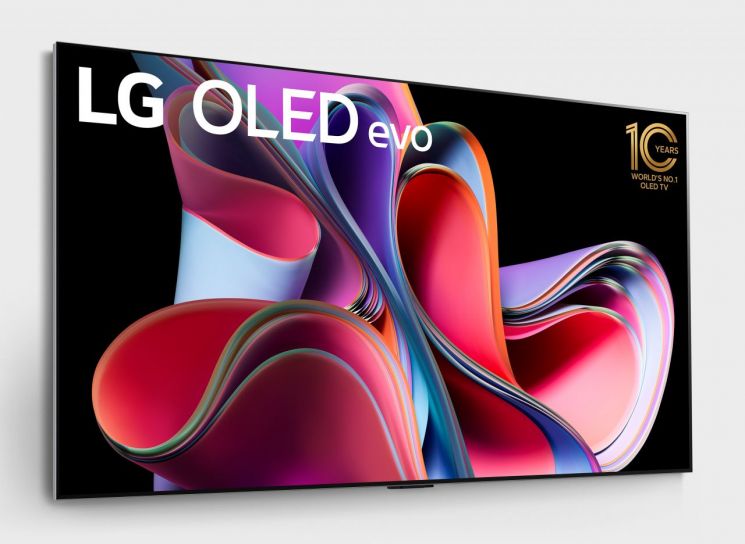
In contrast, LG Electronics has consistently released products for 10 years since it first launched the industry's first OLED TV business in 2013. This year marks the 10th anniversary of its leadership in the industry. Market research firm Omdia reported that LG Electronics shipped 3,824,000 OLED TVs globally last year. The cumulative shipments over 10 years reached 15 million units, ranking first worldwide. Its market share approached 60%. While Samsung Electronics holds the top spot in the global overall TV market with a 30% share, LG Electronics has effectively monopolized the highly profitable OLED TV market.
Samsung Electronics, which has focused on premium products such as Neo QLED TVs based on LCD (Liquid Crystal Display) rather than OLED, has belatedly launched OLED TVs domestically to respond to increasing OLED demand. Last year, global TV shipments totaled 203.25 million units, a 5% decrease from 2021. LCD TV shipments also fell by about 5%, dropping below 200 million units for the first time since 2010. However, the OLED TV market tells a different story. OLED TV shipments are expected to grow 14% this year compared to last year, and OLED accounts for 49.8% of the premium TV market priced above $1,500. In other words, OLED is dominating the premium TV market.
With Samsung Electronics entering the OLED TV market, a price reduction trend is expected due to competition in OLED TV sales. Currently, Samsung's new OLED TV can be purchased by consumers with various discount events applied, with the 77-inch model priced in the 7 million KRW range. Considering that LG Electronics' premium 77-inch model released last year was priced between 8 to 9 million KRW, Samsung's offering is seen as competitively priced. Industry insiders expect that Samsung's OLED TV sales launch will influence the pricing of LG Electronics' new OLED TV models scheduled for release in mid-month.
OLED prices are expected to drop significantly in the future. When Samsung Electronics and LG Electronics, the world's top two TV manufacturers, compete for market share, consumers benefit. For example, during the mid-2000s when the two companies fiercely competed in the LCD TV market, the price of high-end TVs dropped to a quarter of the original price within 3 to 4 years. The price of a 40-inch LCD TV, which was 8 to 9 million KRW in 2004, fell to 5 million KRW in 2005 and further dropped to 2 million KRW in 2007.
The display industry is also hopeful about Samsung Electronics' success in establishing itself in the OLED TV market. Samsung Display, which has currently raised OLED panel yield rates to around 90%, can produce about 1.5 million panels annually. This is far less compared to LG Display's large OLED panel production capacity of up to 10 million units per year. If Samsung Electronics' OLED TVs equipped with OLED panels sell well, it will need to contract with LG Display to increase production. An industry insider said, "Sony receives OLED panels from both Samsung Display and LG Display to sell its TVs. If Samsung Electronics' OLED TV sales are successful, it will inevitably have to consider contracts with LG Display to meet order volumes."
© The Asia Business Daily(www.asiae.co.kr). All rights reserved.
![Clutching a Stolen Dior Bag, Saying "I Hate Being Poor but Real"... The Grotesque Con of a "Human Knockoff" [Slate]](https://cwcontent.asiae.co.kr/asiaresize/183/2026021902243444107_1771435474.jpg)

















