Different Trends from 2019's 'No Japan' Movement
The craze for travel to Japan among domestic tourists shows no signs of cooling down. It has been revealed that a significant number of customers have booked long-term trips to Japan using the 'Sam-il-jeol' holiday on March 1st. This is a complete reversal of the trend seen during the past Japanese product boycott movement known as 'No Japan.'
According to T'way Air, the average reservation rate for flights from Korea to Japan over five days, from the last weekend of February on the 25th through March 1st, reached 93%, effectively fully booked.
Jin Air and Jeju Air also surpassed an average reservation rate of 90% during the same period. Many travelers took advantage of the Sam-il-jeol holiday falling on a Wednesday, adding Monday and Tuesday off to embark on extended trips to Japan.
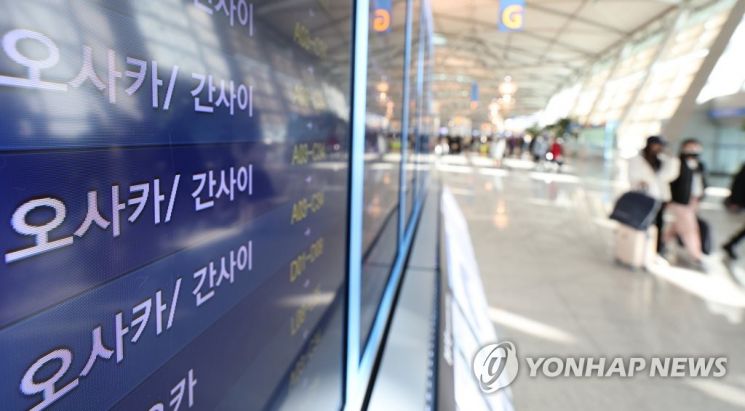
The 'Japan travel craze' among domestic tourists is also confirmed by statistics. After the Japanese government eased COVID-19 restrictions and reopened its borders, approximately 123,000 Koreans traveled to Japan in October last year.
This number steadily increased to 315,000 the following month, 456,000 by the end of last year, and surpassed a staggering 565,000 last month. This accounts for 37.7% of all foreign visitors to Japan during the same period.
This atmosphere is in stark contrast to the period when the 'No Japan' movement was active. In 2019, the Japanese government restricted exports of key semiconductor and display materials to Korea, which fueled anti-Japanese sentiment domestically and materialized into a fervent boycott movement.
At that time, online sentiment grew hostile not only toward Japanese cars, fashion products, and beer brands but even toward traveling to Japan itself. Particularly, Uniqlo's Korean branch, which was directly hit by the No Japan movement, saw its sales halved in 2020 and recorded an operating loss of 88.4 billion won, enduring a significant decline in performance.
© The Asia Business Daily(www.asiae.co.kr). All rights reserved.

















