China Hustles to Regain Its Status as a Manufacturing Powerhouse
Factories and export companies in China, freed from the shackles of the 'Zero COVID' policy, are actively pursuing overseas sales. This movement comes amid a growing trend of de-Chinaization of production bases to mitigate the increasing risks of US-China strategic competition. China is scrambling to retain foreign companies that are beginning to seriously escape China as a production base, including technology companies like Apple and apparel and retail businesses.
According to major foreign media on the 27th (local time), overseas business trips by Chinese export companies have been increasing since the lifting of COVID-19 lockdowns. Dongjing Textile, headquartered in Nanjing, Jiangsu Province, recently set out on a business trip to visit its US clients. The company counts Walt Disney (apparel division) and the jeans brand Levi's among its customers. After a significant drop in orders from clients following the COVID-19 pandemic, the company is actively seeking new orders.
Last week, the CEO of HD Eyewear, an eyewear logistics company headquartered in Wenzhou, Zhejiang Province, participated in MIDO, one of the world's top three eyewear exhibitions held in Italy, on a chartered flight supported by the city authorities. Various provincial and municipal governments in China, including Wenzhou, are providing behind-the-scenes support by dispatching delegations of domestic companies to trade fairs held in the US and Europe.
Foreign media have evaluated this as an effort to make up for the slump caused by COVID-19 lockdowns over the past three years and to seek new opportunities in overseas markets. As the trend to reduce dependence on China, the 'world's factory,' has intensified following the supply chain disruptions caused by the pandemic, China has directly engaged in attracting foreign business.
The market situation is worsening, with US-China relations rapidly cooling due to incidents such as the reconnaissance balloon affair. Uncertainty over interest rate hikes by the US Federal Reserve (Fed) and renewed tensions between the US and China have weakened confidence in the Chinese market. Gary Ng, an economist at Natixis Hong Kong, stated, "The expected reopening effect amid rising US-China tensions has been minimal." He added, "We have not yet escaped the production disruptions and cutbacks caused by COVID-related lockdowns, and new demand has not surged sharply even after reopening."
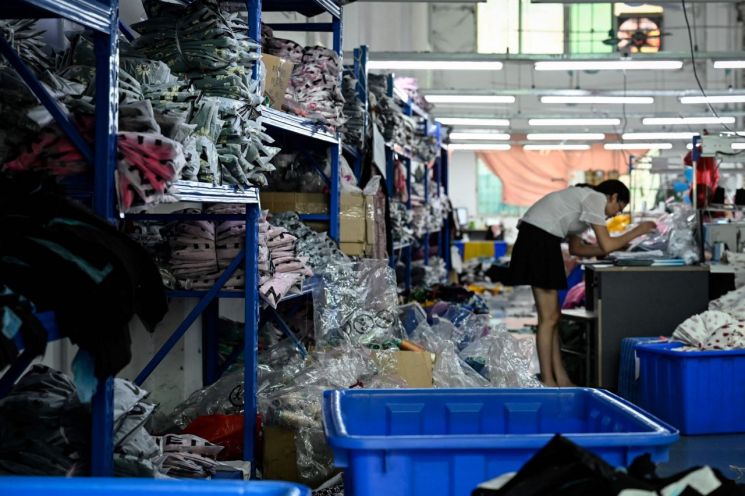
Inflation-driven increases in raw material prices have further complicated the situation. Many factories in southern and eastern China, the manufacturing hubs, repeatedly suspended operations or closed until the end of last year. As a result, China's export value in December last year fell 9.9% year-on-year. This decline was larger than the previous month's change (-8.9%), indicating that the benefits of reopening have not been fully realized. Foreign media attributed this to demand contraction caused by price increases due to inflation and interest rate hikes.
Gary Ng predicted, "Inflation will increase pressure on export prices, and export volumes in the first quarter of this year are unlikely to break the downward trend."
However, there are also forecasts that the de-China trend will not emerge immediately. Andrew Hooper, who provides consulting to companies relocating production bases outside China, said, "Many companies are diversifying their production bases to areas like Vietnam and Mexico, but because China's manufacturing ecosystem remains attractive to exporters, the de-China trend may proceed more slowly than expected."
© The Asia Business Daily(www.asiae.co.kr). All rights reserved.

















