Maintaining Enhanced Inspection System
Continuous Disinfection and Inspection Efforts with Special Management of Laying Hens
The Ministry of Agriculture, Food and Rural Affairs announced on the 28th that it will extend the 'Highly Pathogenic Avian Influenza (AI) Special Quarantine Period,' originally scheduled to end on the 28th, by one month until the 31st of next month, following a meeting of the Livestock Quarantine Committee on the 27th.
Since AI first occurred at a breeding duck farm in Yecheon-gun, Gyeongbuk Province on October 17 last year, a total of 69 cases have been reported at poultry farms to date.
This season, AI is spreading globally. Since October last year, the United States has reported 280 cases across 45 states, and Europe has seen 544 cases at poultry farms in 20 countries including Germany and France.
In South Korea, AI occurred 22 days earlier than last season at poultry farms. A total of 166 cases were detected in wild birds, and comparing the same period since the first occurrence, antigen detection is 2.7 times higher than last year (62 cases). Additionally, unlike in the past, the mortality rate in ducks is high and the transmissibility is strong. Experts evaluate that this year's virus is more pathogenic in ducks compared to previous years, the Ministry of Agriculture, Food and Rural Affairs reported.
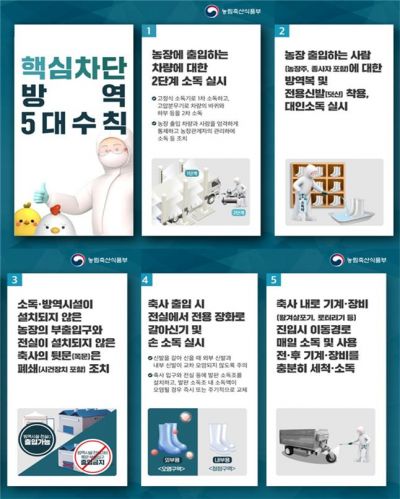
Accordingly, the Ministry plans to maintain the enhanced quarantine measures at the same level during the extended special quarantine period until the end of March, while adjusting quarantine measures based on risk assessments.
To detect AI infections early and prevent spread, the existing enhanced precision testing system will be maintained until the end of March. Pre-shipment inspections will be conducted on all poultry, and the testing intervals will be shortened by species.
Also, considering migratory bird movements in February, the 'Intensive Disinfection Period' to eliminate contamination sources will be extended until the end of March. Farm supervisors will inspect disinfection practices on farms and strictly enforce penalties such as issuing confirmation documents and imposing fines if violations are found.
Special management of laying hens, which affects egg supply, will also be strengthened. Domestic egg prices were 5,070 KRW (farm price, 30 special eggs) in December 2022 when AI began to spread actively, but due to efforts by farms and the government to stabilize quarantine and supply, prices have fallen about 3.4% compared to February last year. However, considering past outbreaks in densely populated laying hen areas, the situation cannot be considered safe. The laying hen intensive management areas will be expanded to include Chungbuk and Jeonbuk provinces, with full-scale responses such as operating control posts, deploying dedicated disinfection vehicles, and inspecting quarantine practices.
Ahn Yong-deok, Director of the Quarantine Policy Bureau at the Ministry of Agriculture, Food and Rural Affairs, said, "If the government, local governments, farms, and quarantine officials maintain vigilance until the end and adhere to basic quarantine rules, additional outbreaks can be minimized." He urged, "If farms observe increased mortality or decreased laying rates or suspect AI symptoms, please report immediately to the quarantine authorities."
© The Asia Business Daily(www.asiae.co.kr). All rights reserved.
![Clutching a Stolen Dior Bag, Saying "I Hate Being Poor but Real"... The Grotesque Con of a "Human Knockoff" [Slate]](https://cwcontent.asiae.co.kr/asiaresize/183/2026021902243444107_1771435474.jpg)
















