While the supply of new apartment move-ins this year is expected to remain at a level similar to last year, the volume in some major regional cities such as Gwangju Metropolitan City and Daejeon Metropolitan City is projected to decrease significantly.
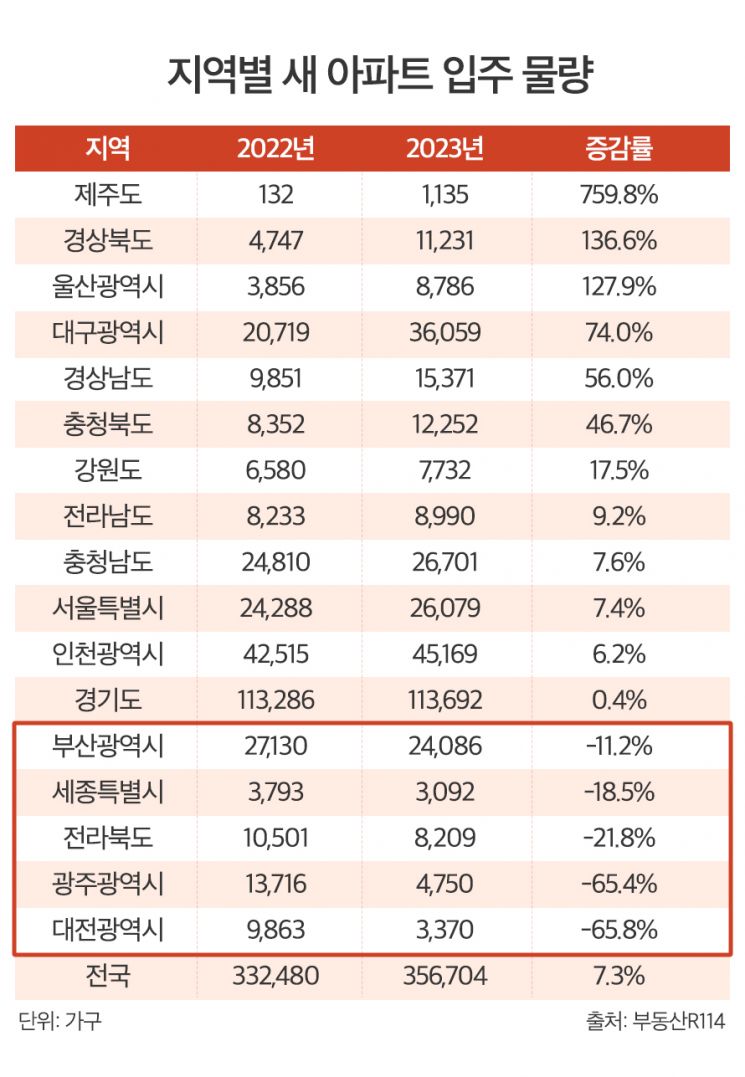
According to Real Estate R114, a total of 356,704 households nationwide are scheduled to move in this year. By region, Gyeonggi-do has the largest volume planned with 113,692 households, followed by Incheon (45,169 households), Daegu (36,059 households), Chungnam (26,701 households), and Seoul (26,079 households). The region with the fewest planned households is Jeju-do with 1,135 households, while Sejong, Daejeon, and Gwangju also have less than 5,000 households scheduled for move-in.
In terms of growth rate, Gwangju and Daejeon show the largest declines compared to the previous year, each dropping by about -65%. In Gwangju, the number decreased from 13,716 households last year to 4,750 households this year, a reduction of approximately 9,000 households. Daejeon also fell from 9,863 households to 3,370 households, a decrease of about 6,000 households. Gwangju recorded its lowest level in 11 years, and Daejeon in 14 years.
Some voices suggest that a shortage of new apartments could emerge within a few years, especially in regions like Gwangju where supply has sharply declined. In particular, new pre-sale volumes this year are expected to drop by about 30% compared to last year, which could accelerate the supply drought phenomenon.
A real estate official stated, “Although the total move-in volume has not significantly decreased due to complexes sold during the boom years of the past few years, the number of move-ins will begin to decline rapidly as pre-sale volumes decrease. It may be difficult in the short term, but if supply decreases and interest rates return to normal levels, the real estate market is likely to normalize.”
Meanwhile, in Gwangju Metropolitan City, where the move-in volume is expected to drop significantly this year, Hoban Construction, Line Construction, and Haedong Construction are preparing to pre-sell ‘We Park Mareuk Park’ in March.
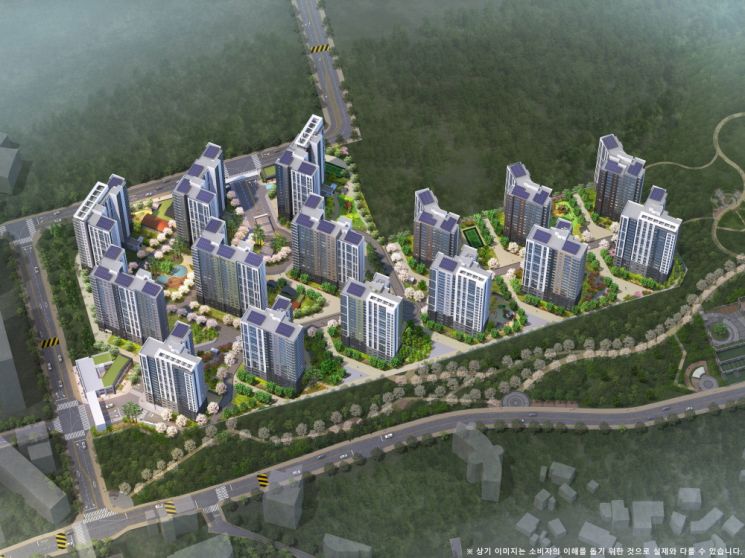
We Park Mareuk Park is located in the double living zone of Sangmu District and Geumho District, which are highly preferred residential areas in Gwangju Metropolitan City. It offers convenient access to Gwangju City Hall, Kim Dae-jung Convention Center, Lotte Mart, CGV, and Shinsegae Department Store, and is near Sangmu Elementary School, Manho Elementary School, and Geumho Middle School, providing favorable educational conditions.
Additionally, this complex includes a park developed through a private park special project. Of the total 220,000㎡ site, about 170,000㎡ will be developed as Mareuk Park for citizens. Connected to the Mareuk Park walking trails, residents can enjoy a large-scale park as if it were their own backyard, and the natural surroundings such as Baekseoksan Mountain and Uncheon Reservoir contribute to a pleasant living environment.
Transportation conditions are also excellent. The complex is adjacent to road networks including Sangmu-daero, Uncheon-ro, Seogwangju-ro, and Gwangju 2nd Ring Road, allowing easy access to both inside and outside Gwangju city. Sangmu Station on Gwangju Metro Line 1 is nearby, and Gwangju Metro Line 2 is scheduled to open in 2026.
We Park Mareuk Park is designed with all units featuring a 4-bay slab-type layout, and the complex is arranged mainly facing south to ensure excellent lighting and ventilation. Additionally, variable walls are used by unit type to allow various space configurations according to consumers’ lifestyles. Kitchen furniture is arranged considering the housewife’s workflow, and various storage spaces such as dressing rooms, multipurpose rooms, and pantries are provided depending on the unit type.
Community facilities include a fitness club, indoor golf practice range, small library, kids caf?, and co-working space to support residents’ healthy and relaxed lifestyles. Furthermore, a daycare center will be established within the complex.
We Park Mareuk Park consists of 15 buildings ranging from 3 basement floors to 20 above-ground floors, with a total of 917 households. All units are medium to large-sized, with popular exclusive areas of 84㎡ and 135㎡. The number of units by type is ▲84㎡A 373 households ▲84㎡B 159 households ▲84㎡C 47 households ▲84㎡D 114 households ▲135㎡ 224 households.
© The Asia Business Daily(www.asiae.co.kr). All rights reserved.
![Clutching a Stolen Dior Bag, Saying "I Hate Being Poor but Real"... The Grotesque Con of a "Human Knockoff" [Slate]](https://cwcontent.asiae.co.kr/asiaresize/183/2026021902243444107_1771435474.jpg)












