H5 Type Antigen Detection, Temporary Movement Suspension Order for Broiler Farms and Companies
A suspected case of highly pathogenic avian influenza (AI) occurred in chickens at a farm in Sangju, Gyeongbuk Province, leading to culling operations.
Gyeongbuk Province announced on the 28th that a suspected AI case was detected at a broiler farm in Sangju on the 27th.
This is reported as the fifth occurrence in Gyeongbuk this winter season. It has been 66 days since the last highly pathogenic avian influenza outbreak at a layer farm in Chilgok at the end of last year.
In Gyeongbuk, suspected AI cases were reported starting with Jeong ducks in Yecheon on October 17 last year, followed by the second case at a breeding chicken farm in Yecheon on October 21, the third case at a layer farm in Seongju on December 21, and the fourth case at a layer farm in Chilgok on December 23.
The affected farm raises approximately 80,800 broilers. The case was reported on the 27th after an increase in dead birds, and a detailed examination by the Animal Hygiene Testing Laboratory detected the H5 antigen.
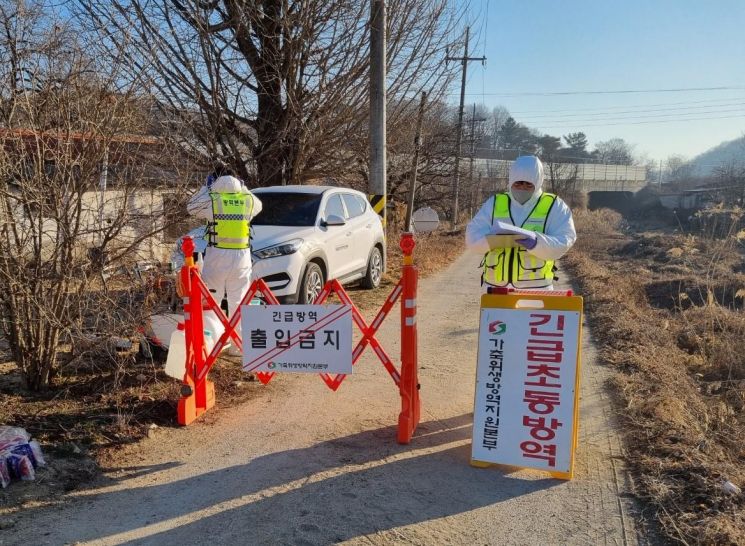 The entrance to a farm in Sangju, Gyeongbuk, where an AI suspected case occurred on the 27th, is being restricted.
Gyeongbuk Province dispatched the initial response team from the Livestock Hygiene and Quarantine Headquarters to the site, fully restricting access for people and vehicles. Subsequently, culling operations and epidemiological investigations were initiated as part of quarantine measures at the farm.
Additionally, to prevent and contain the spread of avian influenza, Gyeongbuk Province issued a temporary Standstill order.
The determination of high pathogenicity is being conducted by the Animal and Plant Quarantine Agency, and the final confirmation is expected to take about 1 to 2 days. If confirmed as highly pathogenic, culling will also be carried out at poultry farms within a 500-meter radius.
As of the 27th, nationwide highly pathogenic avian influenza cases include 68 cases at poultry farms and 166 cases in wild birds. In Gyeongbuk, there have been 4 cases at poultry farms (2 in Yecheon, 1 in Seongju, 1 in Chilgok) and 10 cases in wild birds (1 in Gyeongju, 1 in Andong, 8 in Gumi).
With the full arrival of migratory birds heading north, the number of migratory birds in February is high, and their activity range expands during northward migration, increasing the likelihood of highly pathogenic AI introduction into poultry farms.
Kim Ju-ryeong, Director of the Agriculture, Livestock, and Distribution Bureau of Gyeongbuk Province, urged, “Poultry farms and livestock facilities should strictly adhere to intensive disinfection and biosecurity measures. If symptoms suspected of highly pathogenic avian influenza such as increased mortality, decreased egg production, or reduced feed intake are observed, please report immediately to the quarantine authorities.”
© The Asia Business Daily(www.asiae.co.kr). All rights reserved.











