Visited State-Owned Enterprises Participating in the Belt and Road Initiative... "Rather Helpful"
Chinese Foreign Ministry: "Western and Multinational Financial Institutions Must Take Responsibility"
Some ambassadors from countries involved in China's Belt and Road Initiative (BRI) have rebutted Western media reports criticizing the project for trapping developing countries in a "debt-trap." They labeled such reports as "fake news."
According to the Chinese state-run Global Times (GT) on the 27th, Ule Haque, Pakistan's ambassador to China, who attended a group visit event organized by China Communications Construction Company (CCCC) for ambassadors and diplomats in China, stated that Western media exaggerating the "debt-trap" related to the BRI is fake news. Ambassador Haque explained, "We are based on mutual support, respect, and win-win cooperation," adding, "The Belt and Road Initiative has greatly contributed to transforming Pakistan's economic landscape."
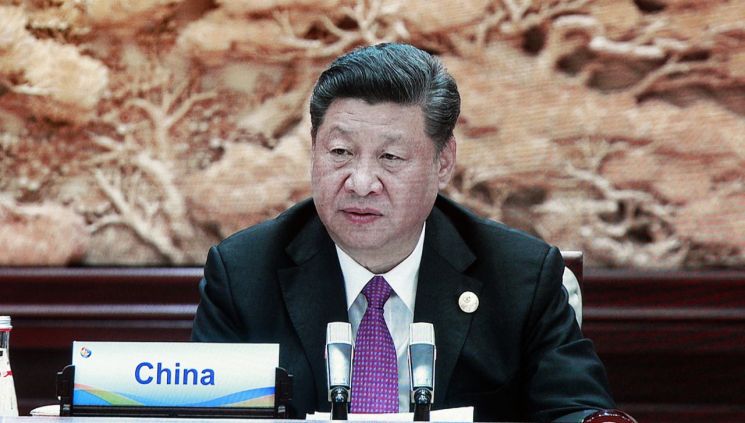
CCCC is one of China's state-owned enterprises participating in the BRI projects. On this day, 111 people including ambassadors, embassy officials from various countries, and diplomats from international organizations visited CCCC. When asked about the Western reports claiming that the BRI has trapped related countries in a "debt-trap," Siyabonga Kuhle, South Africa's ambassador to China, also responded, "We do not see it that way," emphasizing, "We coexist and mutually respect China." Ambassador Kuhle stressed, "Because China provides financing and innovative technologies, most projects proceed better and are completed on time," adding, "Problems arise when projects are not completed on schedule." He further mentioned two power plant projects where debt issues occurred, clarifying that Chinese companies were not involved in those projects.
Yoganathan, Deputy Head of Mission at the Sri Lankan Embassy in China, also indirectly criticized Western media by saying about the "debt-trap," "I don't know who coined this term, but it is just a term for their own propaganda." He emphasized, "I am confident and hopeful that the Belt and Road projects will improve Sri Lanka's foreign currency earnings and attract more foreign investors." Chen Zhong, Vice President of CCCC, also told GT on-site that day, "The debt-trap is not a problem caused by Chinese companies," adding, "It is an issue that everyone needs to negotiate together."
Earlier, the United States and the World Bank (WB) had called for debt relief for Zambia, which defaulted on its debt. Zambia was the first African country to default after the spread of COVID-19 and is currently negotiating debt restructuring with China on approximately $6 billion (about 7.8912 trillion KRW) in debt. Mao Ning, spokesperson for China's Ministry of Foreign Affairs, rebutted at a regular briefing that "China has made positive contributions to alleviating the debt burden of developing countries and promoting sustainable development," adding, "According to data released by Zambia's Ministry of Finance, 70% of Zambia's external debt is held by Western and multinational financial institutions and commercial creditors, who should take responsibility and take stronger measures."
Additionally, the Paris Club, a group of 22 creditor countries including the United States, France, Germany, South Korea, and Japan, is demanding that China join efforts to reduce Sri Lanka's debt. Sri Lanka, which declared default on its external debt in April last year, has reached a preliminary agreement with the International Monetary Fund (IMF) for a $2.9 billion bailout, but this funding can only be received after agreeing on restructuring with other creditors.
© The Asia Business Daily(www.asiae.co.kr). All rights reserved.

















