National Cancer Screening Eligible Population, Odd-Year Birth Cohorts
Gyeongnam Haman-gun Public Health Center is conducting the national cancer screening program and medical expense support project for cancer patients to detect cancer, the leading cause of death in Korea, at an early stage and to reduce cancer patient mortality and medical expense burdens.
This year, the cancer screening targets are those born in odd-numbered years. Stomach cancer and breast cancer screenings are available for those aged 40 and over, cervical cancer for women aged 20 and over, and liver cancer for high-risk groups aged 40 and over, with tests conducted twice a year. Colorectal cancer screening is conducted annually for those aged 50 and over using fecal occult blood tests.
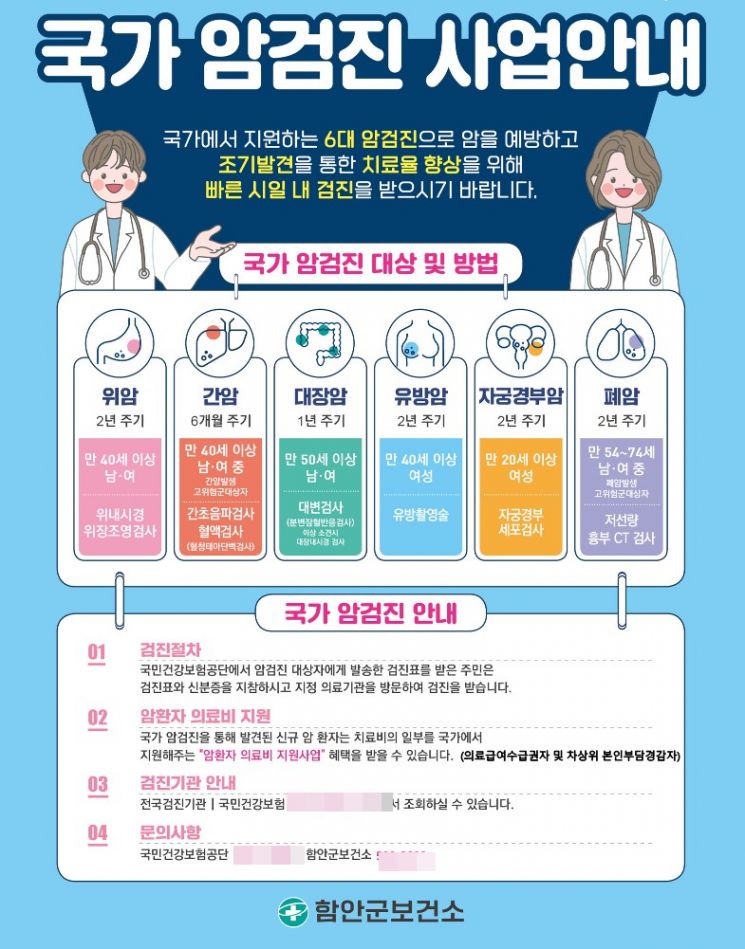
Cancer screenings can be received anywhere nationwide at designated medical institutions, which can be confirmed on the National Health Insurance Service website.
The medical expense support project for cancer patients is divided into adults and children. Among adult cancer patients, medical aid recipients and those eligible for reduced out-of-pocket expenses in the lower-income bracket can receive up to 3 million KRW annually regardless of whether the expenses are covered or not.
Although new support for general health insurance subscribers has been discontinued, those who underwent national cancer screening by June 30, 2021, and were diagnosed with one of the five major cancers (stomach, liver, colorectal, cervical, breast) within two years, or were diagnosed with lung cancer by June 30, 2021, and meet the health insurance premium criteria, can receive up to 2 million KRW annually for partial out-of-pocket expenses covered by insurance.
Additionally, among pediatric cancer patients, those eligible for reduced out-of-pocket expenses in the lower-income bracket and medical aid recipients are automatically selected, while health insurance subscribers undergo income and property investigations, and if criteria are met, support of up to 20 million KRW annually (30 million KRW for leukemia) is provided.
A public health center official stated, “We hope that continuous support from cancer diagnosis to treatment will help both patients and their families lead happy and healthy lives.”
© The Asia Business Daily(www.asiae.co.kr). All rights reserved.

















