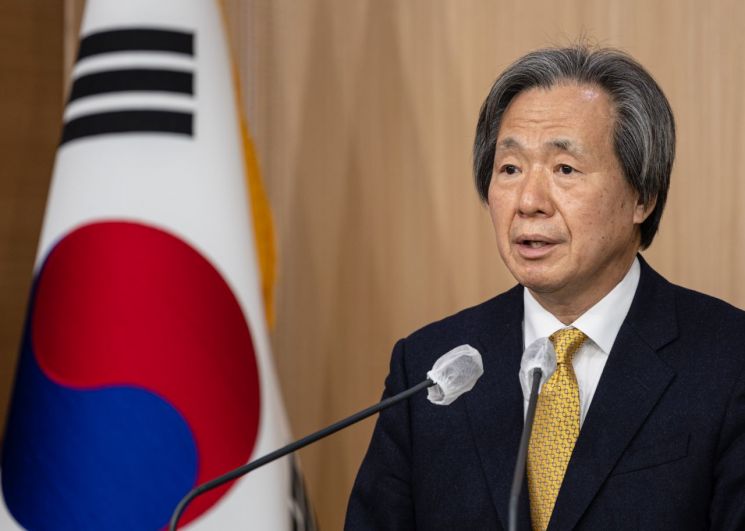
Jeong Gi-seok, head of the COVID-19 Special Response Team and member of the National Infectious Disease Crisis Response Advisory Committee, emphasized on the 27th, "Last year, the average medical cost for patients admitted to the intensive care unit due to COVID-19 reached 16 million KRW," adding, "By administering updated vaccines and providing treatments to high-risk groups, we should not only protect health but also achieve the secondary effect of saving national funds such as health insurance finances."
At the regular COVID-19 briefing that morning, Jeong said, "Considering the recent stabilization of the COVID-19 situation, it is safe to say that the winter surge, which began on October 19 last year, has ended." However, he expressed concern, "unlike the overall decrease in confirmed COVID-19 cases, the rates of severe cases and fatality have been increasing for four consecutive weeks." Jeong is worried that among 100 deaths due to the rise in severity and fatality rates, 93 to 94 are elderly people aged 60 and above. The quarantine authorities are examining whether the increase in severity and fatality rates is due to the decrease in confirmed cases or the decline in immunity.
Jeong stated, "Last year, the average daily medical cost per person admitted to the intensive care unit due to COVID-19 was 1.5 million KRW," adding, "Considering an average hospital stay of 11 days, the total medical cost amounts to 16 million KRW." He emphasized, "We must prevent admissions to intensive care units through updated vaccine administration and treatment intake." Currently, the updated vaccine coverage rate for those aged 60 and above is only 35.1%, and the prescription rate for COVID-19 treatments remains at the 30% level. Jeong introduced research findings showing that taking treatments reduces COVID-19 deaths by about 60%, stating, "applying this to the 1.2 million people prescribed treatments in our country, approximately 4,000 deaths among the elderly aged 60 and above could have been prevented."
Jeong predicted, "Once the pandemic ends, COVID-19 will become an ordinary infectious disease," and "as early as this year, treatment may be transitioned to the general medical system." If COVID-19 is managed within the general medical system, the costs for diagnosis and treatment will be borne by individuals under the health insurance system rather than by the state. Jeong concluded by urging, "If high-risk groups neglect vaccines and treatments, both their health and finances could face difficulties, so I ask for special attention."
© The Asia Business Daily(www.asiae.co.kr). All rights reserved.

















