Transforming from 'Fish Tank' to 'Marine Tourism Hub Port'
Establishing a 100-Year Vision Strategy 'Baeknyeonjidaegye'
Investing 214.9 Billion Won in Yeosu Port, Development Accelerates
"Yeosu Port, I am happy because you exist~ The ship leaving and returning at the clear waters of Yeosu Port, carrying stories on the ship's horn~"
(A part of "Yeosu Port" by singer Park Mi-ran from Yeosu)
Yeosu Port has been the central axis of Yeosu's development as a fisheries logistics hub and a trading port, and it is a living space where the joys and sorrows, abundance, memories, and history of Yeosu citizens are vividly embedded.
After the 2012 Yeosu World Expo, the function of the trading port was reduced and the role of marine tourism grew significantly, changing its role according to the times. However, Yeosu Port has always been at the center of Yeosu's growth to the present.
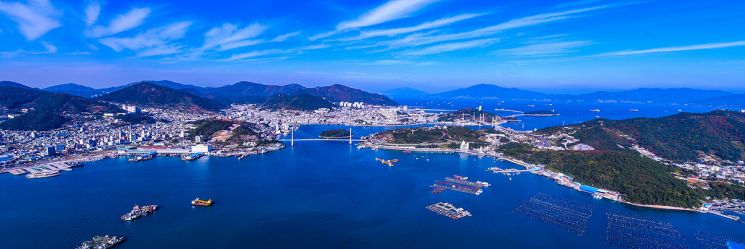
Under the plan to develop Yeosu Port into a marine complex tourism hub coexisting with people, Yeosu City in the 8th elected term is carrying out various projects, including discovering execution tasks for the 100th anniversary of Yeosu Port's opening. We take a look at the new vision for the next 100 years of Yeosu Port contained in the 100-year plan along with its history.
▶The history of Yeosu Port: From a 'fishing port' to a 'marine tourism hub'
During the Imjin War, Yeosu Port was where Admiral Yi Sun-sin was stationed. On April 1, 1923, along with 18 other ports including Geomundo Port and Seongsanpo Port, it was designated as a 'customs-designated port' allowing ship and cargo traffic between Joseon, Taiwan, and Sakhalin, effectively functioning as a trading port. Over the next 100 years, Yeosu Port underwent continuous changes and development, altering its appearance, functions, and roles.
Until Japan's defeat in 1945, Yeosu Port served as a major Japanese port, acting as a transit route for manpower and goods. Rice, cotton, seafood, and minerals were shipped to Japan, while miscellaneous goods, clothing, medicines, and machinery mainly came in. Goods that had previously been imported through Busan began entering directly through Yeosu, attracting merchants nationwide and flourishing as a trading port for Japanese products.
As the port's trade functions became highly active, Yeosu, along with Busan Port, established itself as a major trading port on the southern coast. After liberation and through the Korean War, it served as a port responsible for importing wartime supplies and unloading aid materials after the war.
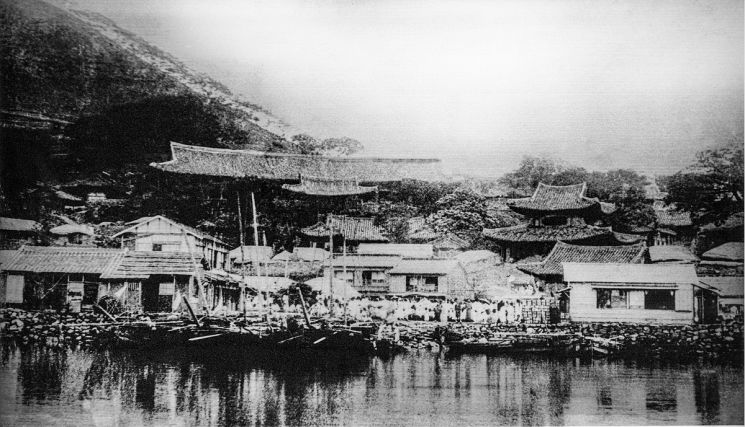
According to the Port Opening Order, Yeosu Port officially opened in 1949 and began to develop in earnest after being designated as a first-class port in 1967. The old town area around Jasan Park in front of Odongdo Island is called the old port, while the area around the 2012 Yeosu World Expo site is divided into the new port and new north port. The old port handles coastal fisheries and passenger transport, while the Expo site new port has developed into an international marine tourism hub.
▶Vision strategy for the next 100 years of Yeosu Port: 'Yeosu Port as a marine complex tourism hub coexisting with people'
In July last year, Yeosu City published a two-volume "100-Year History of Yeosu Port" along with a photo book through a commissioned study. The purpose was to look back on the past 100 years of Yeosu Port and establish a vision for the next 100 years based on that.
The "100-Year History of Yeosu Port" contains comprehensive information about Yeosu Port, including its appearance and role before and after opening, urban spatial changes, changes and operational achievements by era, historical events, and cultural and artistic events.
Notably, the section related to "Yeosu Port's future vision" draws attention.
In this regard, the "100-Year History of Yeosu Port" argues that Yeosu Port should be developed into a "people-centered marine complex tourism hub" through the activation of marine leisure and tourism.
It suggests expanding marine leisure sports content, fostering it as a center of marine transportation to create a marine complex tourism hub that offers various tourism programs to visitors, and encouraging longer stay times for cruise ships to generate direct and substantial economic effects for local residents.
Additionally, it points out the importance of discovering Yeosu's unique history and culture, creating historical and cultural art spaces to develop tourism content, and securing insufficient tourism infrastructure by expanding port waterfront facilities.
Furthermore, although discussions on the post-use of the Expo site have not concluded, it emphasizes that related organizations must work together to renovate the entire Expo site as much as possible through remodeling and establish an international convention center to make the port a place where citizens and local industries can coexist.
In conclusion, as Yeosu Port celebrates its 100th anniversary, it advises setting the future vision as "Yeosu Port as a marine complex tourism hub coexisting with people" and preparing for the future accordingly.
▶100th Anniversary Commemorative Projects for Yeosu Port: Total investment of 214.9 billion KRW to kick off 'full-scale development'
In March 2021, Yeosu City formed a TF team led by the Director of the Fisheries Tourism Bureau to prepare the "Yeosu Port 100th Anniversary Commemorative Project." A citizen promotion committee was formed, and short- and mid-to-long-term tasks were identified, related data collected, symposiums held, booklets published, and a time capsule produced. This project involves a total investment of 214.9 billion KRW, including 206.5 billion KRW in national funds, 1 billion KRW in provincial funds, and 7.4 billion KRW in city funds.
Accordingly, about 20 short-term and linked tasks are underway or nearing completion, including the Yeosu Port Future 100-Year Time Capsule, a documentary capturing the past and future 100 years of Yeosu Port, photo zones, SNS promotional support, a creative musical production, and the 10th anniversary commemorative project of the Yeosu World Expo.
Mid- and long-term projects are also progressing smoothly.
Major projects include the expansion of the cruise-only terminal, activation of cruise tourism, remodeling of Expo facilities, construction of an international exhibition and convention center, expansion of Yeosu Port boundaries, expansion of access roads from the new port to the new north port, construction of connecting roads from Gukdong Port to Yeosu Old Port, and creation of a port waterfront park?nine significant projects in total.
Mayor Jeong Ki-myeong of Yeosu explained, "The growth potential of Yeosu Port lies in being a 'beautiful port' boasting a beautiful coastal landscape and serving as a marine tourism and transportation hub." He added, "This aligns with Yeosu's vision as a 'southern coast hub city, beautiful port Yeosu.'"
He further stated, "We will lay the foundation as a complex marine tourism and leisure hub port by realizing the beauty of 'Korea's Naples' and developing unique content with the distinct charm of Yeosu Port."
On April 1, a "Yeosu Port 100th Anniversary Ceremony" will be held at Yi Sun-sin Square. The ceremony will include a vision declaration segment to foresee the future of Yeosu Port.
Yeosu = Asia Economy Honam Reporting Headquarters Reporter Choi Cheol-hoon hss79@asiae.co.kr
© The Asia Business Daily(www.asiae.co.kr). All rights reserved.
![Clutching a Stolen Dior Bag, Saying "I Hate Being Poor but Real"... The Grotesque Con of a "Human Knockoff" [Slate]](https://cwcontent.asiae.co.kr/asiaresize/183/2026021902243444107_1771435474.jpg)

















