Network Company Image Focus Strategy
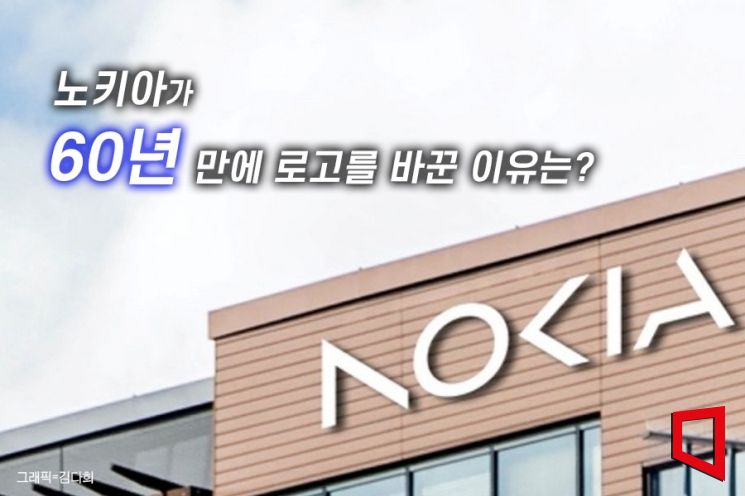
Finland's Nokia, which once held the world's number one market share in mobile phones for over a decade, has changed its company logo for the first time in 60 years. Although it no longer manufactures mobile phones, the public still mistakenly perceives it as a phone company, so the strategy is to showcase the new Nokia as a network company reborn.
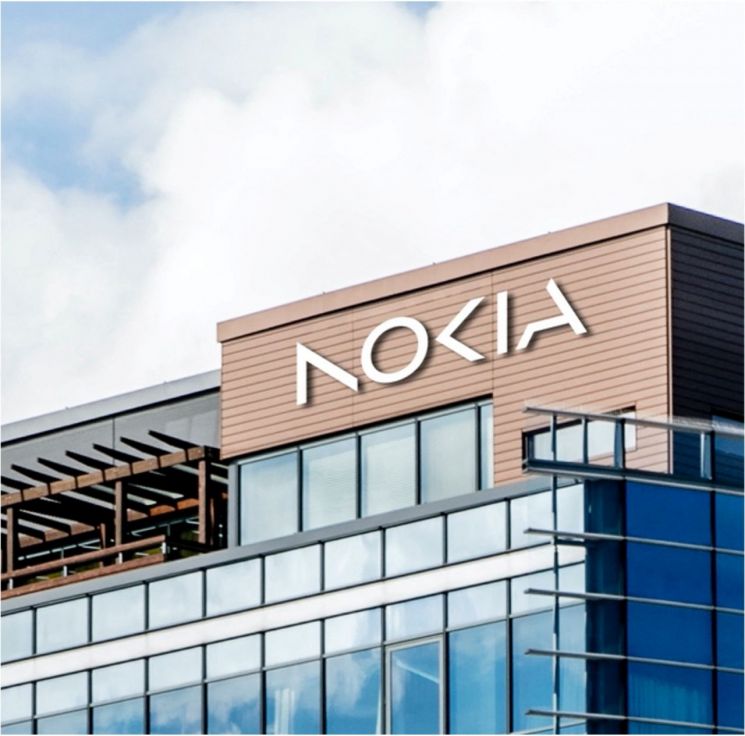
On the 26th (local time), according to Bloomberg and others, Nokia unveiled its new brand logo a day before the opening of the world's largest mobile communications exhibition, Mobile World Congress (MWC) 2023. While the previous Nokia logo was characterized by blue lettering, the new logo features the five alphabets used in Nokia's Romanized spelling in a distinctive form. A foreign media outlet explained, "Nokia plans to change its brand identity with a new logo for the first time in about 60 years."
Pekka Lundmark, Nokia's Chief Executive Officer (CEO), said, "In the minds of the public, we still remain a successful mobile phone brand," but added, "However, that image is no longer related to Nokia." He emphasized, "We want to introduce a new brand focused entirely on networks and industrial digitalization, completely different from the old mobile phone business."
◆ Held the throne for 13 years... Fell behind with changing times
Nokia was the market leader in mobile phones for 13 years from 1998 to 2011. Starting as a paper manufacturing company in 1865, Nokia underwent several business transformations, becoming an electronics equipment company in the 1960s and focusing on telecommunications in the 1990s. Nokia was the first to release a mobile phone without an antenna and the world's first 3G mobile phone.
Nokia thrived until the smartphone market became active. Until 2007, Nokia's global mobile phone market share was around 50%. However, with the advent of smartphones, its share gradually declined. After the iPhone's launch in 2007, Nokia's market share rapidly dropped to the 30% range by 2010. Due to its slow response to market changes, it was quickly overtaken by Samsung Electronics and Apple. Ultimately, in September 2013, Nokia sold its mobile phone business division to Microsoft (MS).
Currently, the Nokia phone brand is used by Finnish company HMD Global, established by former Nokia employees in 2016. In 2016, MS, together with Foxconn, spun off and sold the mobile division to this company.
On the previous day, this company released the unique smartphone 'Nokia G22,' which users can repair themselves. The specifications include a 6.5-inch screen, a 50-megapixel camera, and a 5050mAh battery, making it a standard budget smartphone, but its distinguishing feature is the ability for users to perform self-repairs. Users can replace the screen, battery, charging port, and more on their own.
◆ "Enterprise network sales to reach double-digit share of total"
Nokia is considered one of the world's leading telecommunications equipment and wireless network companies alongside Ericsson and Huawei. Having exited the mobile phone business and with a new logo, Nokia is focusing on increasing its market share as a wireless service provider. Recently, it has been putting effort into selling 5G networks and automation equipment not only to telecom operators but also to the manufacturing sector.
CEO Lundmark said, "Last year, the enterprise segment's revenue growth rate was 21%. The scale was about 2 billion euros (approximately 2.8 trillion KRW), accounting for about 8% of total sales," adding, "We want to raise this to double digits as soon as possible." He also mentioned plans to carry out small-scale acquisitions to achieve this.
A foreign media outlet assessed that Nokia's focus on factory automation and data centers could lead to competition with big tech companies like MS and Amazon. Regarding this, CEO Lundmark said, "There will be various types of relationships," adding, "Sometimes we will be partners, sometimes customers, and sometimes competitors."
Meanwhile, Nokia recently received an investment-grade corporate credit rating of 'BBB-' from the global credit rating agency S&P Global. This marks a return to investment grade after being downgraded to junk bond status in 2012 due to the collapse of its mobile phone business. CEO Lundmark said there is still work to be done to improve operating profit and stated, "We are not yet satisfied with where we are."
© The Asia Business Daily(www.asiae.co.kr). All rights reserved.



















