Nihon Keizai "Settlement Estimated at 39 Billion Won" Report
German Court "Acknowledges Patent Infringement on Umami Production"
Japanese food company Ajinomoto's MSG patent infringement lawsuit against South Korea's CJ CheilJedang is expected to be resolved this month through a settlement between the two companies.
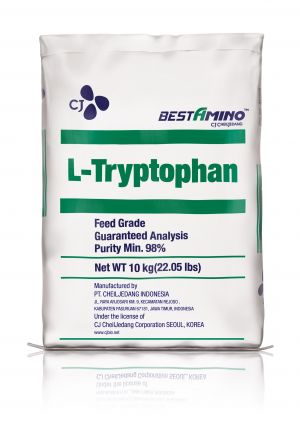
According to a report by Japan's Nihon Keizai Shimbun on the 26th, Ajinomoto filed four lawsuits in Japan, the United States, and Germany in 2016, claiming that CJ CheilJedang and two other CJ Group affiliates infringed on its manufacturing patents for umami seasoning and the manufacturing patent for the amino acid "tryptophan" used in animal feed. Among these, three lawsuits in Japan and the United States were all settled last year through payment agreements, leaving only the German lawsuit pending.
Nihon Keizai Shimbun reported, "Although the two companies did not disclose the amount of the settlement, the total settlement amount for all four cases is estimated to be 4 billion yen (approximately 39 billion KRW)."
The core of the dispute between the two companies was whether CJ CheilJedang copied Ajinomoto's flagship seasoning product of the same name. Ajinomoto claimed that CJ used its patents without permission to replicate a similar umami flavor.
Ajinomoto was created in 1908 by Professor Ikeda Kikunae of the University of Tokyo's Department of Chemistry. At that time, Professor Ikeda isolated a substance called "glutamate" from kombu seaweed, which produced a new taste, and developed monosodium glutamate (MSG), a powder that adds umami flavor to food. Later, Suzuki Pharmaceutical partnered with Professor Ikeda to sell MSG under the brand name "Ajinomoto (味の素, ajinomoto, meaning 'essence of taste')," achieving great success, and in 1946, the company itself changed its name to Ajinomoto.
In January 2020, a German court ruled that CJ had infringed on Ajinomoto's microbial manufacturing technology for monosodium glutamate (MSG) without authorization. CJ refined MSG and also sold it as fertilizer, but the German court's investigation of the genetic base sequence found DNA identical to the microbial DNA used by Ajinomoto in the manufacturing process. In other words, the court found that the MSG products of both companies were similar not only in taste but also in manufacturing methods.
Although Ajinomoto's MSG was once embroiled in controversy over its safety, it has remained a leading seasoning product worldwide for over 100 years. It is known that the late Lee Byung-chul, founder of Samsung Group, benchmarked Ajinomoto when establishing CheilJedang in 1953, and the late Lim Dae-hong, founder of the Daesang Group, traveled to Japan in 1955 to learn the manufacturing method of monosodium glutamate and subsequently created Miwon, the first domestically produced seasoning, in 1956.
© The Asia Business Daily(www.asiae.co.kr). All rights reserved.
![Clutching a Stolen Dior Bag, Saying "I Hate Being Poor but Real"... The Grotesque Con of a "Human Knockoff" [Slate]](https://cwcontent.asiae.co.kr/asiaresize/183/2026021902243444107_1771435474.jpg)










