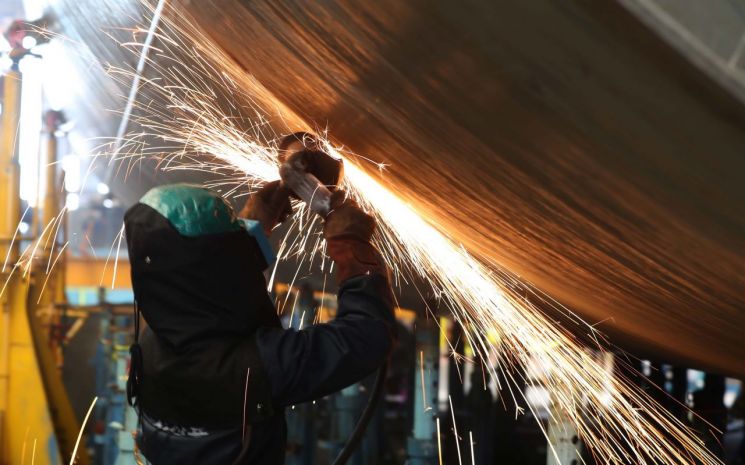
The government has decided to provide 81.9 billion KRW this year to resolve labor shortages in regional industries such as shipbuilding, semiconductors, root industries, and agriculture.
The Ministry of Employment and Labor announced on the 26th that it reviewed the regional PLUS projects and employment stability preemptive response package projects applied for by 17 metropolitan local governments through a private expert committee and finalized the support budget.
This project is a public contest where local governments propose various job policies tailored to regional characteristics, and the Ministry of Employment selects them through evaluation. Local governments only need to bear 10-30% of the local expenses depending on their fiscal autonomy.
The Ministry of Employment and Labor decided to support a total of 81.9 billion KRW for regional and industry-specific job projects, including 34.8 billion KRW for the newly launched regional PLUS projects this year and 47.1 billion KRW for the employment stability preemptive response package projects promoted since 2020.
First, the government newly established the regional PLUS 'job project' to preferentially support industry-specific job projects designed by local governments in shipbuilding, semiconductors, root industries, agriculture, and others.
Accordingly, support was confirmed as 14.8 billion KRW for shipbuilding, 6.05 billion KRW for semiconductors, 6 billion KRW for root industries, 5.5 billion KRW for agriculture, and 2.45 billion KRW for others.
For national key industries such as shipbuilding, where labor shortages have recently intensified, the central government's job projects will be specialized and implemented according to the characteristics of the shipbuilding industry.
Considering the industry's characteristics such as high entry age, short tenure, and frequent movement among in-house partner companies, the Ministry plans to increase participation in the Tomorrow Filling Deduction program by removing age restrictions for support and reducing the tenure requirement for deduction payments to expand support.
Additionally, for small and medium-sized enterprises in the semiconductor industry suffering from chronic labor shortages due to lack of skills and low wages, training allowances, training expenses, and training infrastructure will be additionally supported, and the support age and minimum wage requirements for the Youth Job Leap Incentive will be raised.
Reflecting the chronic labor shortage in root industries caused by low wages, poor working conditions leading to youth employment avoidance and aging of current workers, the support age and minimum wage requirements for the middle-aged suitable job employment incentive have been expanded, and the incentive level increased.
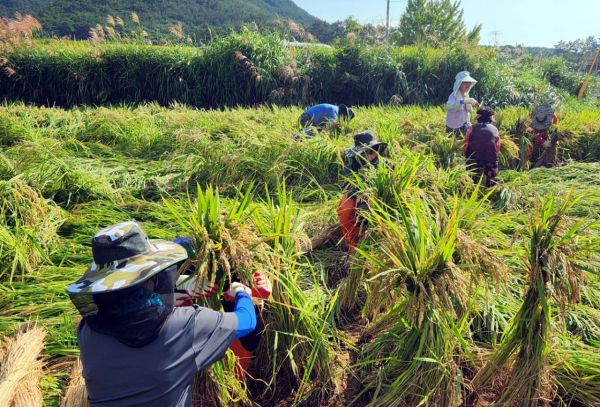
To resolve the rural labor shortage, which continues to worsen due to population decline and aging, services for job seekers such as providing job information connecting urban job seekers with rural areas, employment placement and labor contract support, and strengthening safety management will be expanded.
Along with this, the government will also expand support for job projects led by metropolitan-basic local government consortiums in 10 regions including Gyeongbuk, Ulsan, and Busan, where employment crises are expected, to proactively prevent employment crises.
To discover new growth industries and promote industrial transition and employment stability within regions, 4 billion to 14 billion KRW annually will be supported depending on the consortium's project content.
Kim Seong-ho, Director of Employment Policy at the Ministry of Employment and Labor, said, "The regional and industry-customized job creation support project is a project where local governments, who know the regional circumstances best, directly design job projects," adding, "It will greatly help alleviate the severe labor shortages in major industries and overcome regional job crises."
© The Asia Business Daily(www.asiae.co.kr). All rights reserved.


















