Factors Influencing Price Increases and Survey on the Liquor Industry
National Tax Service Also Urges the Industry to "Refrain from Raising Prices"
As the price of soju, a representative "common people's liquor," shows signs of rising to 6,000 won, the government has effectively stepped in to halt the increase. The government has begun investigating the factors behind the price hike and intends to examine the overall structure of the liquor industry.
On the 26th, Yonhap News quoted government officials reporting that the Ministry of Economy and Finance and the National Tax Service have launched an investigation into the liquor industry's moves to raise soju prices.
The government plans to review not only the price increase trends in the liquor industry, including soju prices, but also, if necessary, the profit margins of liquor companies and the competitive landscape.
Choo Kyung-ho, Deputy Prime Minister and Minister of Economy and Finance, the economic control tower, reportedly ordered a response plan immediately after receiving a report on the soju price increase movement.
Currently, the Ministry of Economy and Finance is examining the rising costs of tapioca, the raw material for soju, energy required for the production process, and bottle price increases. They are first assessing whether these factors justify a soju price hike.
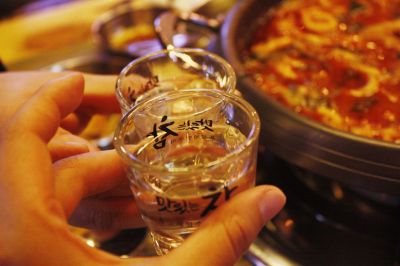
They are also reviewing the profit situation of liquor companies. This is analyzed as an effort to verify whether the situation is similar to that of commercial banks, which complain about difficult business conditions while posting record-high net profits and holding bonus celebrations.
The government is taking the position that it will also examine whether the monopolistic or oligopolistic structure formed during the production, distribution, and sales processes of liquor is causing the price increase. If problems are found during this process, the government intends to encourage more companies to enter the market to foster competition.
Meanwhile, the National Tax Service is reportedly already persuading the liquor industry to refrain from raising prices through meetings. It also plans to hear voices from companies in various fields such as liquor production, distribution, and sales. While this aims to strengthen communication with the industry, it is analyzed that this has realistically put considerable pressure on liquor companies.
The Fair Trade Commission has also set a policy to focus on investigating collusive behavior in the livelihood sector this year. A Fair Trade Commission official stated, "Even if it is a follow-up price increase, if it was not decided individually but agreed upon to raise prices together, it can be problematic."
A government official said, "In a market economy system, the government cannot intervene in the prices of goods, but if the market structure is vulnerable to price increases, there is room to promote competition," adding, "Considering the difficult economic situation, we hope a sentiment to refrain from price hikes will be formed."
© The Asia Business Daily(www.asiae.co.kr). All rights reserved.
![Clutching a Stolen Dior Bag, Saying "I Hate Being Poor but Real"... The Grotesque Con of a "Human Knockoff" [Slate]](https://cwcontent.asiae.co.kr/asiaresize/183/2026021902243444107_1771435474.jpg)
















