In the process of a redevelopment project, if the project promotion committee entered into a construction contract on the condition that the construction company would lend funds necessary for the project implementation, the Supreme Court has ruled that even if the construction contract is invalid, the debt relationship does not become invalid.
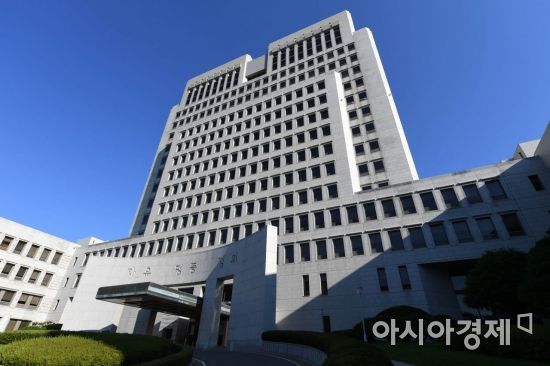
The Supreme Court's First Division (Presiding Justice Kim Seon-su) announced on the 26th that it overturned the lower court ruling which dismissed Hyundai Construction's loan lawsuit against B and 10 other landowners in the redevelopment project area of Gwanak-gu, Seoul, and remanded the case to the Seoul High Court.
The redevelopment promotion committee selected Hyundai Construction as the contractor in 2006 and signed a construction contract, attaching the condition that Hyundai Construction would lend funds necessary for the project implementation upon the committee's request. Accordingly, Hyundai Construction lent a total of over 3.4 billion won to the committee sequentially from 2006 to 2010, and B and others provided joint guarantees for this debt.
The problem arose when other landowners within the redevelopment zone filed a lawsuit against the selection of the contractor. The court ruled that the promotion committee's resolution to select Hyundai Construction as the contractor was invalid, and as a result, the redevelopment project has not proceeded to date.
In response, Hyundai Construction filed a lawsuit against the promotion committee and B and others, demanding repayment of over 2.5 billion won of the loan.
The first trial ruled in favor of Hyundai Construction, ordering the promotion committee to repay approximately 2.524 billion won. However, the second trial sided with the promotion committee, stating that "since the loan agreement (monetary loan contract) is not unrelated to the construction contract, and the resolution to select the contractor was ruled invalid, the loan agreement should also be considered invalid."
However, the Supreme Court judged that even if the construction contract and the loan agreement are recognized as a single contractual relationship, the loan agreement should still be considered valid.
The court stated, "The lower court failed to properly examine whether the redevelopment promotion committee intended to enter into and maintain the loan agreement even if the construction contract became invalid, and incorrectly judged that the loan agreement was also invalid," adding, "there was an error in the application of the law regarding partial invalidity."
© The Asia Business Daily(www.asiae.co.kr). All rights reserved.

















