Test Results Show Legionella Bacteria 3700 Times Higher
Owner Says "Thought It Would Be Okay by Circulating Hot Water"
A traditional inn (ryokan) in Fukuoka Prefecture, Japan, was found to have changed its hot spring water only twice in one year.
On the 24th, local media such as NHK and TBS reported, "It has been revealed that the ryokan 'Daimaru Villa' located at Futsukaichi Onsen in Chikushino City, Fukuoka Prefecture, changed the water in its hot spring baths only twice a year."
Daimaru Villa is a historic ryokan that has been in operation for 158 years since 1865. It is known to attract many overseas tourists, including Koreans.
However, in August, it was revealed that a person who contracted Legionnaires' disease had visited Daimaru Villa. Subsequently, the health center conducted an inspection and detected Legionella bacteria in the Daimaru Villa hot spring at twice the standard level.
Legionnaires' disease is an acute respiratory illness caused by infection with Legionella bacteria. The bacteria, which mainly exist in contaminated water from air conditioners, showers, and faucets, infect humans through droplets.
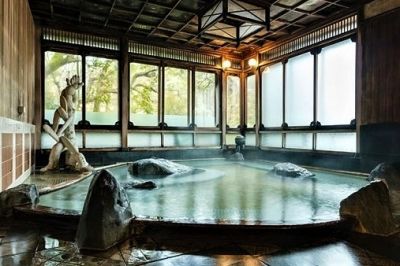
Investigations revealed that Daimaru Villa did not regularly replace the water but only circulated and filtered part of the bath water for reuse. Water was replaced only twice a year during closures, and chlorine disinfection was infrequent. According to Fukuoka Prefecture regulations, hot spring accommodations must replace all bath water at least once a week.
At the time, Daimaru Villa explained, "We are properly managing the hot spring water," but during an unannounced reinspection in November, Legionella bacteria were detected at levels up to 3,700 times the standard, exposing poor management.
The ryokan owner explained, "We knew the regulations, but since the system always circulates hot water directly from the source, we thought it was fine," adding, "We are now complying with the rules."
Meanwhile, Fukuoka Prefecture authorities believe that Daimaru Villa submitted false reports regarding hygiene management and are reportedly considering penalties such as fines following correction orders.
© The Asia Business Daily(www.asiae.co.kr). All rights reserved.

















