Unmarried Men and Women Want 1.96 Children but "Cannot Give Birth Due to Real-Life Difficulties"
Government Admits "Spent 280 Trillion Won, but Policy Effects Are Limited"
Need to Consider Measures That Create Substantial Change Rather Than Campaign-Style Policies
"We must break the 'Dokbak childcare' through fathers' participation in parenting."
This is the fundamental solution to low birth rates proposed by Seulgi Choi, a demography expert and professor at the Graduate School of International Studies, Korea Development Institute (KDI).
At the '1st Future and Population Strategy Forum' recently hosted by the Ministry of Health and Welfare, Professor Choi pointed out the problems caused by 'Dokbak childcare,' where only mothers take on childcare responsibilities, stating, "Since workplaces and homes have different goals, conflicts over overlapping roles are inevitable." She emphasized that moving away from a women-centered discussion on childcare responsibilities and making it an issue for both men and women is essential to fundamentally solving the low birth rate problem.
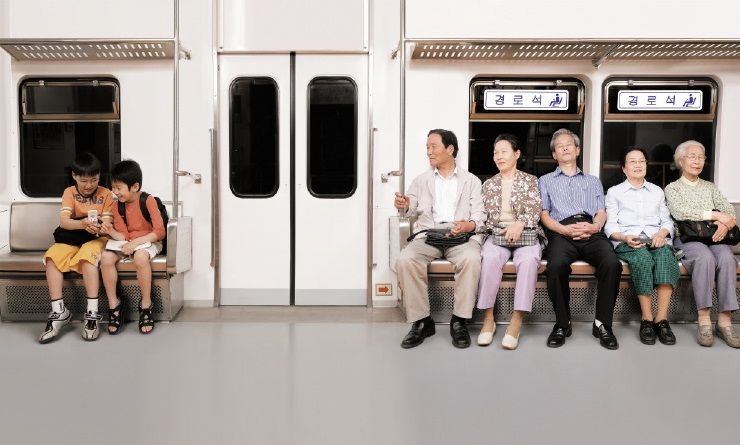 The appearance of a public service advertisement produced by the Public Service Advertisement Council to encourage childbirth. [Photo by Public Service Advertisement Council]
Total fertility rate of 0.78, less than half of the OECD average of 1.59
According to Statistics Korea's '2022 Birth and Death Statistics' released on the 26th, there were 249,000 births last year, a decrease of 11,500 from the previous year. This is the first time since the establishment of the government that the annual number of births fell below 250,000. Last year's total fertility rate dropped to 0.78, breaking below the 0.8 level. This figure is less than half of the average total fertility rate (1.59) among OECD member countries.
On the other hand, the number of deaths reached 372,800, resulting in a natural population decrease of 123,800 last year, the largest ever recorded. If this trend continues, the working-age population, currently about 35 million, will nearly halve to 17.37 million by 2070. By the 22nd century, the gloomy prediction of 'national extinction' is becoming an increasingly realistic concern.
Despite this situation, Professor Choi noted, "It is important to pay attention to the fact that the number of children expected by unmarried men and women has not decreased, unlike the total fertility rate." Based on the 'Survey on Family and Marriage Values of Koreans' conducted in June last year with 834 unmarried men and women aged 24 to 49 (458 men and 376 women), and in-depth group interviews (FGI) conducted at the end of last year with groups including unmarried men and women, married men, married women with preschool children, and married women with school-age children, she analyzed that the reasons for avoiding childbirth are 'anxiety about the future,' 'desire to work,' and 'difficulties in childcare.'
Unmarried men and women want 1.96 children... "Cannot have as many children as desired due to reality"
Although the total fertility rate has fallen, the 'ideal number of children' according to unmarried survey respondents was 1.96, much higher than the total fertility rate. She said, "Due to practical difficulties, people are not having as many children as they want," emphasizing, "The low birth rate problem should be understood as the cry of the younger generation."
Accordingly, experts diagnose that since the recent low birth rate reflects the difficult reality of the younger generation, persuading them to marry or have children may have the opposite effect.
 Sleeping baby. [Photo by Getty Images Bank]
Researcher Min-sang Yoo of the Korea Youth Policy Institute said, "This is a macro-level change not only among the current young generation but also among adolescents," and suggested, "Rather than trying to change individual perceptions through low birth rate policies, we should shift to self-reliance support policies that allow individuals to choose and realize their life goals and stabilize."
Government admits, "Despite pouring in 280 trillion won, policy effects are limited"
The government has spent up to 280 trillion won over the past 15 years to increase the birth rate. According to data recently released by the Presidential Committee on Ageing Society and Population Policy, starting with 2.1445 trillion won in 2006, a total of 19.8926 trillion won was invested in responding to low birth rates and aging during the first basic plan period (2006?2010). During the second basic plan period (2011?2015), 60.5789 trillion won was spent, and from 2016 to 2020, the third plan period, 152.8658 trillion won was executed, with 46.6846 trillion won spent in 2021.
Despite this enormous budget, the effects were minimal. The government also acknowledges this. At the 'Population Structure Changes and Response Measures' meeting held in December last year, the Committee on Ageing Society and Population Policy admitted, "Despite the massive budget input of 280 trillion won, the effects of population policies so far have been limited."
In response, Professor Choi pointed out the limitations of 'campaign-style policies.' She said, "Simply running campaigns telling young women to have children despite difficulties because the birth rate is low is neglecting the government's role and may even cause resentment among the younger generation," emphasizing, "Rather than such campaign-style policies, there needs to be serious consideration on how to create practical changes."
© The Asia Business Daily(www.asiae.co.kr). All rights reserved.

















