Cold Snap, Southern Warm Air and Northern Cold Air Clash as Cold Air Moves South
KMA "Warm Air Influx, Temperatures Expected to Be Above Average"
The cold snap that teases spring arrives this weekend. When will spring come? According to the calendar, March marks the beginning of spring. It is said that from next Wednesday, it will be the actual spring. Meteorological experts predict that from next week, without severe cold, temperatures will be higher than average, and genuine spring weather will continue.
In March, warm air from the south and cold air from the north compete for dominance. The warm air pushes the cold northern air further north. As the sun's altitude gradually rises, the energy from the sun increases, making the warm southern air dominant, but sometimes the cold air remaining near Siberia descends. At that time, morning temperatures drop below freezing, which is called 'Kkotsemchuwi' (cold snap teasing spring).
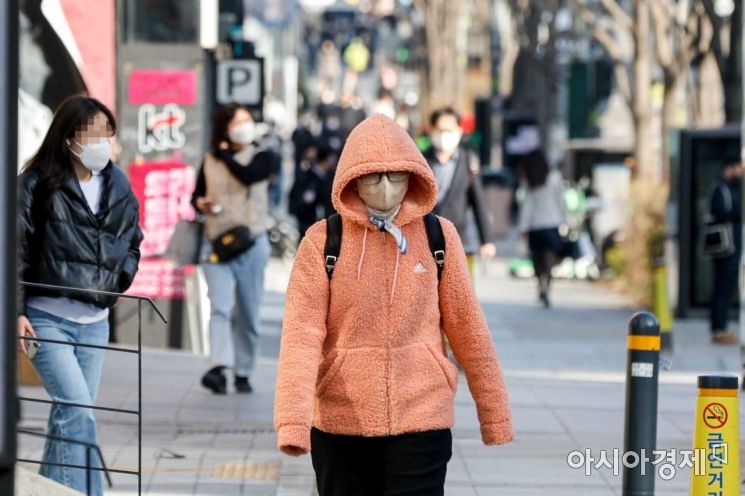 The "Kkotsem Chuwi" cold snap is intensifying. Weather experts predict that one or two more bouts of Kkotsem Chuwi will occur in the near future. Photo by Jinhyung Kang aymsdream@
Kkotsemchuwi is a phenomenon where the weather temporarily turns cold again just as early spring passes, it warms up, and flowers bloom. The name comes from the idea that the cold snap is jealous of the blooming spring flowers. Meteorological experts refer to it as a 'teuguil' (特異日), meaning a specific day when unusual weather conditions frequently occur by chance.
Seungbae Kim, head of the Korea Natural Disaster Association (former spokesperson of the Korea Meteorological Administration), warned on the 25th, "When warm air begins to dominate and cold air descends from the north creating conditions for snowfall, heavy snow can fall in early March." He added, "On March 5, 2004, 49 cm of heavy snow fell in Daejeon, paralyzing highways. At that time, Seoul received 18.5 cm," cautioning that damage can occur due to Kkotsemchuwi.
Although it frequently appears from February to early April, Kkotsemchuwi can also occur in mid to late April and early May. In severe cases, abnormal low temperatures and cold damage can occur. In the springs of 2010 and 2013, unprecedented severe cold in March and April caused widespread cold damage nationwide.
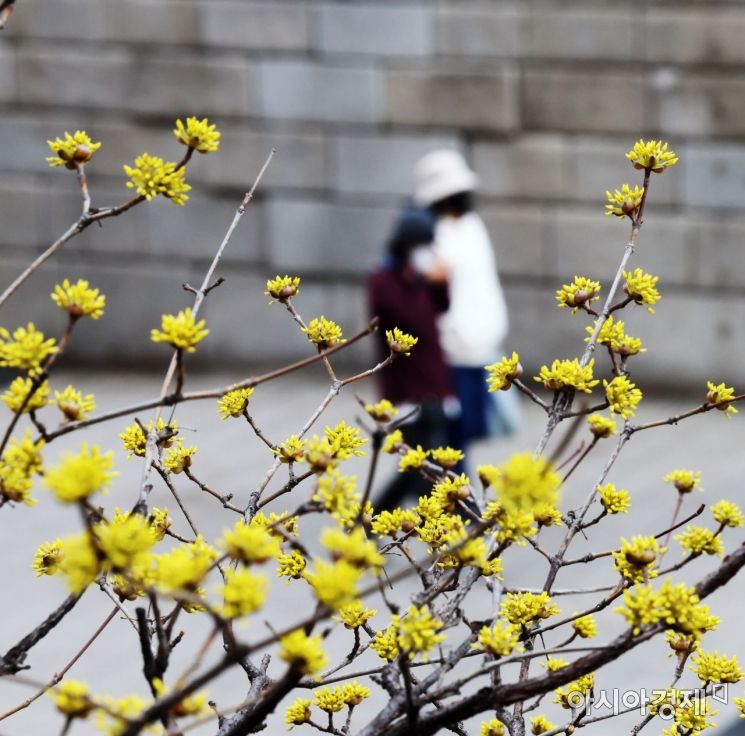 Seoul citizens walking along Cheonggyecheon Stream lined with yellow Sansuyu flowers. Photo by Yoon Dong-joo doso7@
March 2021 saw an unusual heat wave with no Kkotsemchuwi, but a late cold snap hit in mid-April and early May, causing people to shiver from the cold. Last year, there were one or two Kkotsemchuwi events in March, but most days were warm, and there was no Kkotsemchuwi in April or May.
Head Kim forecasted, "This year, temporary cold snaps will also appear," adding, "One or two more Kkotsemchuwi events may occur before temperatures rise significantly in April."
A Korea Meteorological Administration official also forecasted, "Warm air will flow in from the west due to a high-pressure system widely established over inland China, making temperatures higher than average. However, there will be times when cold air near Lake Baikal temporarily affects the region."
© The Asia Business Daily(www.asiae.co.kr). All rights reserved.


















