[Asia Economy New York=Special Correspondent Joselgina] As China's ambitions targeting Taiwan become more overt, the United States has decided to significantly increase the number of U.S. troops stationed in Taiwan to more than four times the current level. Voices within the U.S. Congress are also calling for urgent arming of Taiwan to prevent a Chinese invasion.
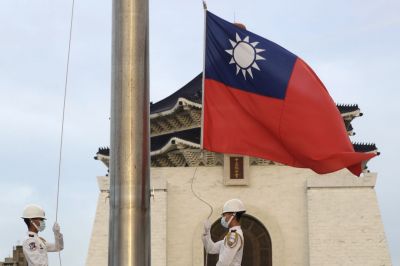
◆"U.S. to Expand Troops in Taiwan to 200"
The Wall Street Journal (WSJ) reported on the 23rd (local time), citing U.S. officials, that plans are underway to deploy 100 to 200 U.S. troops to Taiwan in the coming months. This is a significant increase compared to 30 troops a year ago. WSJ stated, "The U.S. will be deploying the largest number of troops to Taiwan in decades."
These troops will be involved in training programs for the Taiwanese military. A source revealed that the Michigan National Guard is conducting annual exercises with several countries at Camp Grayling, including training for U.S. military units assigned to Taiwan. The additional deployed units will receive training on U.S. military weapons systems as well as military maneuver training to protect themselves in the event of a Chinese attack.
This move comes amid the recent overt ambitions of China targeting Taiwan and the deterioration of U.S.-China relations. Since the inauguration of pro-independence Taiwanese President Tsai Ing-wen in 2016, China has intensified military pressure by conducting large-scale live-fire exercises involving fighter jets and landing ships in the nearby strait. In August last year, China conducted military blockade exercises around Taiwan in response to then U.S. House Speaker Nancy Pelosi's visit to Taiwan. However, U.S. officials confirmed that the military buildup had been planned well before the recent shootdown of a Chinese reconnaissance balloon, which sharply escalated U.S.-China tensions.
Until now, the U.S. has maintained a policy of "strategic ambiguity," not clearly stating whether it would militarily intervene if Taiwan were invaded by China. However, as China's ambitions have become more overt, U.S. President Joe Biden has repeatedly stated that "the United States will defend Taiwan." WSJ reported, "Taiwan relations have long been a powder keg in U.S.-China relations," noting that China claims the U.S. has violated the 'One China' principle and has declared it will take control by force if necessary. A representative example is President Xi Jinping's announcement at the 20th National Congress of the Communist Party last October that 'Taiwan reunification will definitely be realized.'
The U.S. Indo-Pacific Command, Department of Defense, and the White House did not respond to WSJ's inquiries regarding the troop increase. However, Department of Defense spokesperson Marty Minners emphasized, "U.S. support and defense relations with Taiwan are aligned with the threats posed by China," adding, "Our commitment to Taiwan is firm and contributes to maintaining stability in the Taiwan Strait and the region."
During the Cold War, the U.S. stationed a large number of troops in Taiwan. After establishing diplomatic relations with China in 1979 and severing official diplomatic ties with Taiwan, these troops were withdrawn. According to the Defense Manpower Data Center, which compiles quarterly reports on U.S. troops stationed worldwide, the number of U.S. troops in Taiwan decreased from 30 in spring 2022 to 26 in summer and 23 in fall of the same year.
◆U.S. Congress: "Taiwan Must Be Fully Armed to Prevent Chinese Invasion"
Currently, U.S. military intelligence authorities assess that China will be prepared to invade Taiwan by 2027, marking the 100th anniversary of the founding of the People's Liberation Army and the start of President Xi Jinping's fourth term.
The Congressional Research Service (CRS) recently cited remarks by William Burns, Director of the U.S. Central Intelligence Agency (CIA), stating, "As the Chinese military modernizes, the military balance across the Taiwan Strait has shifted in China's favor," adding, "Taiwan's military capabilities are high, but its budget is less than one-tenth of China's, and it faces issues with equipment and readiness." The report also mentioned calls within the U.S. to abolish the policy of 'strategic ambiguity.'
Former U.S. Ambassador to South Korea Harry Harris also testified at a recent public hearing of the U.S. House Armed Services Committee, arguing that the U.S. should abandon strategic ambiguity in its Taiwan policy and clearly state its intention to protect Taiwan from a Chinese invasion. Having served as commander of the U.S. Indo-Pacific Command, he said there is a high likelihood that China will attempt to unify Taiwan by force, and "strategic clarity means making it clear that the U.S. will defend Taiwan if China attacks to unify Taiwan by force."
Voices within Congress are also calling for expanded arms support to Taiwan and emphasizing the urgency of Taiwan's defense capabilities. Mike Gallagher, chairman of the U.S. House Select Committee on the Strategic Competition between the United States and the Chinese Communist Party, who recently completed a four-day visit to Taiwan, told The Washington Post (WP), "The best way to prevent a Taiwan invasion and a third world war is to provide Taiwan with real military power."
He said, "All the Taiwanese officials I met during the visit mentioned that Russia's invasion of Ukraine was a wake-up call," and "Delays in U.S. arms deliveries to Taiwan were a major concern shared by all key Taiwanese leaders. This is unacceptable." According to WP, the scale of U.S. arms deliveries to Taiwan amounts to $19 billion (approximately 24 trillion KRW).
Chairman Gallagher explained that he plans to use the Strategic Competition Committee to emphasize the "urgency of arming Taiwan." He added, "We must mobilize all efforts to fully arm Taiwan," and insisted that Taiwan should be prioritized in receiving Harpoon missiles.
The Republican leadership is currently urging President Biden to expand arms support to Taiwan in the budget proposal. Taiwan is also strengthening its defense capabilities by increasing its defense budget by 14%, raising it to 2.4% of its gross domestic product (GDP), Gallagher added. He also revealed plans to hold a special committee hearing in Taiwan this summer.
Meanwhile, Hu Xijin, former editor-in-chief of the Global Times and a spokesperson for Chinese authorities, posted on Chinese social media platform Weibo the day before, stating, "China desires peaceful reunification but does not rule out the use of force." He argued, "The greatest risk in resolving the Taiwan issue by force is U.S. military intervention," and insisted, "Before the Taiwan liberation war, China must possess more than 1,000 nuclear warheads to establish strong nuclear deterrence." He added that such Chinese deterrence would weaken the U.S. willingness to intervene in a Taiwan conflict.
© The Asia Business Daily(www.asiae.co.kr). All rights reserved.
![User Who Sold Erroneously Deposited Bitcoins to Repay Debt and Fund Entertainment... What Did the Supreme Court Decide in 2021? [Legal Issue Check]](https://cwcontent.asiae.co.kr/asiaresize/183/2026020910431234020_1770601391.png)
















