Source says "Repatriation planned amid concerns over successive defections"
North Korea seals border for 3 years... Will repatriation unlock it?
Recent resumption of train and truck trade routes in North Korea-China border area
[Asia Economy Reporter Jang Hee-jun] News has emerged that North Korea is preparing to repatriate a large number of workers it had dispatched to China back to their home country. Analysts suggest this is due to growing dissatisfaction caused by difficulties living in China following the spread of COVID-19 and prolonged controls, raising concerns about a chain of defections. Attention is focused on whether North Korea, which has maintained lockdown orders for over three years, will ease restrictions following the repatriation of workers.
On the 23rd, a source familiar with North Korean affairs said, "The North Korean authorities have begun preparations to call back workers staying in China," adding, "Repatriation is expected to take place around the time the Chinese Two Sessions (Lianghui) conclude." The Two Sessions are China's largest annual political events held in March, collectively referring to the National People's Congress and the Chinese People's Political Consultative Conference. They begin on April 4.
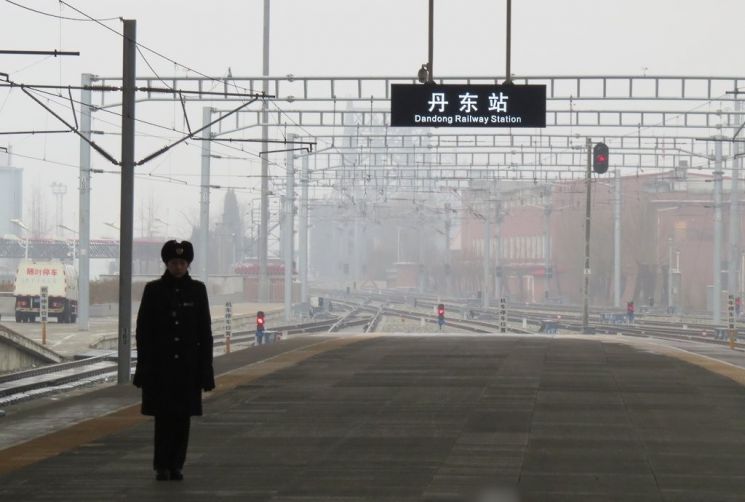 Platform at Dandong Station, Liaoning Province, China, near the North Korea-China border [Image source=Yonhap News]
The source explained that North Korea typically rotates overseas workers dispatched for foreign currency earnings every three years, but since the COVID-19 pandemic led to border closures, some workers have been stuck for as long as 6 to 10 years. During this period, they have lived under strict surveillance by the State Security Department, and worsening local conditions due to COVID-19 have deepened their hardships.
Furthermore, those who bribed to be dispatched overseas have seen their debts increase with interest during the extended periods of inability to return, leading some to attempt escape or even extreme measures. There have also been frequent cases of extortion of remittance money meant to be sent home. Particularly during the dispatch period, communication with family left behind in North Korea was blocked, which increased dissatisfaction.
Because of this, in addition to recently reported mass defections, small-scale escapes have become more frequent, and the authorities, fearing a chain of defections, are trying to recall existing personnel and replace them with new workers. Previously, in February last year, over 20 female garment workers and their manager dispatched to a clothing factory in Shanghai disappeared collectively. The North Korean consulate and Chinese public security reported them as 'missing,' but it was suspected to be a planned defection. In the winter of the same year, construction workers fearing conscription into war reconstruction projects in Russia also defected en masse.
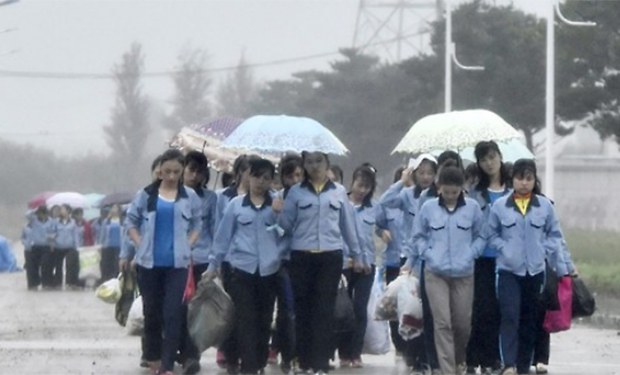 North Korean workers commuting to work in the Economic Development Zone of Duman City, Yanbian Korean Autonomous Prefecture, Jilin Province, China
 [Image source=Yonhap News]
North Korea locked down its borders starting January 2020, immediately after the outbreak of COVID-19 in China. Since last winter, it has partially resumed train operations with China, and recently, freight transport by trucks has also begun. Notably, truck traffic between Rason and Hunchun, a major land trade route between North Korea and China, has resumed, and customs facilities in Hunchun, northeastern China, have been reactivated, leading to expectations that North Korea will actively expand trade.
The source said, "The exact situation of COVID-19 spread within North Korea is unclear, but repatriating workers should not be a significant burden unless they are entering Pyongyang," adding, "China also needs the cheap labor provided by North Korea, so it is understood that they are actively coordinating an appropriate timing. There are also reports that those who had been caught by public security while attempting to escape will be repatriated together."
© The Asia Business Daily(www.asiae.co.kr). All rights reserved.


















