Hi·Saluscare Publishes '2022 Mental Health Trend Report'
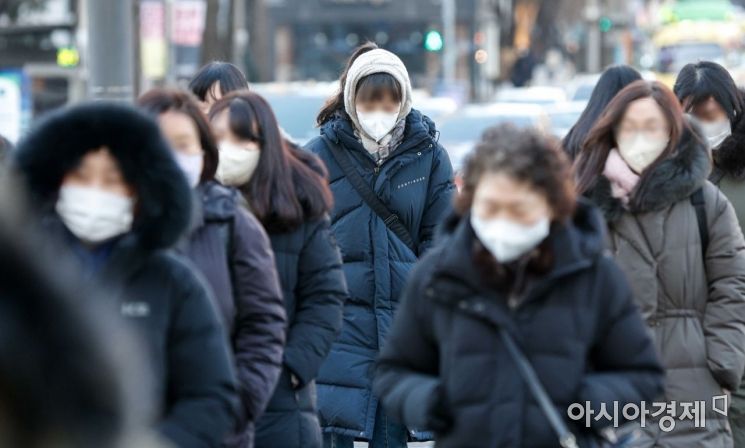 Office workers are heading to work wearing thick coats at the Sejongno intersection in Jongno-gu, Seoul. Photo by Jinhyung Kang aymsdream@
[Asia Economy Reporter Chunhee Lee] The MZ generation (Millennials + Generation Z, born between 1980 and 2006) experiences stress from excessive workload at the workplace, whereas Generation X (born in the 1970s) suffers job stress mainly from conflicts with colleagues and seniors or juniors. Additionally, it was found that women in their 20s and 30s have high job stress and mental illness measurement indicators, highlighting the need for proactive mental health management.
Digital Therapeutics (DTx) company Hi and Saluscare announced on the 22nd that they published the '2022 Mental Health Trend Report,' which analyzed 'Mind Checkup' data collected from examinees at domestic health screening institutions containing these findings.
Since February last year, Hi has been providing the mental health examination service called Mind Checkup to examinees at domestic screening institutions. Mind Checkup assesses job stress and six mental illnesses. The mental illness measurement items include depression, anxiety, adjustment stress, sleep problems, post-traumatic stress, and suicidal and self-harm incidents, which are commonly experienced by modern office workers.
The 2022 Mental Health Trend Report was created using 117,878 data points collected through Mind Checkup, enabling an understanding of mental health status based on data by gender, age, and occupation. Healthcare specialist company Saluscare collaborated on data analysis and report preparation.
Data analysis showed that women in their 20s and 30s require active mental health management. Job stress peaks in the 30s and 40s, with women scoring higher total stress than men. In mental illness measurement indicators, women in their 20s and 30s showed somewhat or significantly higher levels than men across all indicators, including depression, anxiety, adjustment stress, sleep problems, post-traumatic stress, and suicidal and self-harm incidents.
Job stress analysis revealed differences between Generation X and the MZ generation. The MZ generation experiences stress mainly due to excessive workload, while Generation X's primary issue is conflicts with colleagues and seniors or juniors. Overall, job stress peaked in the 30s and 40s. Excessive workload stress decreases after the 40s, but stress from relationship conflicts continues to increase with age.
Stress indices by 24 occupations according to the Korean Employment Classification were also analyzed. Regarding stress indices related to job authority and autonomy, the top five occupations were security and cleaning (71.4%), driving and transportation (69.1%), food processing (63.7%), legal and police work (60.2%), and agriculture, forestry, and fisheries (55.3%). Stress indices related to employment and job instability were highest in printing and publishing (61.3%), personal care, accommodation, and travel (59.5%), sales (57.3%), culture and arts (55.9%), and textiles and clothing (54.1%). Depression was also highest in the printing and publishing occupation (62.2%), attributed to the reduction in printed materials due to social distancing from COVID-19, increased leisure activities at home, and decreased use of movie theaters and theaters.
The top five occupations with the highest proportion of workers exhibiting suicidal thoughts were culture, arts, design, and broadcasting (7.4%), textiles and clothing (6.6%), food service (6.5%), health and medical care (5.3%), and management, accounting, and office work (5.1%). The top two occupations, culture, arts and textiles and clothing, cited work stress from customer interactions, low wages, career management, and miscellaneous tasks as reasons, while the other occupations mainly attributed it to deteriorated work environments due to COVID-19.
Kim Jin-woo, CEO of Hi, who published this report, said, "By analyzing the severity of workers' mental health issues in detail, we can identify the characteristics of social groups facing difficulties and use this as a foundation to understand and prevent intergenerational conflicts." He advised, "Stress relief solutions tailored to job environments seem necessary, and especially in printing, publishing, culture, arts, design, and broadcasting sectors, companies need to identify difficulties and areas requiring improvement."
This report will be posted on Hi's official website.
© The Asia Business Daily(www.asiae.co.kr). All rights reserved.
![Clutching a Stolen Dior Bag, Saying "I Hate Being Poor but Real"... The Grotesque Con of a "Human Knockoff" [Slate]](https://cwcontent.asiae.co.kr/asiaresize/183/2026021902243444107_1771435474.jpg)

















