[Asia Economy Reporter Jang Hyowon] Neurophit, a specialized company in AI solutions for brain disease imaging, announced on the 21st that it participated in the 5th International Brain Stimulation Conference and presented the current status of clinical research on personalized tDCS (transcranial direct current stimulation) using brain imaging analysis technology.
At this conference, Neurophit held a solo workshop session and gave a presentation on the topic of "Personalized tDCS using MRI-driven Simulation Approach."
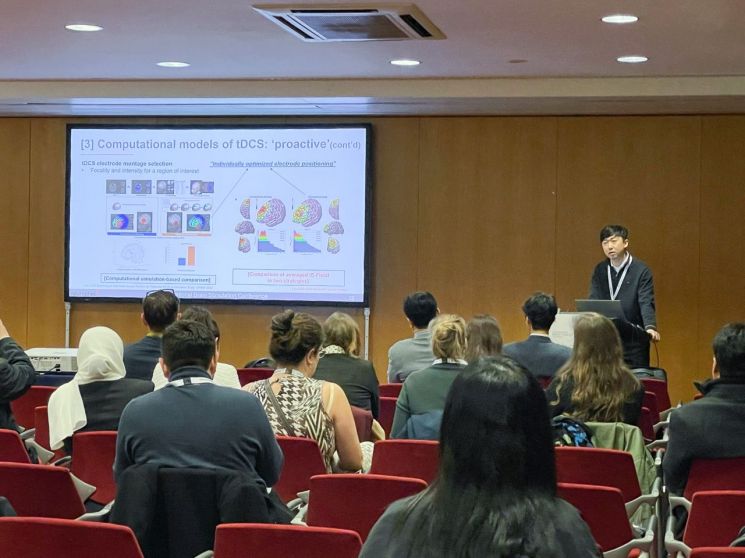
Donghyun Kim, CTO of Neurophit, introduced the brain electrical stimulation imaging therapy planning software "Neurophit tES LAB" and the tDCS device "Neurophit innk." Professors Seonghoon Lim from the Department of Rehabilitation Medicine at Catholic University St. Vincent's Hospital and Taewoo Kim from the Department of Rehabilitation Medicine at the National Traffic Rehabilitation Hospital, who are conducting joint clinical research with Neurophit, revealed the current status of clinical research using tDCS.
tDCS is a method of stimulating the brain by applying a weak current to the scalp and is one type of electronic medicine used to treat brain diseases. It is gaining attention as a treatment option for brain disease patients due to its portability and minimal side effects during treatment. However, most tDCS devices do not consider individual differences in brain structure, limiting precise stimulation and causing significant variability in treatment effectiveness.
Neurophit developed a precise brain stimulation solution by utilizing its unique AI-based brain imaging analysis technology. By combining Korea's first brain imaging therapy planning software Neurophit tES LAB with the tDCS device Neurophit innk, they established a precise brain stimulation platform capable of designing and performing brain disease treatments.
Since 2019, Neurophit has jointly conducted industry-academic projects with Professor Seonghoon Lim on the development of Neurophit tES LAB and Neurophit innk at Catholic University. Additionally, as part of the Ministry of SMEs and Startups' "Regulatory Free Zone Innovation Project," they have been jointly conducting research on "Treatment Strategies and AI Solution Development and Validation for Brain Injury Patients" with government and local government research funding.
To verify the clinical safety and efficacy of the personalized tDCS solution, Neurophit is conducting and planning clinical trials in collaboration with leading domestic hospitals such as Catholic University St. Vincent's Hospital, National Traffic Rehabilitation Hospital, and Samsung Seoul Hospital. The target brain diseases for these clinical trials include consciousness disorders, stroke, and mild cognitive impairment caused by Alzheimer's disease.
During the conference, Neurophit also presented four abstracts as research achievements to enhance the therapeutic effects of tDCS. The abstract topics were: a study on determining tDCS electrode positions targeting the left dorsolateral prefrontal cortex (simulation-based); a study on frontal lobe tDCS treatment planning for patients with brain structure deformation after brain surgery (simulation-based); a study on optimizing treatment areas to prevent glioblastoma metastasis (simulation-based); and a study on optimizing tDCS treatment effects for cognitive function improvement in patients with mild cognitive impairment.
Jungil Bin, CEO of Neurophit, said, "The personalized tDCS solution using brain imaging analysis technology is a culmination of Neurophit's core technologies developed over many years, including AI-based brain imaging analysis, 3D brain modeling, physical analysis of brain stimulation electric fields, and brain disease treatment planning." He added, "During this conference, researchers, experts, and global companies in the brain stimulation field worldwide have visited the Neurophit booth to continue discussions on technology exchange and business cooperation."
Meanwhile, the International Brain Stimulation Conference is a specialized academic conference in the field of brain neuroscience and was held this year in Lisbon, Portugal. The conference started on the 20th local time in Portugal and will continue for three days until the 22nd.
© The Asia Business Daily(www.asiae.co.kr). All rights reserved.

















