Expected Inflation Rate Rises for Two Consecutive Months
Interest Rate Outlook Sees Largest Drop Since March 2020
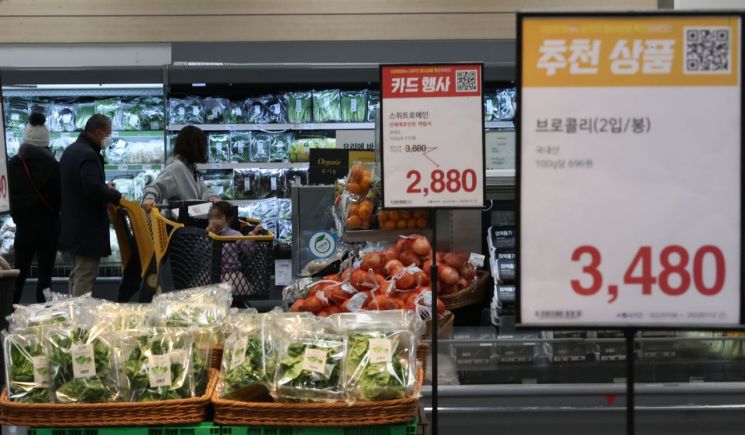
As expectations for the Bank of Korea to keep the base interest rate unchanged spread and pressure to raise public utility fees increased, the general public's expected inflation rate for consumer prices over the next year rose back to the 4% range.
According to the "February Consumer Sentiment Survey Results" released by the Bank of Korea on the 21st, the expected inflation rate was recorded at 4.0%, up 0.1 percentage points from the previous month.
The expected inflation rate rose to 4.7% in July last year but fell to 3.8% in December due to the decline in international oil prices and the base interest rate hike. However, it has shown an upward trend for two consecutive months, rising to 3.9% in January and 4.0% in February this year.
Expected inflation refers to the inflation rate one year ahead anticipated by economic agents such as businesses and households based on currently available information. The Bank of Korea conducted the survey from the 7th to the 14th of this month targeting 2,500 households (2,372 responses).
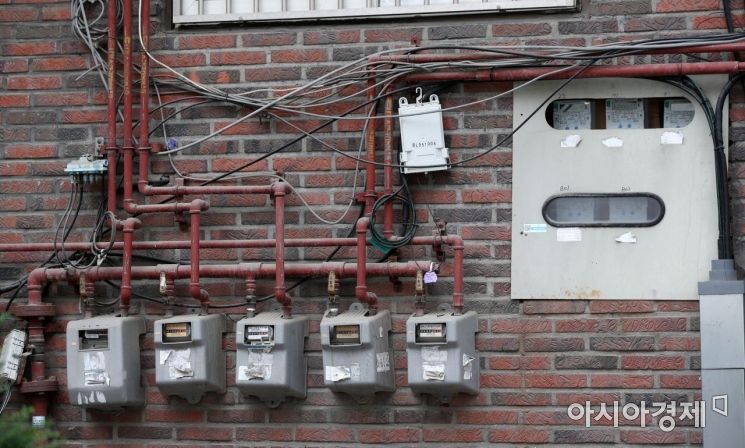 On the 19th, gas and electricity meters installed in a residential area in Seoul. As prices of essential goods and energy soar across the board, and even public utility rates such as electricity, water, and gas increase, these factors are becoming major causes of rapid inflation, deepening the concerns of inflation authorities. Photo by Hyunmin Kim kimhyun81@
Hwang Hee-jin, team leader of the Statistical Survey Team at the Bank of Korea's Economic Statistics Bureau, explained the renewed rise in the expected inflation rate, saying, "The survey was conducted amid announcements of increases in winter energy charges and electricity, gas, and transportation fees, so the upward pressure on public utility fees seems to have influenced the results."
He added, "The fact that prices of industrial products and daily necessities, which consumers frequently encounter, remain at high levels also had an impact."
Looking at the distribution of responses for the expected inflation rate, those expecting '2-3%' decreased by 1.7 percentage points, while those expecting '6% or higher' increased by 4.5 percentage points, and '4-5%' rose by 0.3 percentage points.
The major items expected to influence consumer price increases over the next year were public utility fees (87.7%), petroleum products (29.2%), and agricultural, livestock, and fishery products (27.6%), in that order.

Consumer sentiment also declined due to the expanded price increases in public utility fees and other items and a decrease in exports caused by the global economic slowdown. The overall Consumer Confidence Index (CCSI) for February was 90.2, down 0.5 points from the previous month.
The CCSI is an indicator calculated using six major individual indices?current living conditions, living conditions outlook, household income outlook, consumption expenditure outlook, current business conditions, and future business conditions?out of the 15 indices that make up the Consumer Sentiment Index (CSI). A figure above 100 indicates optimistic consumer sentiment compared to the long-term average (2003?2021), while below 100 indicates pessimism.
The Interest Rate Level Outlook CSI (113) fell by 19 points, marking the largest drop since March 2020, due to eased expectations for additional tightening amid accelerated declines in market interest rates.
The Housing Price Outlook CSI (71) rose by 3 points, supported by real estate market stimulus policies and the announcement of the Special Act on First-Phase New Towns, but it remains at a low level as the downward trend in housing prices continues.
© The Asia Business Daily(www.asiae.co.kr). All rights reserved.
![User Who Sold Erroneously Deposited Bitcoins to Repay Debt and Fund Entertainment... What Did the Supreme Court Decide in 2021? [Legal Issue Check]](https://cwcontent.asiae.co.kr/asiaresize/183/2026020910431234020_1770601391.png)


















