Up to 15.3 million KRW per electric passenger car
20.5 million KRW for electric small cargo vehicles
[Asia Economy Honam Reporting Headquarters, Reporter Heo Seon-sik] Gwangyang City, Jeollanam-do announced that it will promote the "2023 Eco-friendly Vehicle Subsidy Support Project" as part of efforts to respond to the surge in electric vehicle demand and to reduce greenhouse gas emissions and fine dust.
The support volume has significantly increased compared to the previous year, totaling 990 units: ▲ 500 electric passenger cars (including ultra-small) ▲ 200 electric cargo vehicles (including small and ultra-small) ▲ 12 electric buses ▲ 80 electric two-wheelers ▲ 10 electric excavators ▲ 188 hydrogen electric vehicles.
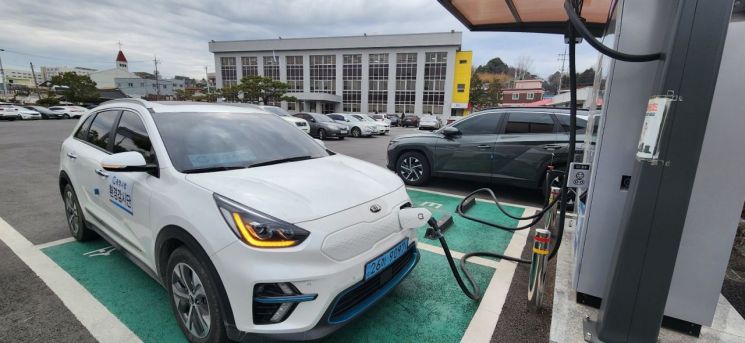
The subsidy amount varies by vehicle type, with up to 15.3 million KRW per electric passenger car, 20.5 million KRW for small electric cargo vehicles, and a fixed amount of 34.5 million KRW for hydrogen vehicles, specifically the Nexo (Hyundai). Recipients will be selected on a first-come, first-served basis upon delivery registration.
Eligible vehicle models can be checked on the Ministry of Environment's Zero-Emission Vehicle Integrated Website.
Applicants must be citizens aged 18 or older with a resident registration address in Gwangyang City for more than three months, or corporations/businesses located within the city. Electric vehicles are supported up to one unit per individual and one unit per corporation/business, while hydrogen vehicles are supported up to one unit per individual and up to three units per corporation/business.
Kim Jae-hee, Director of the Environment Division, said, "This project actively reflects the demand for purchasing electric and hydrogen vehicles. By replacing internal combustion engine vehicles with eco-friendly vehicles, we hope citizens will show great interest and participation in this project, which offers not only low maintenance costs but also contributes to reducing greenhouse gases and fine dust."
Meanwhile, Gwangyang City supplied 2,087 electric vehicles by 2022 (1,298 passenger cars, 456 cargo vehicles, 18 buses, 186 two-wheelers, and 129 hydrogen electric vehicles) and provided subsidies totaling 32.2 billion KRW.
Asia Economy Honam Reporting Headquarters, Reporter Heo Seon-sik hss79@asiae.co.kr
© The Asia Business Daily(www.asiae.co.kr). All rights reserved.
![User Who Sold Erroneously Deposited Bitcoins to Repay Debt and Fund Entertainment... What Did the Supreme Court Decide in 2021? [Legal Issue Check]](https://cwcontent.asiae.co.kr/asiaresize/183/2026020910431234020_1770601391.png)















