[Asia Economy Reporter Yujin Jo] The Indian economy, which had shown strong recovery surpassing the UK, is now faltering again. After escaping the COVID-19 quagmire and achieving a V-shaped rebound, the Indian economy is rapidly cooling down due to the effects of high-intensity tightening measures.
On the 19th (local time), Bloomberg reported by synthesizing eight major indicators it tracks that corporate activities are weakening due to declining exports and sluggish manufacturing and service sectors, and that tax increases are offsetting the drivers of consumption improvement.
India's manufacturing Purchasing Managers' Index (PMI) for January stood at 55.4, significantly below the market forecast of 57.4. The services PMI was also well below expectations at 57.2 compared to the forecast of 58.1. The new orders index fell from 58.7 in the previous month to 57.2 last month, and shipments declined from 53.4 to 52.1. Although all major indices composing the PMI remained above 50, they showed a significant decrease compared to the previous month.
Trade volume also sharply decreased amid weakening demand. Last month's export value remained at $32.9 billion, down 6.58% year-on-year. Imports also fell by 3.63% year-on-year, resulting in a trade deficit of $17.8 billion last month. Foreign media assessed that supply chain disruptions following the Russia-Ukraine war, rising oil prices, and the depreciation of the rupee have deepened fiscal and trade deficits.
With a consumer market worth $1.7 trillion (as of 2021), the Indian economy is driven 70% by private consumption. However, high inflation caused by food and energy supply factors following the Russia-Ukraine conflict has dealt a direct blow to the Indian economy. Consumer prices in India rose 6.52% year-on-year last month, with the inflation rate higher than the previous month’s 5.72%. This marked the first time since October last year that inflation exceeded 6%, significantly surpassing the market forecast of 5.90%.
Food inflation, which accounts for 40% of consumer prices, rose sharply to 5.94% last month from 4.19% in the previous month. Aditi Nayar, Chief Economist at ICRA, predicted, "With ongoing cost increases, core inflation excluding food and energy is expected to rise further in February and March."
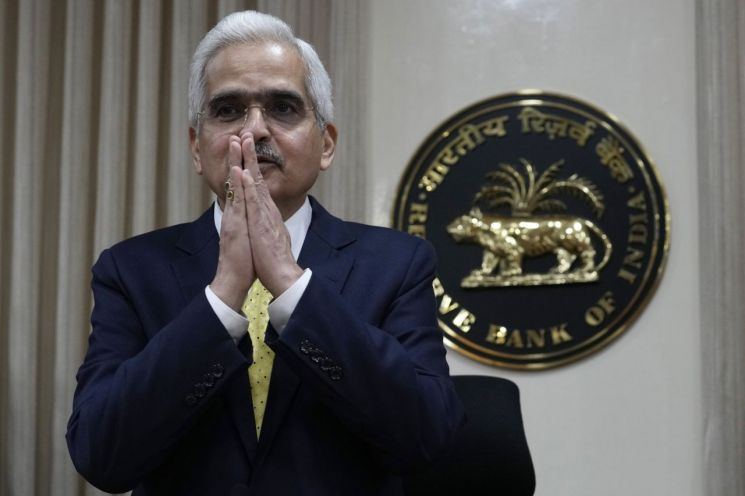
Despite aggressive interest rate hikes last year, high inflation has not been resolved, and the outlook remains negative. Since May last year, the Reserve Bank of India (RBI) has raised interest rates six times, bringing the benchmark rate to 6.5%. Last week, the RBI pointed out that "inflation remains at a high level," leaving the door open for further rate hikes.
Bloomberg evaluated that the Indian economy, which had fallen into the COVID-19 pandemic slump but showed a rapid recovery, is now faltering again. Madan Sabnavis, an economist at Bank of Baroda India, forecasted, "For at least the next two months, India’s inflation rate will remain above 6%, and a recession caused by monetary tightening is inevitable."
India, which surpassed the UK last year in the first quarter to become the world's fifth-largest economy, experienced a severe economic downturn due to the COVID-19 impact. Since the current government took office in 2014, the economic growth rate had been around 7% annually but began a clear downward trend after 2018. The combined effect of the pandemic led to a negative growth rate of -6.6% in 2020. After successfully controlling the spread of COVID-19, India recorded a growth rate of 8.7% in 2021. The International Monetary Fund (IMF) forecasted that India’s growth rate would slow to 6.8% last year, remaining in the 6% range.
© The Asia Business Daily(www.asiae.co.kr). All rights reserved.

















