New Growth 4.0 Strategy 2023 Implementation Plan and Annual Roadmap
Promotion of Announcing Over 30 New Growth Projects Within the Year
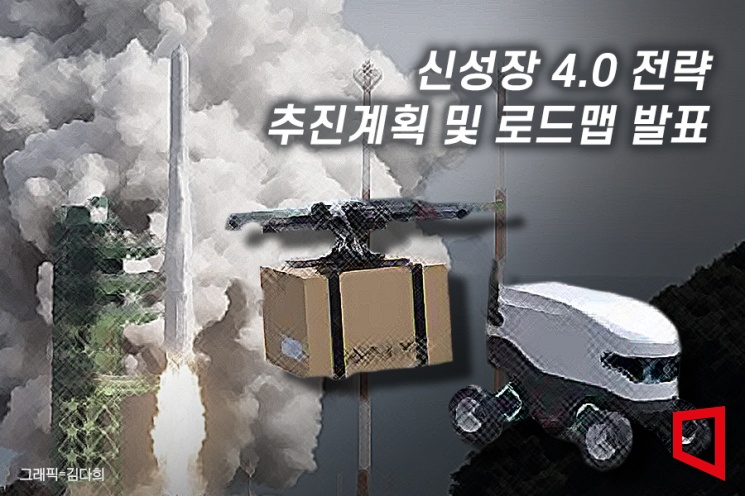
[Asia Economy Sejong=Reporters Joo Sang-don, Noh Kyung-jo, Sejong=Song Seung-seop] The government plans to announce more than 30 major measures (over 20 in the first half) related to the 'New Growth 4.0 Strategy' within this year and prepare separate implementation plans for each detailed task. First, it will push for the third launch of Nuriho in June together with private companies and open the Space Aviation Agency by the end of this year. To accelerate commercialization of robot delivery by 2026 and drone delivery by 2027, it will also support technology development and demonstration. Additionally, it will establish legal grounds for unmanned delivery using robots and drones through amendments to the Living Logistics Act within the year. In April, it will begin development of next-generation nuclear power technologies such as Small Modular Reactors (SMR) and Molten Salt Reactors (MSR).
On the 20th, the government held an emergency economic ministers' meeting at the Sejong Government Complex chaired by Deputy Prime Minister and Minister of Economy and Finance Choo Kyung-ho, announcing the 'New Growth 4.0 Strategy 2023 Implementation Plan and Annual Roadmap' containing these details.
Last December, the government announced the New Growth 4.0 Strategy to secure growth engines centered on future industries. This implementation strategy concretizes project goals and promotion methods to start producing visible results this year.
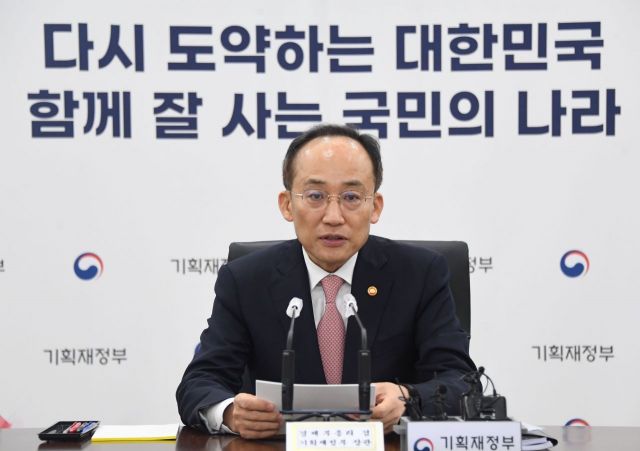 Deputy Prime Minister and Minister of Economy and Finance Choo Kyung-ho is presiding over the Emergency Economic Ministers' Meeting held at the Government Complex Sejong on the 20th, delivering opening remarks.
Deputy Prime Minister Choo said, "We have prepared the 2023 implementation plan to fully promote various projects under the New Growth 4.0 Strategy and plan to push about 30 detailed measures this year," adding, "In the process, we will maximize the capabilities and resources of private companies and others and create visible results that the public can feel."
First, institutional foundations will be laid for developing innovative services like ChatGPT. Starting in April, a data center utilizing domestically produced AI semiconductors will be built, and in June, a nationwide 'AI Everyday Life Project' will be announced to address AI-related public issues. The government plans to amend relevant laws to allow the use of copyrighted works for data analysis in AI development. In the private sector, consortia centered on companies and hospitals will be formed to promote the development and adoption of AI software in the medical field. In telecommunications and network sectors, four additional 5G specialized network models will be identified, and development of 6G infrastructure will be accelerated.
To sustain momentum in space exploration, the government will push for the third launch of Nuriho by June with private company participation. The fourth launch in 2025, fifth in 2026, and sixth in 2027 are also planned. The government will transfer Nuriho technology to the private company Hanwha Aerospace, which will take charge of Nuriho production, component manufacturing, and managing participating companies, supporting its growth into a private space company through involvement in launches 3 to 6.
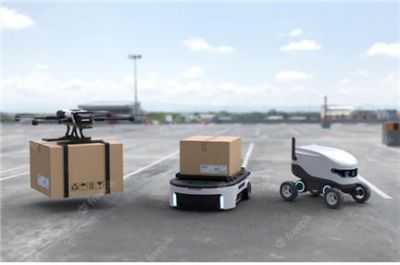
The government will also promote institutional arrangements for commercialization of robot and drone delivery within the year and infrastructure development such as opening the country's first fully automated port. In June, a public-private consultative body (Smart Logistics Development Council) involving companies from logistics, platforms, and IT sectors will be formed to discover business models and induce private-led innovation. Additionally, ultra-short delivery within 30 minutes to 1 hour nationwide will be realized by allowing urban order delivery facilities (MFC) and digitalizing outdated logistics warehouses.
Amendments to the Living Logistics Act will establish legal grounds for unmanned delivery using robots and drones within the year. For robot delivery, legal revisions for driving video recording will be pursued this year, with plans to commercialize after demonstrations in apartment complexes in 2024 and on sidewalks and roads in 2025. For drone delivery, expansion of special deregulated zones will support demonstrations, along with reforms to drone insurance systems and establishment of safety certification systems to prepare for commercialization.
For Urban Air Mobility (UAM), commercialization will begin in 2025 and full-scale operation by 2030. Demonstration projects will be conducted in open areas (Goheung, Jeollanam-do) in August this year and in urban areas next year. The first phase involves open area demonstrations from August this year to December next year in Goheung, Jeollanam-do, verifying aircraft and integrated operation and measuring noise, with participation from six consortia including private companies. The second phase will conduct urban demonstrations (July 2024 to June 2025) for consortia that pass phase one, verifying safety in urban environments and near airports. The government will also pursue legislation of the UAM Act including regulatory exemptions in the second half of this year.
To narrow the technology gap with advanced countries in the future core technology of quantum technology, the development and demonstration of a 20-qubit quantum computer will be advanced to the second half of this year. The goal is to develop a 50-qubit quantum computer surpassing supercomputers by 2026. In April, development of next-generation nuclear power technologies SMR and MSR will begin. After announcing and selecting innovative SMR and MSR R&D projects next month, R&D will commence. The goal is to obtain standard design approval for SMR by 2028. The K-Bio Lab Hub is targeted for completion in 2025, with a basic plan for the construction project to be established in March this year. A project team will be formed within the first half of this year, aiming for completion in 2025 and discovering and nurturing 120 new drug development startups from 2026 to 2031.
In the semiconductor sector, a key domestic industry, the government will promote industrial complex construction through large-scale domestic investment. It will support fabs with expanded investment tax credits, permit time-out systems, 530 billion KRW in policy finance, and a 300 billion KRW semiconductor fund. As secondary battery companies are reviewing domestic research facilities and production lines, the government will establish a battery academy and expand contract departments to support supply of specialized personnel. The secondary battery innovation fund investing in materials, parts, and equipment companies will operate with a scale of 200 billion KRW.
To foster the bio industry, a bio foundry will be established by August through public-private cooperation, and a national bio databank will be completed by May. R&D support will increase to train physician-scientists, and medical science graduate schools will be expanded.
In energy policy, regulatory improvements and public interest were emphasized. The government will timely build 'public Energy Storage Systems (ESS)' to expand distributed energy and establish a stable power grid. With a budget of 776.4 billion KRW, six substations including the Shin Namwon substation will be constructed by the end of this year. Additionally, an 'Advanced Metering Infrastructure (AMI)' will be built for about 5 million single-family homes, and AMI distribution will be supported for 660,000 apartment households. Expanded AMI deployment will enable real-time power demand monitoring and efficient management.
In the cultural industry, the goal is to nurture a 'Korean Disney.' First, advanced content production infrastructure accessible to the private sector will be designed. An IP convergence cluster will be established in Goyang City, and a special effects cluster in Daejeon City. Funding support will be provided through a 410 billion KRW content fund with up to 50% private matching. R&D feasibility studies for next-generation content technologies such as 3D virtual humans and extended reality (XR) will also be promoted within this year.
To achieve rapid results, the government will announce follow-up measures for 15 major projects through the New Growth Strategy Task Force (TF) and monitor task implementation. The 15 projects will be continuously supplemented and developed reflecting field demands collected through various channels, with plans to add new projects upon private sector requests. When preparing the 2024 budget, funding needs related to New Growth 4.0 will be prioritized, and the New Growth 4.0 logo will be created and utilized to brand it as the current administration's 'representative growth policy.'
© The Asia Business Daily(www.asiae.co.kr). All rights reserved.
![User Who Sold Erroneously Deposited Bitcoins to Repay Debt and Fund Entertainment... What Did the Supreme Court Decide in 2021? [Legal Issue Check]](https://cwcontent.asiae.co.kr/asiaresize/183/2026020910431234020_1770601391.png)

















