Labeled as Mixed Origin... Export Continues Despite Sanctions
Countries with Developed Processing Industries like Belgium Oppose
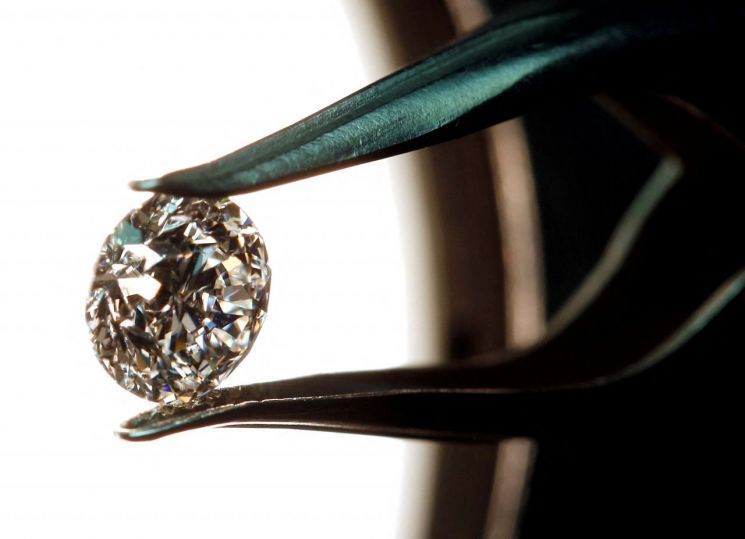
[Asia Economy Reporter Hyunwoo Lee] The European Union (EU) and the Group of Seven (G7) are reportedly considering measures to trace the origin of diamonds in order to impose sanctions on Russian diamonds. This move is interpreted as an effort to block the export of Russian diamonds, which are still traded on the international market under the so-called "mixed origin" label, mixed with diamonds from other regions, despite the Ukraine war approaching its one-year mark.
However, opposition to sanctions on Russian diamonds continues, especially among countries with a large diamond cutting industry such as Belgium, making it likely that more time will be needed to secure consensus for sanctions across the entire EU.
Targeting Blood Diamond Sanctions... Russian Diamonds Still Dominate 30% of the Market
On the 19th (local time), Bloomberg News cited informed sources regarding EU sanctions on Russia, reporting that "the G7 and EU are discussing measures to accurately trace the origin of diamonds circulating in the market, including Russian diamonds, to end the export of Russian diamonds," and that "a related statement could be announced around the 24th, marking the first anniversary of Russia's invasion of Ukraine."
Earlier, the U.S. government imposed sanctions on Alrosa, Russia's largest diamond mining company, in April last year. Alrosa is the world's largest diamond supplier, accounting for more than 30% of the global diamond market, estimated at about $80 billion (approximately 104 trillion KRW), and is known to have continued exports despite U.S. sanctions.
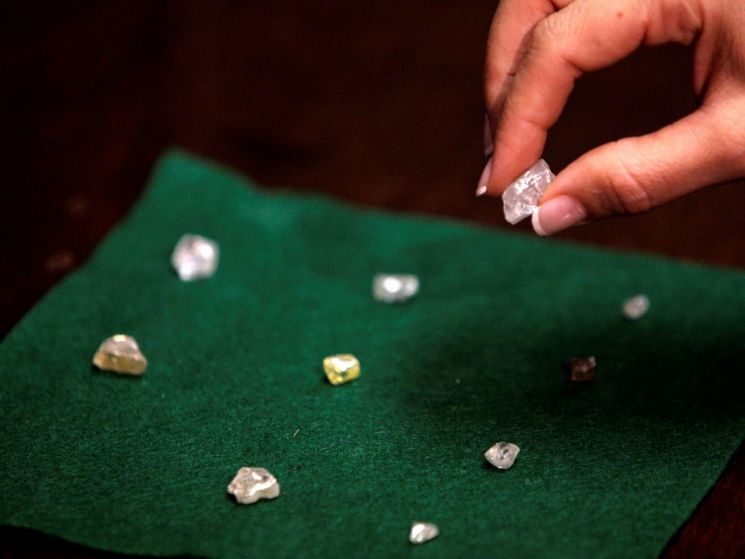
According to Bloomberg, diamonds usually have their origin indicated when in rough form, but during processing, diamonds from various regions are mixed, resulting in a "mixed origin" label that obscures the exact origin. Western intelligence agencies estimate that a significant portion of Russian diamonds are mixed into diamonds labeled as mixed origin, allowing exports to continue.
Cutting Countries Like Belgium Still Oppose... "Even if Blocked, They Will Flow to India"
However, opposition remains strong among countries with significant diamond cutting industries such as Belgium, making it difficult to reach an agreement on sanctions against Russian diamonds within the EU. There are concerns within the EU that even if sanctions are imposed, the processing share will simply shift to India.
A senior EU diplomat told the UK Guardian in an interview, "If imports of Russian diamonds are banned, the trade will head to India, which could work against us."
Belgium is particularly sensitive to diamond sanctions. According to the Antwerp World Diamond Centre (AWDC), about 1,700 companies and 4,500 dealers buy and sell diamonds in Antwerp, Belgium. Additionally, more than 10,000 cutters are known to process diamonds there.
Before Russia's invasion of Ukraine, about 25% of the diamonds processed in Antwerp were imported from Russia. According to statistics from the National Bank of Belgium, Belgium imported Russian diamonds worth 1.8 billion euros (approximately 2.5 trillion KRW) in 2021, and more than 1.2 billion euros in the first eight months of last year.
Other European countries with high dependence on Russian steel and oil also agree with Belgium's calls to block sanctions. Earlier, Italy requested the EU to postpone the ban on Russian steel products, citing the potential for mass unemployment. Countries highly dependent on Russian oil, such as Hungary and the Czech Republic, have also applied for sanction period exemptions.
© The Asia Business Daily(www.asiae.co.kr). All rights reserved.
![Clutching a Stolen Dior Bag, Saying "I Hate Being Poor but Real"... The Grotesque Con of a "Human Knockoff" [Slate]](https://cwcontent.asiae.co.kr/asiaresize/183/2026021902243444107_1771435474.jpg)

















