[Asia Economy New York=Special Correspondent Joselgina] Will the U.S. central bank, the Federal Reserve (Fed), take another big step (a 0.5 percentage point increase in the benchmark interest rate)?
Amid the upcoming release of the Fed's preferred inflation indicator, the January Personal Consumption Expenditures (PCE), and the February Federal Open Market Committee (FOMC) minutes this week, concerns about tightening have resurfaced. If the PCE price index, following last week's inflation indicators, fuels worries about prolonged high inflation, expectations for a big step are likely to accelerate.
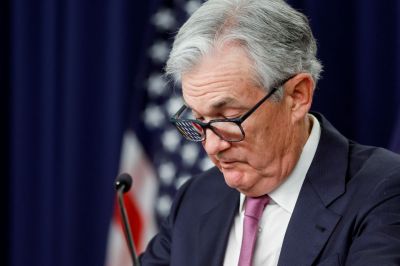
◆ After CPI and PPI, now PCE: Will it again exceed expectations?
According to Bloomberg on the 19th (local time), the January PCE price index, to be released on the 24th, is estimated to rise 0.5% month-over-month, marking the largest increase since mid-2022. This is a significant rise from the 0.1% increase in December last year. Additionally, the core PCE price index, which excludes volatile energy and food prices, is expected to increase by 0.4% month-over-month.
This could be another signal that inflation is not falling as quickly as the market expects. The January Consumer Price Index (CPI) and Producer Price Index (PPI) released last week both exceeded expectations, raising concerns that U.S. inflation may become entrenched at a high level. If the PCE price index also surpasses market forecasts, hawkish opinions advocating for accelerated tightening will inevitably gain strength. Michael Gapen, Chief U.S. Economist at Bank of America (BoA), said, "We are closely watching the signals sent by the January inflation indicators," adding, "This suggests that the disinflation process may take longer than previously expected."
Some even speculate that the upward pressure on service inflation remains strong, so the January PCE price index increase could be larger than expected. Ray Parisi, Chief Economist at Credit Suisse, stated, "Core PCE is expected to rise faster than CPI." Tribune News also warned, "Just as last week's inflation report stirred the market by fueling Fed tightening concerns, this week could be similar," cautioning, "Do not be surprised if a situation like the (above-expectation) CPI occurs again."
Accordingly, the market is increasingly expecting the Fed to raise the benchmark interest rate by 0.5 percentage points at once, the so-called big step. This is based on the view that the Fed, which had previously slowed the pace to 0.25 percentage points, may intensify tightening again to combat inflation. The remarks from Fed officials such as Loretta Mester, President of the Cleveland Federal Reserve Bank, and James Bullard, President of the St. Louis Federal Reserve Bank, who left the door open for a big step last week, add weight to these expectations.
According to the Chicago Mercantile Exchange (CME) FedWatch, the federal funds (FF) futures market currently prices in an over 18% chance that the Fed will raise rates by 0.5 percentage points at the March FOMC. Although bets on a baby step (0.25 percentage point increase) still dominate, this is double the level from just a week ago (9.2%). Tuan Nguyen, an economist at RSM, said, "Strong economic data increases the possibility of further rate hikes," adding, "All possibilities remain on the table." The possibility of rate cuts within the year, which had circulated in the market just a month ago, has diminished.
◆ "Big step is difficult" critique... Will baby steps become more frequent?
However, despite the rapidly spreading tightening outlook, some analyses suggest that it will be difficult for the Fed to immediately intensify to a big step starting in March. Previously, at the February FOMC, the Fed lowered the rate hike to 0.25 percentage points and changed the policy statement's wording from 'pace' to 'extent' of rate hikes. This implies that a 0.25 percentage point increase is the default going forward. A Wall Street insider said, "While the possibility of returning to a 0.5 percentage point increase depending on upcoming indicators cannot be completely ruled out, it may be difficult to switch immediately in March," noting that next month's employment report and inflation indicators will be key factors in the Fed's pace adjustment.
Major investment banks also predict that baby steps of 0.25 percentage points may become more frequent than big steps. Goldman Sachs and BoA initially expected the Fed to raise rates by 0.25 percentage points twice in March and May, but revised their forecasts to three hikes in March, May, and June due to recently released strong data. This strategy maintains the pace but increases the intensity. In this case, U.S. interest rates would rise to 5.25%?5.5% by June, significantly exceeding the Fed's median year-end rate forecast of 5.1% from the December dot plot.
The market is also watching the February FOMC minutes, to be released on the 22nd, along with the PCE. These minutes provide hints about the FOMC members' views on recent inflation trends. Although the February FOMC unanimously decided on a 0.25 percentage point rate hike, some non-voting members, including the hawkish Bullard, reportedly advocated for a 0.5 percentage point increase. This week, speeches by Fed's third-ranking official John Williams, President of the New York Fed; Raphael Bostic, President of the Atlanta Fed; Fed Governor Philip Jefferson; and President Bullard are scheduled, making their inflation assessments worth monitoring.
Manufacturing and services Purchasing Managers' Indexes (PMI), housing indicators, and the revised fourth-quarter Gross Domestic Product (GDP) growth rate, which help gauge economic conditions, will also be released this week. If these indicators confirm that economic growth remains strong despite high inflation, tightening expectations surrounding the Fed could intensify further. The market will be closed on Monday the 20th for Presidents' Day.
© The Asia Business Daily(www.asiae.co.kr). All rights reserved.
![Clutching a Stolen Dior Bag, Saying "I Hate Being Poor but Real"... The Grotesque Con of a "Human Knockoff" [Slate]](https://cwcontent.asiae.co.kr/asiaresize/183/2026021902243444107_1771435474.jpg)
















