Incheon City Audit States "Violates Civil Servant Regulations"
Refunds Up to Approximately 4 Million Won Each Required
[Asia Economy Reporter Choi Seung-woo] Public officials commuting to and from Yeongjongdo, Incheon, are now facing a situation where they must return approximately 200 million KRW in support funds received under the name of toll fees. This is because it violates the relevant provisions of the Local Public Officials Act.
According to Yonhap News on the 18th, Incheon City audited Jung-gu Office last year and re-notified them to "recover 209 million KRW in toll support funds paid to public officials commuting to Yeongjongdo from 2018 to mid-2019 by April."
The city had previously conducted an audit in 2019 and ordered the recovery of the support amount, stating that paying tolls in the form of allowances violates the regulations on public official compensation under the Local Public Officials Act.
At that time, the district office did not take recovery measures, arguing that the tolls were lawfully paid based on its own ordinance, and only stopped the support. However, as the city repeated the same point, after internal legal review, it was decided to recover the full amount of support funds by April.
Accordingly, 104 public officials who received toll support during the relevant period are expected to return support amounts ranging from a few thousand KRW to as much as 4 million KRW each.
The tolls for Yeongjong Bridge and Incheon Bridge are 6,600 KRW and 5,500 KRW respectively. These are 2.28 times and 2.89 times the average toll for domestic fiscal roads, ranking among the highest nationwide. The ferry fare between Wolmido and Yeongjong is 8,000 KRW round trip.
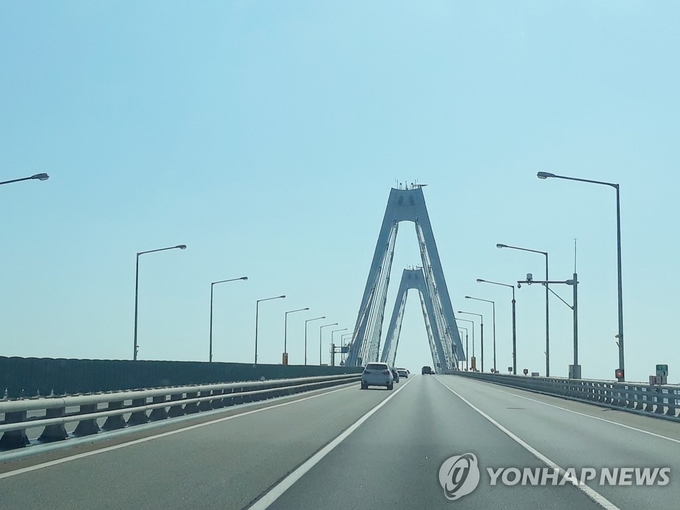
Jung-gu includes the old downtown and Yeongjong International City, and in recent years, the population and administrative demand in the Yeongjong area have surged, with more than one-third of all public officials working at the second government office. From 2018 to mid-2019, the district office supported toll fees for public officials commuting to the Yeongjongdo second government office via Incheon Bridge, Yeongjong Bridge, or by ship from the mainland.
Article 6 of the Ordinance on Welfare for Jung-gu Public Officials allows the district mayor to provide commuting support through shuttle buses within the budget.
Regarding this recovery decision, it is reported that experts are divided between the opinion that "the support funds are welfare benefits under the district’s own ordinance and not compensation" and the opinion that "it falls under the nature of public official compensation, so support is not possible."
With toll support no longer possible, the district office is currently struggling to devise measures, such as increasing the number of shuttle buses from three to four.
A district official said, "The second government office has expensive tolls and no cafeteria, so commuting employees face significant difficulties," adding, "While providing official residences is an option, various costs are considerable, making immediate implementation difficult."
Meanwhile, the Yeongjong International City Citizens' Coalition, a resident group in Yeongjong, plans to hold a vehicle protest at 3 p.m. on March 1st, demanding the abolition of tolls on Incheon and Yeongjong Bridges.
The Ministry of Land, Infrastructure and Transport promised in August 2018 to reduce the tolls on Incheon and Yeongjong Bridges to the level of general fiscal roads by the end of last year. However, it has not been implemented yet due to failure to reach an agreement with the private road operators.
© The Asia Business Daily(www.asiae.co.kr). All rights reserved.
![Clutching a Stolen Dior Bag, Saying "I Hate Being Poor but Real"... The Grotesque Con of a "Human Knockoff" [Slate]](https://cwcontent.asiae.co.kr/asiaresize/183/2026021902243444107_1771435474.jpg)
















