Lawsuit for State Compensation by Bereaved Family of 'Junggok-dong Murder Case'
Compensation Granted 11 Years After Incident Occurrence
[Asia Economy Reporter Choi Seok-jin, Legal Affairs Specialist] The Ministry of Justice has decided not to file a further appeal against the retrial ruling that recognized the state's liability for damages to the bereaved families in the so-called 'Seo Jin-hwan case,' also known as the 'Junggok-dong murder case.'
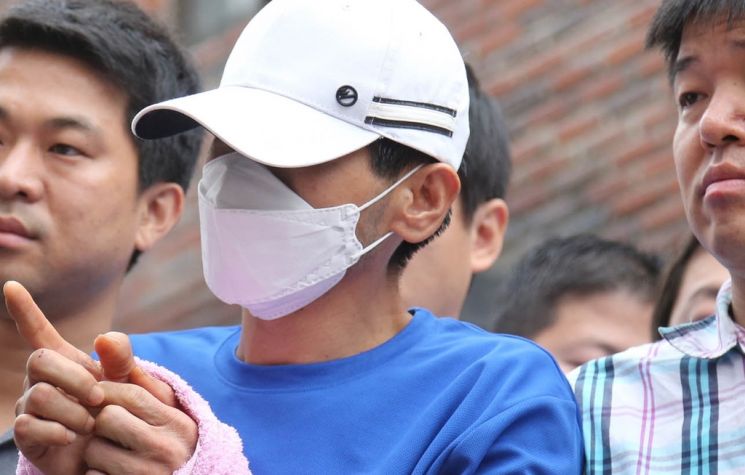
The 'Junggok-dong murder case' refers to an incident on August 20, 2012, when Seo Jin-hwan (then 43 years old), who was wearing an electronic tracking device (electronic anklet), secretly entered the home of a woman in her 30s in Junggok-dong, Gwangjin-gu, Seoul, while she was seeing her child off to kindergarten. He attempted to sexually assault the victim, and when she resisted, he stabbed her multiple times with a utility knife, killing her.
On the 17th, the Ministry of Justice announced that it had decided to forgo further appeal against the retrial ruling that recognized the state's responsibility and ordered compensation of approximately 210 million KRW, following the Supreme Court's remand decision in the state compensation lawsuit filed by the bereaved families of the 'Junggok-dong murder case.'
The Ministry of Justice explained, "This decision respects the intent of the Supreme Court ruling on this case, acknowledges the state's responsibility for failing to prevent the crime due to inadequate duty performance, and aims to promptly restore the damages suffered by the bereaved families."
Minister of Justice Han Dong-hoon stated, "This decision to forgo further appeal acknowledges the state's fault revealed during the trial process and aims to swiftly restore the damages suffered by the bereaved families who have endured over ten years of litigation. Since the incident, the Ministry of Justice has implemented various institutional improvements to prevent recurrence and is currently operating measures such as the 'High-Risk Group Dedicated System,' 'Expansion of 1:1 Electronic Supervision Subjects,' and the 'Electronic Supervision Rapid Investigation Team.'"
He added, "The Ministry of Justice will continue to address deficiencies and faithfully fulfill its constitutional duty to protect the public from crime."
In fact, the Ministry of Justice has introduced and expanded measures to prevent recidivism of serious crimes among electronic supervision subjects, including ▲ the 'High-Risk Group Dedicated System,' where highly specialized staff focus on managing and supervising high-risk offenders such as murderers and sex offenders, ▲ the '1:1 Electronic Supervision System,' where one probation officer is exclusively responsible for supervising sex offenders under 19 years old who have a significantly high risk of reoffending, and ▲ the establishment and operation of the 'Electronic Supervision Rapid Investigation Team,' which can immediately secure custody upon violation of compliance requirements by electronic supervision subjects. The recidivism rate for sexual offenses among electronic supervision subjects, which was 2.4% in 2012 when Seo Jin-hwan committed the crime, decreased to 0.73% last year.
Seo Jin-hwan was sentenced to seven years in prison in August 2004 for special robbery and rape under the Act on the Punishment of Sexual Crimes and Protection of Victims and was released in November 2011 after serving his sentence. Before his release, in November of the same year, he was ordered to wear an electronic anklet and committed the 'Junggok-dong murder case' while wearing it.
At the time, the police only discovered after arresting Seo Jin-hwan that 13 days before the 'Junggok-dong murder case,' he had broken into a house in Jungnang-gu, Seoul, threatened a housewife with a weapon, and committed sexual assault, and that he was wearing an electronic anklet during the crime.
Accordingly, the victim's family filed a lawsuit against the state in February 2013, claiming 370 million KRW in damages, arguing that "if the state had properly responded to the first crime, Seo Jin-hwan's additional crimes could have been prevented."
However, the first trial (delivered on December 18, 2013) and the second trial (delivered on November 14, 2017) did not recognize the state's liability.
It was reasoned that it was difficult to view the police or probation office handling the case as having violated laws, and that the investigation's direction and methods were discretionary decisions based on the professional judgment of police officers, so not utilizing the location information of the electronic device wearer could not be conclusively deemed an unlawful investigation.
The first trial dismissed the family's claim, stating that there was no causal relationship between the negligence of the investigative and probation officials and Seo Jin-hwan's crime. The second trial also acknowledged some fault on the state's part but found it difficult to consider it a 'violation of law.'
However, in July last year, the Supreme Court ruled that the state agencies responsible for investigation and probation at the time had violated their official duties and partially ruled in favor of the plaintiff, remanding the case to the Seoul High Court.
The Supreme Court held that the police bore responsibility for not actively utilizing the location information of the electronic anklet wearer near the crime scene in accordance with the purpose of the Electronic Monitoring Act to protect the public from high-risk sex offenders, and that instead of relying on DNA testing, which takes time for results, they should have sought faster measures for arrest, thus deeming the police investigation unlawful.
The court stated, "If Seo Jin-hwan had been aware that an investigation was underway against him and that his location was being monitored through the electronic device, he would not have dared to commit such bold consecutive crimes," and added, "There is a strong possibility of recognizing a significant causal relationship between the violation of official duties by police officers and probation officers and the victim's death."
Additionally, the probation office was found to have violated its official duties by failing to provide active and substantial guidance and supervision, as the face-to-face contacts that should have been regularly conducted over a certain period for Seo Jin-hwan, who was classified as high risk of reoffending, were only formally conducted for a short period, resulting in a management gap.
The retrial court, the Seoul High Court Civil Division 19-2 (Presiding Judges Kim Dong-wan, Bae Yong-jun, Jeong Seung-gyu), accepted the Supreme Court's judgment and on the 1st ordered the state to pay approximately 93.75 million KRW in damages to the victim's husband and 59.5 million KRW each to the two children, totaling 212.75 million KRW.
Seo Jin-hwan, who was tried on charges including rape and murder, was sentenced to life imprisonment in the April 2013 appellate trial, and the sentence was finalized. He is currently serving his sentence.
© The Asia Business Daily(www.asiae.co.kr). All rights reserved.

















