Professor Seokyun Ryeol of Seoul National University Department of Nuclear Engineering Warns of Risks
"Equilibrium Water and Food Chain, Not Ocean Currents, Are the Problem"
Difficult to Prevent Contaminated Fish from Reaching Our Tables
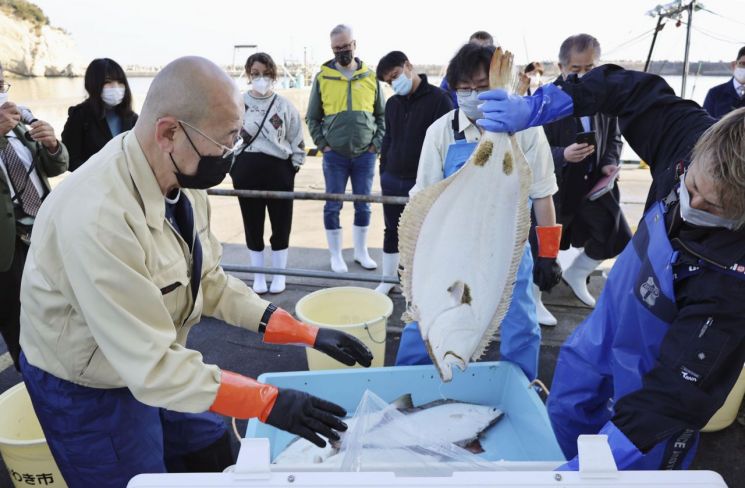
[Asia Economy Reporter Ryu Jeong-min] "The problem is more with the ballast water than the ocean currents, and then the food chain is more problematic than the ocean currents. So, it takes 5 to 10 years for the contaminated water to travel along the Pacific currents. The food chain?flatfish, bottom-dwelling fish, and swimming fish like hairtail, Spanish mackerel, and tuna?do you think these creatures know and avoid those areas?"
Professor Seo Gyun-ryeol of the Department of Nuclear Engineering at Seoul National University warned about the risks of the perspective that contaminated water from Japanese nuclear power plants is harmless to humans because it will be diluted when discharged into the ocean during an interview on CBS Radio's 'Kim Hyun-jung's News Show' on the 17th.
Professor Seo said, "What are the chances of getting hit by a baseball at Jamsil Stadium? It could happen. But what if the person hit is a child? It's a matter of probability. So, on average, it might be okay. But what if at one point, one fish, and that fish passes through the legal net and ends up on our dining table? What do we do then? It's hard to prevent that," he explained.
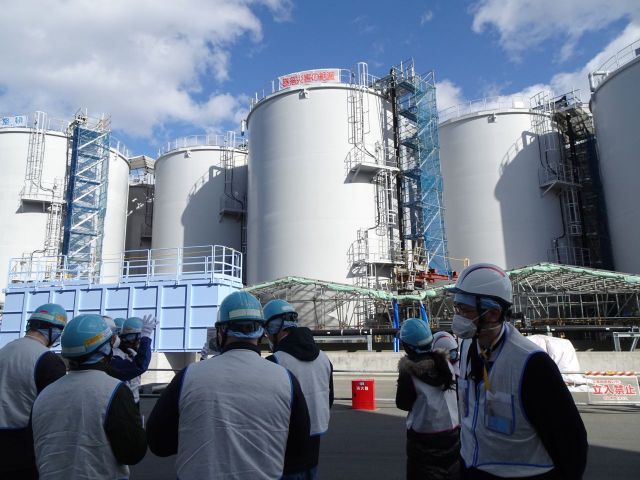
Japan plans to discharge 1.3 million tons of contaminated water from the Fukushima nuclear power plant, and attention should be paid to the impact of this contaminated water on people.
Professor Seo said, "Radioactive substances plus corrosive substances. Even in our tap water, corrosive substances can become toxic. These are layered together. But they are hiding that. They keep focusing only on radioactive substances, while hiding corrosive substances, and there is a third hidden element called plutonium," he said.
He claimed that although Japan talks only about the tritium issue, the real problem that Tokyo Electric Power Company is keeping silent about is something else.
Regarding the discharge of contaminated water, Professor Seo predicted that the United States, Canada, and Mexico would be affected when considering ocean currents. He said, "We are actually in a good position. The problem lies with the United States, Canada, and Mexico. And also island nations like the Marshall Islands, Solomon Islands, and Fiji. New Zealand and Australia would also be affected," he said.
However, Professor Seo warned about the risk of large container ships traveling back and forth to Fukushima using seawater as ballast water and then discharging it into countries like Korea. This implies that it is unrealistic to say Korea is relatively safe based solely on Pacific ocean currents.
Professor Seo also mentioned that when Russia tried to discharge contaminated water, Japan changed its regulations to protect its own safe food supply. He said, "Japan nowadays is like the saying 'Ashitabi'?what I do is right, but what others do is wrong. That's exactly it. Yet now Japan is planning to discharge an amount equivalent to 1,000 times that," he said.
© The Asia Business Daily(www.asiae.co.kr). All rights reserved.


















