COVID-19 Loss Airlines
Cost-Cutting Efforts Continue Despite Endemic
[Asia Economy Reporter Haeyoung Kwon] The aviation industry has begun cutting back on various services, including in-flight meals, to reduce costs. Although overseas passenger demand is exploding and the industry is recovering from the COVID-19 pandemic shock, the losses incurred so far have been so significant that airlines are aiming to maximize profits through stringent cost-cutting measures. However, with airfares soaring while services are being reduced, consumer dissatisfaction is expected to grow even further.
Shrimp Out, Chicken In
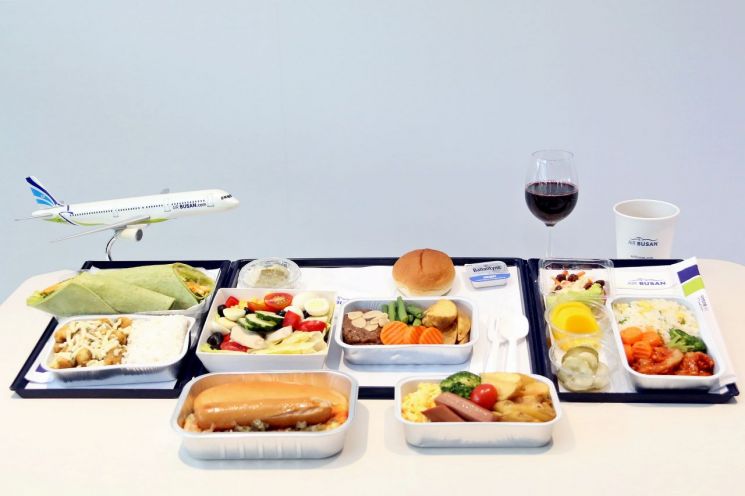
According to major foreign media on the 17th, Kerry Mok, CEO of SATS, announced cost-cutting measures during the Q3 fiscal year earnings conference call held this week. When asked about the company's financial status, he stated, "To maintain unit costs, we are reducing the amount of protein or looking for protein substitutes related to meat." He added, "If shrimp is too expensive, we will switch to chicken." This indicates a move to find alternatives to increase profits amid rising costs due to global inflation. SATS, a subsidiary of Singapore Airlines, supplies in-flight meals tailored to airlines using Changi Airport.
SATS has been recording poor performance, but it did not disclose how much these measures will improve results. SATS reported a profit of 5.1 million Singapore dollars for the third quarter of the fiscal year, a decrease of 0.5 million Singapore dollars compared to the same period last year. The following day, its stock price fell as much as 8% intraday before closing down 4.7%.
Skip Your Meal and Reduce Waste
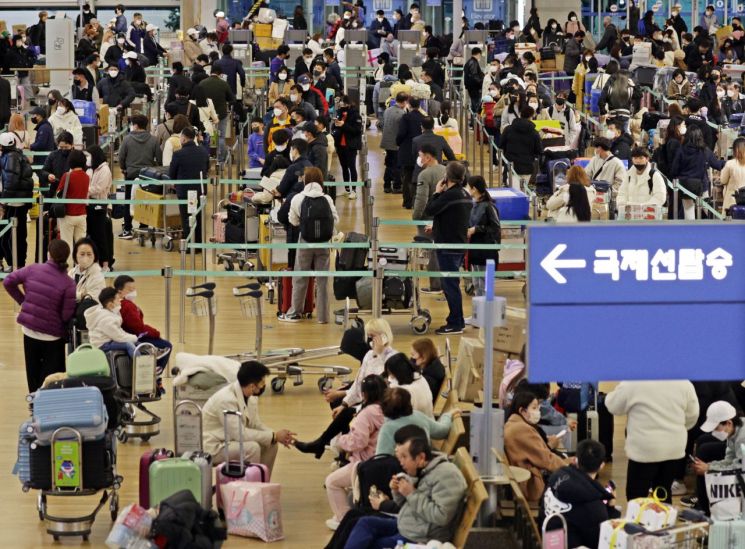
Some airlines have started encouraging passengers to skip in-flight meals. Japan Airlines (JAL) recently announced that it will offer an in-flight meal cancellation option to all passengers on all flights. This expands the meal cancellation option system that had been applied only to certain routes since 2020. JAL expects this option to help reduce food waste. JAL also refers to this option as an "ethical choice." In 2017, the International Air Transport Association announced that 1.14 million tons of food waste are generated annually on commercial flights. In December last year, Japan Airlines stated that the cost savings from this policy would be donated to school meal programs for children in developing countries.
However, some critics argue that JAL's move is a trick to cut costs. Since the cost of in-flight meals is likely included in the airfare and the airline does not deduct this cost when passengers opt out, they see this as an evasion of the obligation to provide meals while masquerading as an ethical choice. They said, "We are curious about how much the airline plans to donate per passenger," and criticized, "The pre-cancellation service for in-flight meals is a cost-cutting policy disguised as an eco-friendly initiative."
Korean airlines are also following the trend of reducing in-flight services, such as discontinuing free newspapers and magazines. In-flight meals are being significantly reduced or replaced with simple meals without beverages.
During the COVID-19 pandemic, airlines' performance rapidly deteriorated due to border closures and soaring oil prices. Although the endemic phase is approaching, there is still a long way to go to recover losses. According to the International Air Transport Association (IATA), the aviation industry is expected to record losses of $13.8 billion in 2020, $4.2 billion in 2021, and $690 million in 2022.
Airfares Soar
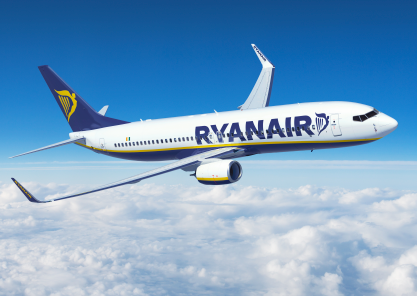
While the aviation industry is cutting back on services provided to passengers, airfares are soaring. According to the British broadcaster BBC, airfares in the UK rose 44% year-on-year in December last year, marking the largest increase since the 1980s. The main culprit behind the airfare surge is oil prices. The Russian invasion of Ukraine caused oil prices to skyrocket, pushing up airfares. Fuel costs account for one-third of airline operating expenses. Travel and aviation analyst Sally Gatineau said, "Airlines probably could not absorb the rise in fuel costs."
The surge in overseas passenger demand is also cited as a major cause. After the outbreak of COVID-19 in 2020, countries restricted cross-border travel. However, as the situation shifted to an endemic phase, countries lifted entry and exit restrictions in the second half of last year, leading to a sharp increase in overseas passenger demand. Aviation consultant John Strickland analyzed, "Demand has strongly returned in many markets, but capacity could not keep up with demand," adding, "The tight balance between supply and demand has exerted upward pressure on prices."
Airfares are expected to remain strong this year as well. Michael O'Leary, CEO of Ryanair, Europe's largest low-cost airline, said at a press conference last month that European airfares could rise by 10% this year. He cited rising fuel costs, a surge in American tourists, and a shortage of flight supply as reasons, predicting, "European airlines will raise airfares by 5-10% this year."
© The Asia Business Daily(www.asiae.co.kr). All rights reserved.



















