Syria with a Larger Population than the Netherlands and Greece
Designated as a Travel Ban Country by the Ministry of Foreign Affairs, Earthquake-Affected Nation
Long-Term Civil War and Security Instability, Urgent Need for Support in Northern Syria
[Asia Economy Reporter Ryu Jeong-min] The more attention one pays to Syria, the more interesting two points emerge. First, our knowledge about Syria is limited, and second, it is a larger country than expected. Syria borders the Mediterranean Sea and Lebanon to the west, T?rkiye to the north, Iraq to the east, and Jordan to the south.
The capital of Syria is Damascus, which is recognized more as the name of a sword than as a capital city to us. Syria covers an area of 180,000 km², approximately 0.838 times the size of the Korean Peninsula. The population of Syria reaches 18.27 million. It is difficult to gauge the scale by numbers alone, but Syria’s population exceeds that of European countries such as the Netherlands, Belgium, Portugal, and Greece.
There is a reason why Syria, a larger-than-expected country, feels unfamiliar to us. It is difficult to visit there. This is not merely due to practical issues like the attractiveness of travel packages or cost.
According to the Ministry of Foreign Affairs’ Overseas Safety Travel advisory as of the 16th, Syria is classified as a travel-prohibited country along with Iraq and Afghanistan. This means that unless there is a special reason, one cannot visit Syria. Looking at the world map, Syria is located between the Arabian Peninsula and T?rkiye. The reason it is designated as a travel-prohibited country is related to security instability caused by a long civil war.
The belief that visiting Syria cannot guarantee safety has been established. The reason to pay attention to Syria, a travel-prohibited country, is that it is a core victim country of the massive earthquake. Countless lives are lost there yesterday, today, and tomorrow. Numerous citizens have lost their lives buried under huge piles of building rubble and earth.
Unlike the outpouring of support toward T?rkiye from countries around the world, aid to Syria itself is a subject of concern. Even if rescue teams are sent, it is difficult to guarantee their safety. The earthquake-affected areas in Syria are under the influence of rebel forces. The Syrian government also finds it difficult to exercise administrative power in these areas.
Efforts must be made to save the lives of earthquake victims, but no one knows what might happen during combat with rebel forces. This is the current status of Syria in February 2023?a space lacking safety.
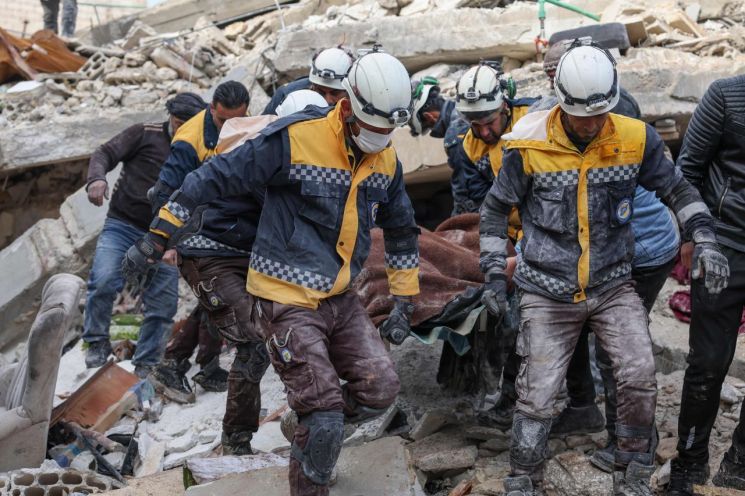
Ismail, a member of the Syrian White Helmets, explained in an interview with CBS Radio’s "Kim Hyun-jung’s News Show" on the 16th, "There is no professional equipment, no search equipment, no experts who can help, no large vehicles, and no emergency medical equipment when rescuing patients. There is no fuel, vehicle movement is continuously restricted, and despite the earthquake, bombing continued," he said.
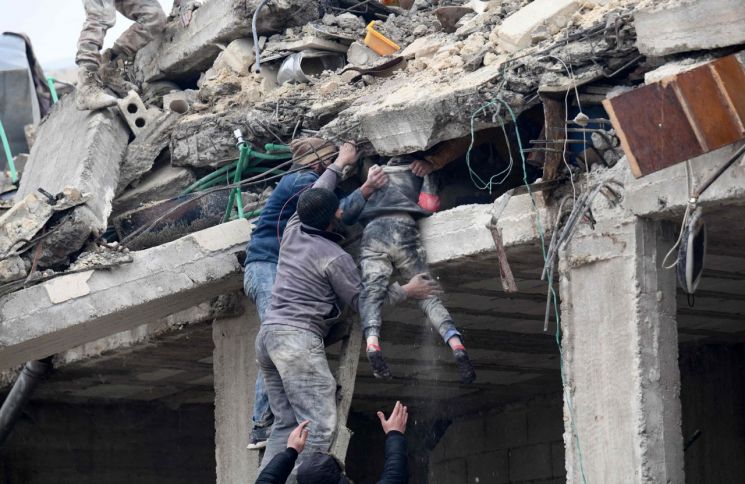
It is said that in the northern region of Syria, where the earthquake damage occurred, buildings were collapsing and people were dying even before the earthquake due to bombings.
Ismail said, "A pregnant woman was about to give birth but was injured by the earthquake, breaking all her bones?legs, arms, and waist. She came to the hospital but was only given painkillers because treatment was not possible. There are no specialist doctors, no equipment, and no facilities to provide treatment, so it is a very tragic situation," he reported.
Regarding support issues after the earthquake, Ismail said, "When the earthquake happened, we usually immediately requested help from the international community, but there was no response. We received no help at all." He added, "Currently, there is absolutely no foreign aid in northern Syria." Although the international community has promised support for Syria, the earthquake-affected areas in northern Syria have yet to receive significant aid and are still waiting for assistance.
© The Asia Business Daily(www.asiae.co.kr). All rights reserved.


















