[Asia Economy New York=Special Correspondent Joselgina] As President Joe Biden and the Republican Party continue to clash over debt ceiling negotiations, a warning has emerged that if the current limit is not raised, the United States could default as early as July.
The U.S. Congressional Budget Office (CBO) stated on the 15th (local time) in its report "Federal Debt and the Statutory Limit" that "if there is no change to the current debt ceiling, the Treasury's extraordinary measures will be exhausted during the fourth quarter of this fiscal year, from July to September." The CBO added, "The expected exhaustion timing is uncertain due to variations in the timing and amount of revenues and expenditures," and predicted, "If April income tax revenues fall short of estimates, these extraordinary measures could be exhausted even earlier than July."
Furthermore, the report warned, "If the debt ceiling is not raised or suspended before the extraordinary measures are exhausted, the government will be unable to fully repay its debts," adding, "As a result, the government will have to either delay some payments, default, or both."
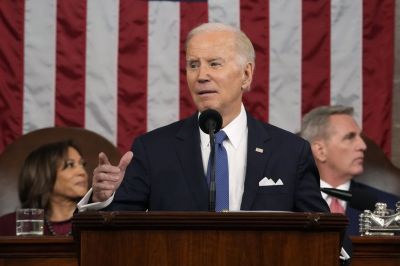
The U.S. statutory debt ceiling stands at $31.381 trillion and was reached as of January 19. If Congress does not increase or suspend the limit once total debt hits the ceiling, default becomes inevitable. Although the Treasury has immediately announced extraordinary measures to buy time, the White House and the Republican Party remain sharply divided over raising the debt ceiling, making the outlook for negotiations bleak.
The Republican Party, which holds the majority in the House of Representatives, is currently demanding large-scale fiscal spending cuts as a precondition for raising the debt ceiling. On the other hand, the Biden administration has drawn a firm line, stating there will be no negotiations or concessions to the Republicans regarding the debt ceiling increase. Earlier this month, President Biden and House Speaker Kevin McCarthy, a Republican, met in person to discuss the issue but failed to find common ground.
Historically, the U.S. government raised the debt ceiling 22 times between 1997 and 2022. Among these, in 2011, congressional deadlock peaked, leading to a downgrade of the U.S. credit rating and turmoil in financial markets. The Wall Street Journal (WSJ) reported, "As lawmakers argue over spending and clash over the debt ceiling, concerns about default are escalating," warning that a U.S. default could cause greater damage not only to financial markets but also to the global economy.
The White House plans to announce its budget on March 9, while the Republicans are expected to release their own budget around April. Accordingly, full-scale debt ceiling negotiations are anticipated to take place after these dates. On the same day, President Biden stated at a union hall in Maryland that some Republican lawmakers are "holding the economy hostage" and declared, "I will not negotiate over the debt." Meanwhile, Speaker McCarthy tweeted, "A blank check for more spending will ruin America," and insisted, "We must negotiate a responsible debt ceiling to restore fiscal health."
© The Asia Business Daily(www.asiae.co.kr). All rights reserved.
![Clutching a Stolen Dior Bag, Saying "I Hate Being Poor but Real"... The Grotesque Con of a "Human Knockoff" [Slate]](https://cwcontent.asiae.co.kr/asiaresize/183/2026021902243444107_1771435474.jpg)
















