[Asia Economy New York=Special Correspondent Joselgina] The warning signs of inflation in the United States, which seemed to have eased, are growing again in the new year. The January Consumer Price Index (CPI) exceeded market expectations and even turned upward compared to the previous month. As the Federal Reserve (Fed) had been concerned, upward pressure on housing and service prices was significant. Accordingly, the possibility that the Fed will maintain higher interest rates for a longer period than the market expects is gaining strength.
◆ US CPI rises 6.4%... up 0.5% month-over-month
According to the U.S. Department of Labor on the 14th (local time), the January CPI rose 6.4% compared to the same month last year. It slightly declined from the previous month's increase of 6.5%, continuing a seven-month consecutive slowdown trend, but the pace of deceleration slowed. It also far exceeded Wall Street's market forecast of 6.2%. Although the downward trend continues compared to June last year when it exceeded 9%, it is evaluated that inflation is not cooling as quickly as expected despite high-intensity tightening.
In particular, the January CPI rose 0.5% compared to the previous month. This not only significantly expanded the increase from December (0.1%) but also exceeded market expectations (0.4%). This is also the largest increase since October last year.
The core CPI, excluding the volatile energy and food sectors, rose 5.6% year-over-year and 0.4% month-over-month. The core CPI also exceeded market expectations (5.4% year-over-year, 0.3% month-over-month).
With all indicators of the January CPI exceeding market expectations, concerns about prolonged high inflation are spreading again. Among the broad inflationary pressures confirmed, the main culprits leading the price increase in January were housing costs and various service prices, as well as energy.
First, housing costs in January rose 0.7% compared to the previous month, accounting for nearly half of the total CPI increase (month-over-month). Compared to the same month last year, it rose 7.9%, approaching 60% of the core CPI increase (year-over-year). The Department of Labor stated, "Housing costs played the largest role in the rise of all items in January." Housing costs account for about one-third of the CPI and 15% of Personal Consumption Expenditures (PCE), making it a key factor in the Fed's inflation target achievement. Energy services (2.1%) and transportation services (0.9%) also continued to rise.
Additionally, energy prices, which had shown signs of calming at the end of the year, rose again, fueling inflationary pressure. The energy price index, which had fallen consecutively in November (-1.4%) and December (-3.1%) last year, rose to 2.0% in January. Compared to the same month last year, it jumped 8.7%. Specifically, gasoline and natural gas surged 2.4% and 6.7% month-over-month, respectively, driving up overall energy prices. Gasoline prices fell 7% in December last year but returned to an upward trend. However, medical services (-0.7%), airline fares (-2.1%), and used car prices (-1.9%) showed a downward trend.
Jeffrey Roach, Chief Economist at LPL Financial, said, "Inflation is easing, but the path to lowering inflation will not be smooth," adding, "There is growing concern that inflation may not cool as quickly as the Fed wants." The 'supercore,' which refers to core service prices excluding housing costs, rose 0.2% in January and was 4% higher compared to a year ago.
◆ "Inflation war is not over" concerns about prolonged high interest rates
With the release of the January CPI, which suggests that high inflation may last longer than expected, concerns about tightening around the Fed have intensified. After the release of a strong January employment report that far exceeded market expectations earlier this month, speculation about an early end to rate hikes has lost momentum. With the CPI released on this day also exceeding expectations, it could be an opportunity for the Fed to decide to increase the intensity of monetary tightening.
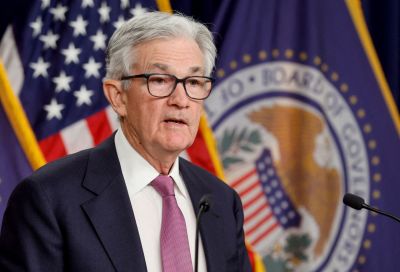
This aligns with recent remarks by Fed Chair Jerome Powell, who warned that "the disinflation process will not be smooth." In a discussion at the Washington DC Economic Club, he said, "Disinflation has started in the goods sector. It is at a very early stage," but added, "We are not seeing it in housing and services."
Many Fed officials have also repeatedly issued hawkish comments ahead of the CPI release, such as "It could be a long fight with higher rates for longer than some expect" (Christopher Waller, Fed Governor), "Rates need to remain restrictive for years" (John Williams, President of the New York Federal Reserve Bank), and "Inflation is still high" (Michelle Bowman, Fed Governor). Their warnings were confirmed by the CPI data released that day.
Maria Basarou, Chief Investment Officer of Multi-Asset Solutions at Goldman Sachs Asset Management, said, "The strength of the core CPI indicates that the Fed has a lot of work to do to bring inflation back to the 2% target," adding, "If retail sales released the next day also show strength, the Fed may need to raise the benchmark interest rate to 5.5% to curb inflation." Ryan Sweet of Oxford Economics also said, "We may need to revise our forecast due to stronger-than-expected figures." The current U.S. benchmark interest rate is 4.5?4.75%.
The interest rate futures market reacted sensitively. According to the Chicago Mercantile Exchange (CME) FedWatch, which reflects U.S. interest rate market expectations, immediately after the CPI release, the federal funds (FF) futures market reflected more than a 90% probability that the benchmark rate (lower bound) in September will exceed 5%. The forecast that it will remain above 5% until December was also over 60%. Until early this month, the market widely expected the Fed to end rate hikes as early as March and begin cutting rates in the second half of the year.
The New York stock market is also showing weakness. On the morning of this day, the Dow Jones Industrial Average, composed of blue-chip stocks, was moving about 0.7% lower than the previous session. The large-cap-focused S&P 500 index and the tech-heavy Nasdaq index were also down about 0.6% each.
© The Asia Business Daily(www.asiae.co.kr). All rights reserved.












