'Random Electronic Assignment' Method... Dismissal Opinion in Judge Impeachment Trial
[Asia Economy Reporter Heo Kyung-jun] The presiding judge for the impeachment trial of Lee Sang-min, Minister of the Ministry of the Interior and Safety, has been appointed as Justice Lee Jong-seok of the Constitutional Court (age 62, 15th class of the Judicial Research and Training Institute).
According to the legal community on the 13th, the Constitutional Court assigned the case to Justice Lee through a 'random electronic allocation' method after receiving the National Assembly's impeachment resolution.
Justice Lee is from Daegu and graduated from Gyeongbuk High School and Seoul National University Law School. He began his career as a judge in 1989. He has served as the chief bankruptcy presiding judge at the Seoul Central District Court, chief presiding judge at the Seoul High Court, and president of the Suwon District Court. He also served as the chief presiding judge at the Seoul High Court. Justice Lee was appointed as a Constitutional Court justice in 2018, recommended by the Liberty Korea Party (now the People Power Party).
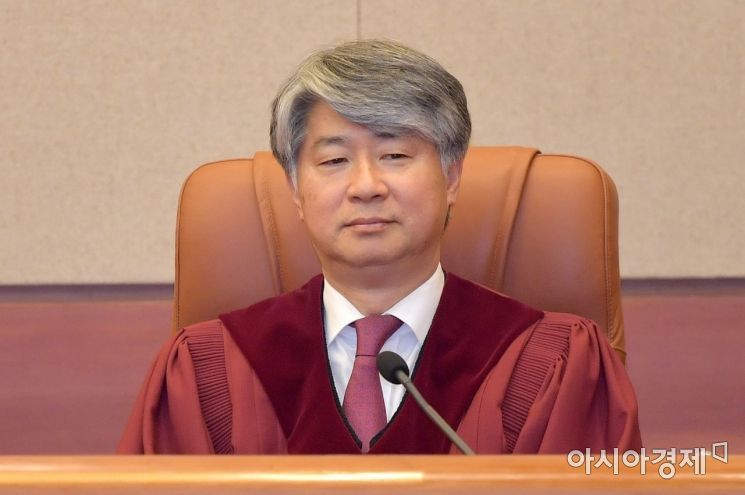
In 2021, Justice Lee issued a dismissal opinion in the unprecedented impeachment trial of a judge. At that time, regarding the impeachment trial of former Chief Judge Lim Seong-geun, Justice Lee stated, "Although the Constitutional Court is granted the authority to decide on dismissal in impeachment trials, this authority involves pursuing legal responsibility according to the requirements and procedures prescribed by the Constitution and laws. Therefore, legal responsibility cannot be pursued outside of these predetermined requirements and procedures," and ruled that the impeachment trial did not meet the proper legal requirements.
Justice Shim will lead the deliberation process, which is the discussion procedure for the case. In typical cases handled by the Constitutional Court, such as unconstitutional law reviews or constitutional complaints, the opinion of the presiding justice has significant influence; however, in impeachment trials, it does not carry much weight.
All nine justices participate in the impeachment trial, and if six or more agree, a dismissal decision can be made. If dismissed, the individual cannot serve as a public official for five years.
The Constitutional Court Act stipulates that the court should deliver a verdict within 180 days from the date the case is received, but this is not a mandatory rule, so a verdict can be delivered after 180 days. The Constitutional Court took 63 days for the impeachment trial of former President Roh Moo-hyun, 92 days for former President Park Geun-hye, and 267 days for former Chief Judge Lim.
© The Asia Business Daily(www.asiae.co.kr). All rights reserved.

















