2021 Export Amount $29.66 Million
Domestic Alternatives Including Oligosaccharides
Riding the wave of the ‘K-food’ craze, starch syrup products used in cooking are also gaining attention overseas. Foreigners who have been exposed to Korean cuisine through various content such as so-called ‘mukbang’ YouTube videos are increasingly attempting to recreate the taste of Korean food at home. On the other hand, domestically, oligosaccharides and other substitutes are gaining attention as alternatives to starch syrups amid the trend for ‘healthy food.’
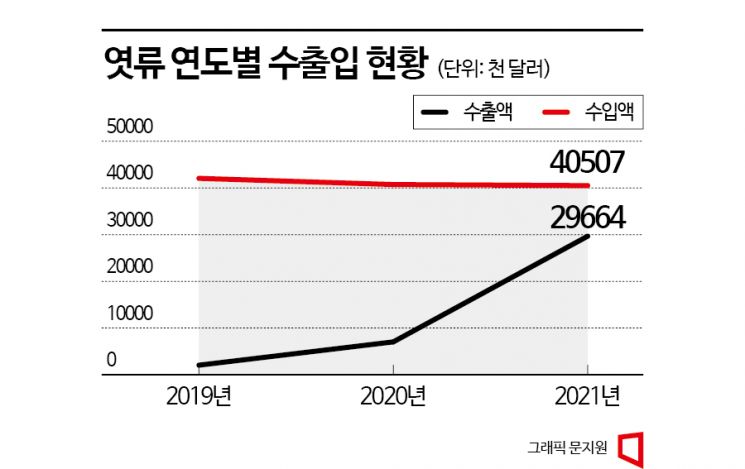
According to the Korea Agro-Fisheries & Food Trade Corporation on the 13th, the export value of starch syrup products (including corn syrup, other starch syrups, and dextrin) reached $29.66 million in 2021, growing about 28 times compared to $1.01 million in 2017. The export value of starch syrups was $2.05 million in 2019, a 33.8% decrease compared to the previous year ($3.09 million), but it rebounded with a 243.4% increase to $7.03 million in 2020, marking two consecutive years of growth. As of 2021, dextrin holds the top export share among all starch syrups, frequently competing with corn syrup for first place each year. Dextrin refers to glucose derived from the breakdown of starch and is mainly used as a bulking agent in processed foods.
The rapid growth in starch syrup exports is mainly attributed to the increasing preference for Korean food among overseas consumers. The demand for starch syrups has risen particularly among foreign consumers who try to replicate the taste of Korean cuisine at home. Starch syrups serve as sweeteners that provide a deep sweetness while enhancing the natural color and gloss of food, making them widely used in traditional Korean cooking. While corn syrup and maple syrup are used similarly overseas, more people are directly seeking starch syrups to experience the unique taste and flavor of Korean cuisine.
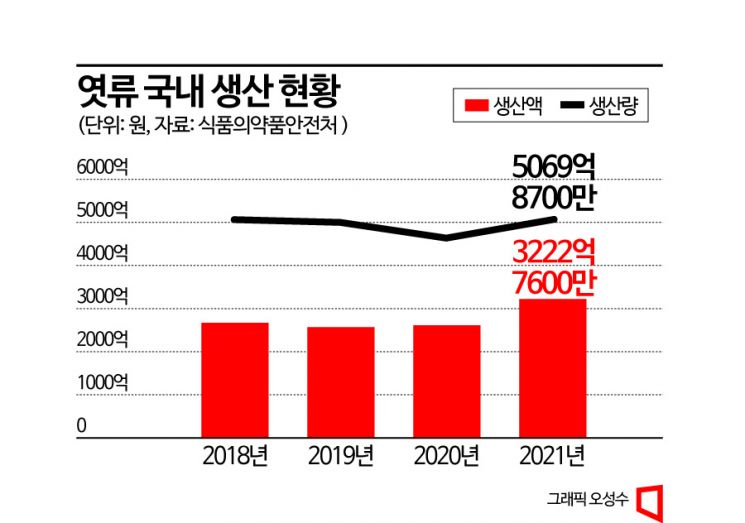
Conversely, domestically, oligosaccharides and other alternatives are gaining attention as substitutes for starch syrups amid the trend for ‘healthy food.’ For this reason, overall starch syrup consumption has somewhat declined. Domestic production value of starch syrups decreased by 3.8% from 266.7 billion KRW in 2018 to 256.6 billion KRW in 2019, then slightly increased by 1.7% to 261 billion KRW in 2020. Although production value rose significantly to 322.2 billion KRW in 2021 compared to the previous year, this was largely due to increased costs caused by rising transportation fees and international oil prices amid COVID-19. Since most raw materials for corn syrup, which accounts for the largest share of production value, are imported, the rise in raw material prices after COVID-19 has had a significant impact on production scale.
Domestic consumers seem to be turning their attention to malt syrup and oligosaccharides, which are healthier though less sweet than starch syrups. In fact, consumption of various products that can replace corn syrup continues to increase. Even when purchasing starch syrups, there is a growing trend toward health-conscious buying behavior. According to a recent consumer survey conducted by the Korea Agro-Fisheries & Food Trade Corporation targeting 500 men and women aged 20 and over nationwide who had purchased malt syrup or starch syrup products within the past year, the most important factor considered when buying these products was ‘taste and quality.’ Respondents said they mainly seek handmade or traditionally made products.
An industry insider said, "Recently, more overseas consumers have been trying recipes such as fried chicken and fresh kimchi using corn syrup after watching so-called ‘mukbang YouTube’ videos," adding, "While starch syrup consumption is gradually decreasing domestically, exports of starch syrups are actually increasing significantly, especially overseas."
© The Asia Business Daily(www.asiae.co.kr). All rights reserved.


















