Strength of Flexible Stance from Scholar Background
Gradual Easing... Possible Adjustment to YCC
[Asia Economy Reporter Jeon Jin-young] Kazuo Ueda, a professor at Kyoritsu Women's University and newly appointed Governor of the Bank of Japan (BOJ), is an international economics expert, marking the first time since World War II that a BOJ governor has been appointed from academia. Given that Professor Ueda has previously expressed concerns about maintaining Japan's accommodative monetary policy, his appointment has drawn significant attention both inside and outside Japan as a potential turning point for policy change. Local media expect him to pursue medium- to long-term normalization rather than radical shifts.
According to the Nihon Keizai Shimbun (Nikkei) on the 13th, the Japanese government plans to submit Professor Ueda's nomination to the National Diet on the 14th and appoint him after obtaining parliamentary approval. The government describes Professor Ueda as "someone who possesses both theoretical and practical expertise." After graduating from the University of Tokyo, Ueda earned a Ph.D. in economics from the Massachusetts Institute of Technology (MIT) and is a financial expert. He later served as a professor at the University of Tokyo and was a BOJ Policy Board member from 1998 to 2005.
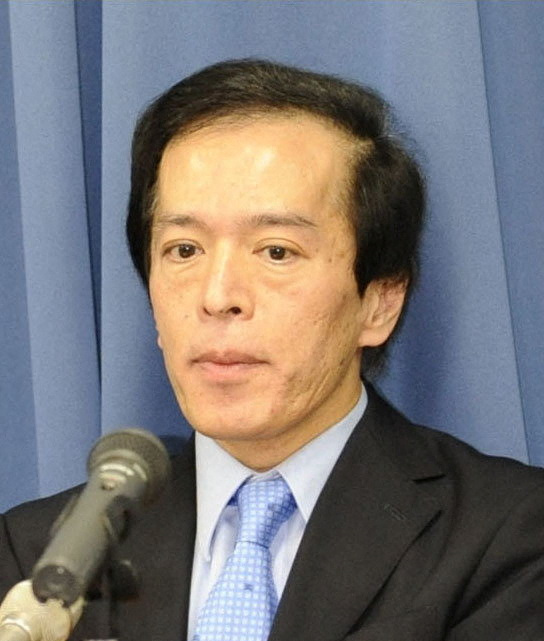
During his time as a BOJ Policy Board member, Professor Ueda was involved in the introduction of quantitative easing and earned the nickname "the theoretical pillar of quantitative easing." However, he has recently voiced concerns about Japan's financial easing policy stance. This has led to interpretations that his appointment symbolizes the end of Abenomics. In a July interview with Nikkei last year, he stated, "Serious consideration is needed regarding long-term and exceptional financial easing."
As he mentioned, side effects from quantitative easing are among the issues facing the Japanese economy. Following the aftermath of quantitative easing, including yen depreciation and rising prices, the recent surge in international energy and raw material prices has further eroded confidence in BOJ policies.
It is widely expected that Ueda's first target will be the Yield Curve Control (YCC) policy. YCC is a policy of unlimited purchases to prevent government bond yields from rising above a certain level. Currently, the BOJ sets the fluctuation range of the 10-year government bond yield at 0% to ±0.5%, and if it exceeds this range, the BOJ purchases bonds unlimitedly to lower the yield.
According to Nikkei, Professor Ueda has previously opposed the YCC policy, arguing that it encourages currency speculation and makes policy shifts difficult. He emphasized that "it is appropriate for the BOJ to allow the 10-year yield to fluctuate freely." Nikkei analyzed that "Ueda's BOJ is likely to shift its focus to manipulating the 5-year or even shorter 2-year yields and gradually distance itself from controlling long-term yields."
There is also speculation that the BOJ's inflation target, fixed at 2% for the past decade since 2013, may change. Currently, the consumer price inflation rate is 4%, more than double the target, making price stability the most critical issue.
This outlook is considered by local media as an indication that Professor Ueda will pursue medium- to long-term normalization rather than radical policy shifts such as tightening.
Meanwhile, the yen-dollar exchange rate, which briefly fluctuated due to this "surprise appointment," has shown only slight movements without major shocks. According to the Tokyo foreign exchange market on the 13th, the opening yen-dollar rate was 131.39 yen, returning to the level before the BOJ governor appointment announcement.
The yen-dollar rate had fallen to the 129 yen range on the 10th amid expectations that "ultra-low interest rates would end" following the appointment of Ueda instead of Masayoshi Amamiya, the BOJ Deputy Governor initially considered as the next governor. However, after Ueda told reporters that "the accommodative stance should be maintained for the time being," the rate recovered.
© The Asia Business Daily(www.asiae.co.kr). All rights reserved.

![Clutching a Stolen Dior Bag, Saying "I Hate Being Poor but Real"... The Grotesque Con of a "Human Knockoff" [Slate]](https://cwcontent.asiae.co.kr/asiaresize/183/2026021902243444107_1771435474.jpg)















