Recent Economic Trends and Implications Report of Major Countries
[Asia Economy Reporter Choi Dae-yeol] There is a forecast that the global economy will recover faster than initially expected. Although various economic indicators show significant downward pressure, positive signals are also emerging from China and the United States.
Lee Bu-hyung, Deputy Director at Hyundai Research Institute, explained in the economic weekly report released on the 12th, "The OECD Composite Leading Indicator, which predicts the direction of the economy, has declined for 19 consecutive months, indicating that downward pressure remains strong," but added, "The global composite Purchasing Managers' Index (PMI), which had been declining since June last year, rose in January compared to the previous month, signaling a positive sign for an upcoming economic rebound."
Supply chain disruptions that surfaced worldwide after COVID-19 are gradually easing, and inflation also shows signs of slowing down. The Global Supply Chain Pressure Index peaked at 4.31 points in December 2021 but has since fallen to 0.95 points last month. The number of countries with rising consumer price inflation (year-on-year) was 86% as of June last year but dropped to 20.8% in December of the same year. This is the basis for the theory that inflation has peaked.
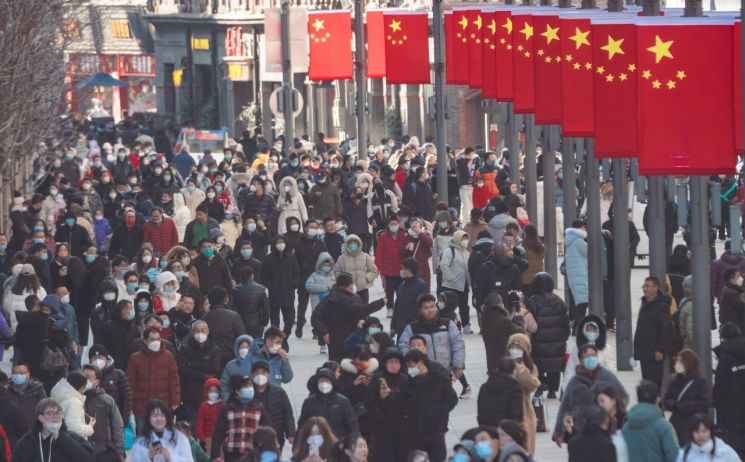
Additionally, China's reopening (resumption of economic activities) after prolonged lockdowns as part of strict quarantine measures and the possibility of a soft landing for the U.S. economy have increased. Although the World Bank and the UN lowered their economic growth forecasts for this year by more than 1 percentage point last month, the International Monetary Fund raised its forecast by 0.2 percentage points to 2.9%, citing recovery prospects in China and the U.S.
The U.S. is expected to achieve a soft landing supported by a robust labor market. The Eurozone's leading and coincident economic indicators have rebounded, suggesting that the real economy has bottomed out. Japan's economy is expected to continue recovering, mainly driven by rising wages and an increase in foreign tourists. Lee predicted that China's economy will see a consumption rebound in the first half of the year, but downward pressures such as a resurgence of COVID-19 and delayed real estate recovery will reemerge in the second half.
Furthermore, India is expected to maintain stable growth centered on domestic demand, and Vietnam is likely to continue steady growth this year due to government stimulus measures and foreign tourists. Lee said, "Although concerns about a complex domestic and external recession remain, some are gradually expressing optimism about the global economy," and emphasized, "All economic agents must maintain a balanced perspective to prevent a self-fulfilling crisis caused by excessive fear." He added, "Focused policy support for small and medium export companies should be implemented, and active responses to changes in the trade environment due to global fragmentation are necessary."
© The Asia Business Daily(www.asiae.co.kr). All rights reserved.

















