Last Year's Strong Performance in the Fashion Industry Continues
Imported Brands Benefit from Reopening
Cautious Outlook This Year... Concerns Over Reduced Consumption
The fashion industry is beaming with smiles thanks to strong performance. Last year, most fashion companies saw significant growth in their results, benefiting from the easing of social distancing measures and the reopening. The continuous growth of imported overseas brands is also cited as a driving factor behind the strong performance.
According to the industry on the 11th, cumulative sales of companies that announced their third-quarter results, such as Samsung C&T, Shinsegae International, Handsome, and F&F, all rose compared to the previous year.
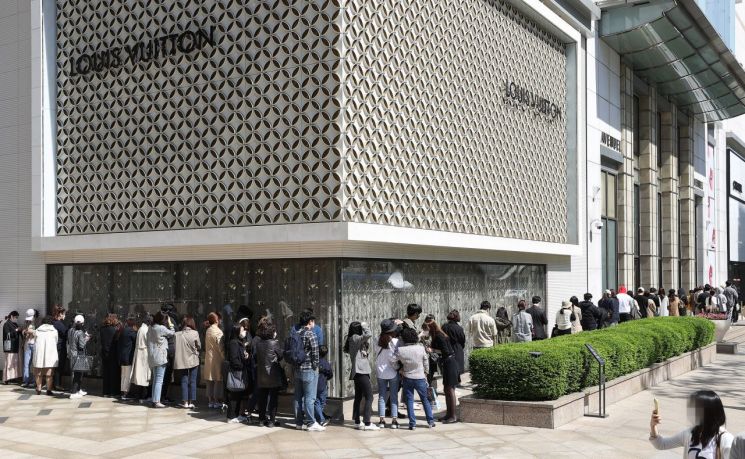
Samsung C&T's fashion division posted an operating profit of 180 billion KRW on a consolidated basis last year, an 80% increase from the previous year. Sales reached 2.001 trillion KRW, up 13.2% year-on-year. It became the first domestic fashion company to achieve annual sales exceeding 2 trillion KRW. Most brands, including imported and in-house brands, grew evenly, with growth continuing especially around new luxury brands such as Ami, Lemaire, and Maison Kitsun?.
Shinsegae International also achieved record-high results last year. On a consolidated basis, its operating profit was 115.3 billion KRW, up 25.3% from the same period last year. Sales increased by 7.1% to 1.5539 trillion KRW. The operating profit surpassed 100 billion KRW for the first time ever, marking a record high. The background to this record performance was the significant increase in fashion division results due to more outings following the lifting of social distancing caused by COVID-19. All business sectors including fashion, beauty, and lifestyle showed solid results, with overseas fashion, which secured a strong customer base, recording double-digit growth rates. Domestic fashion brands such as Bobe, J. Cut, Delarana, and Studio Tomboy saw both sales growth and significant profitability improvement. The cosmetics division continued its growth centered on imported brands, and the effects of investments to foster in-house brands also appeared.
Handsome posted an operating profit of 168.3 billion KRW on a consolidated basis last year, up 10.6% year-on-year. During the same period, sales increased by 11.2% to 1.5422 trillion KRW. Net profit rose 8.2% to 120.7 billion KRW. High-priced brands showed strong growth, including women's character brands (15.6%), menswear (14.6%), and overseas select shops (17.3%). Offline sales grew 11.6% compared to the previous year, and online sales grew 11.0%. The online sales ratio remained similar, at 20.7% last year compared to 20.8% in 2021.
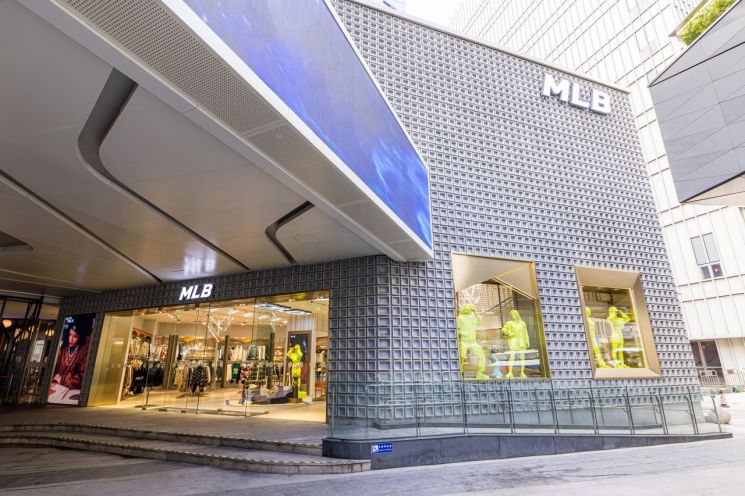
Fashion company F&F also recorded its best-ever performance last year, driven by high growth of major brands such as MLB and Discovery Expedition in the Chinese market. F&F posted an operating profit of 522.4 billion KRW on a consolidated basis last year, up 61.9% year-on-year. Sales increased 66.1% to 1.8091 trillion KRW, and net profit rose 66.6% to 386.5 billion KRW.
F&F's strong sales last year were driven by the popularity of major brands like MLB and Discovery Expedition both domestically and internationally. Especially in the Chinese market, despite COVID-19 lockdowns, MLB's popularity showed balanced growth both online and offline. The aggressive business expansion strategy, such as rapidly increasing store openings in major hub cities like Beijing and Shanghai where consumption levels are high and fashion trends change quickly, is analyzed as a key success factor. F&F also attributes its strong performance to its proactive DT (Digital Transformation) strategy, which pioneered the global market.
Although most fashion companies posted good results, it is uncertain whether this effect will continue into this year. The aftermath of the "3-high" phenomenon (high inflation, high interest rates, high oil prices) is likely to lead to a contraction in clothing consumption.
© The Asia Business Daily(www.asiae.co.kr). All rights reserved.


















