Prosecutors and Police Face Challenges in Drug and Gang Investigations Due to 'Evidence and Witness Testimonies' Unavailability
Court: "Not All Warrants Are Reviewed... Prosecutors and Police Overly Sensitive"
[Asia Economy Reporter Heo Kyung-jun] The Supreme Court has initiated a revision of the rules to allow judges to conduct in-person hearings to examine the necessity of search and seizure before issuing search warrants to investigative agencies. This aims to assess the legitimacy of search and seizure similarly to the substantive review of arrest warrants, but concerns have been raised within the prosecution and police. On the other hand, from the perspective of judicial control over investigative agencies, there is an opinion that discussions are necessary unless hearings are held every time a search warrant is requested.
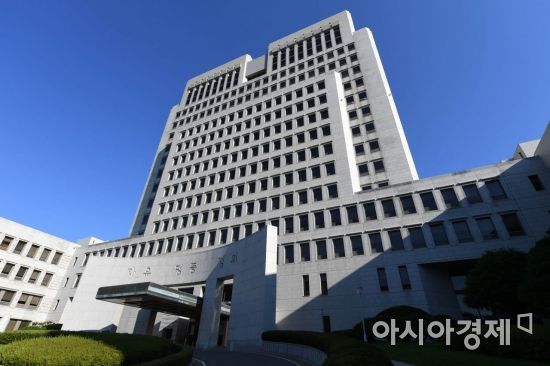
On the 10th, within the prosecution and police, there are reactions that if hearings are held for search warrants, there is a risk of exposing investigation information, materials, and informants related to the investigation target, making actual investigations impossible.
The main content of the revision is to allow judges to conduct discretionary in-person hearings related to the issuance of search warrants. The purpose is to have the judge directly hear statements by summoning the investigative agency conducting the investigation, informants, and the subjects of the search and seizure.
Opinions are divided regarding the Supreme Court's revision for in-person hearings on search warrants. Search warrants rely heavily on secrecy, and if persons related to the case attend the hearing, it effectively informs the investigation situation to the investigation target.
Police official A said, "It is an unwritten rule not to even inform colleagues working in the same bureau or police station about search warrants," adding, "Before the hearing for the search warrant even opens, they will try to destroy all evidence in advance."
There are also voices that if the search warrant hearing system is implemented, drug investigations, where securing evidence is crucial to success, will become practically impossible.
Another police official B said, "If drugs are not found when arresting drug distributors, the investigation ends as is," and predicted, "When drug offenders receive notification to appear for a search warrant hearing, they will either discard or hide the drugs, making the investigation itself impossible."
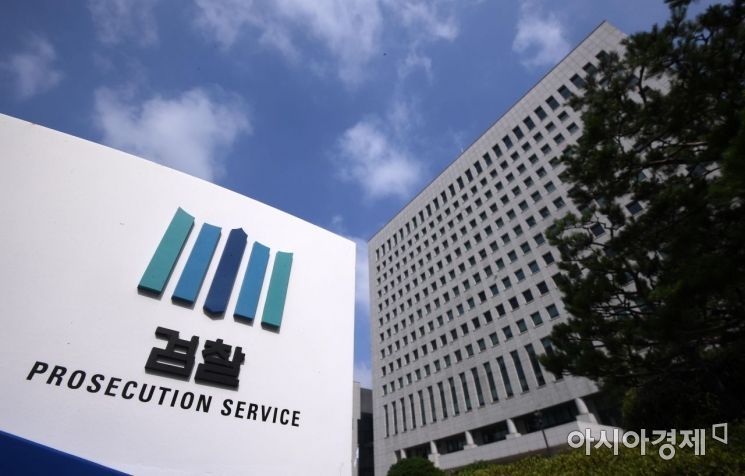
There are concerns that a newly added provision in the Supreme Court's revision, which requires including an execution plan specifying search terms and the target period for electronic information seizure in the application, will also become an obstacle to drug investigations. Since drug sellers and buyers use numerous slang terms for transactions, it is necessary to verify circumstances, and requiring search warrants to specify search terms is considered an unrealistic theoretical approach disconnected from reality.
There is also an opinion that organized crime investigations, where securing victim testimony is important, will be impacted. If a pre-hearing system for search warrants is introduced, the subjects of in-person hearings will likely be investigative agencies or informants, but victims may be reluctant to testify about their harm when there is a high possibility that their identities will be exposed to perpetrators.
Hong Wan-hee, head of the Violent Crime Investigation Division at Daegu District Prosecutors' Office, wrote on the prosecution's internal network, e-Pros, "The victims I have met say that gangsters are scarier than prosecutors," explaining, "Victims start to testify about their harm only after other evidence leads to the arrest or detention of gangsters."
He added, "Victims who find it difficult to testify even in front of prosecutors or police officers, when asked to appear in court at the beginning of the investigation, will they be able to properly testify about their harm?" and expressed concern, "In a situation where court appearances are easily exposed, informants will not properly testify about the harm, and organized crime investigations may become practically impossible."
On the other hand, within the court, the response is that only warrants with a high possibility of dismissal among the requested search warrants will be reviewed by hearing the opinions of investigative agencies before deciding on issuance, but investigative agencies are interpreting this broadly. Judges do not have the capacity to review all search warrants, and warrants likely to be dismissed might be issued after considering the investigative agencies' opinions.
A presiding judge said, "(The prosecution and police) seem to accept that all search warrants will be heard," adding, "If it were a written review, they would have the opportunity to reconsider and explain for search warrants that would have been dismissed, but they seem to be reacting too sensitively."
© The Asia Business Daily(www.asiae.co.kr). All rights reserved.
![Clutching a Stolen Dior Bag, Saying "I Hate Being Poor but Real"... The Grotesque Con of a "Human Knockoff" [Slate]](https://cwcontent.asiae.co.kr/asiaresize/183/2026021902243444107_1771435474.jpg)

















