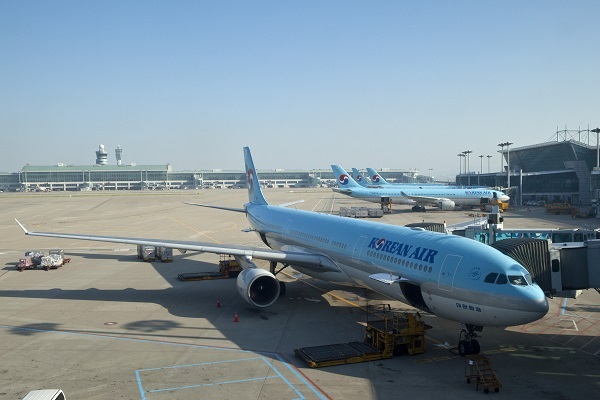
Following last year's With Corona declaration and the recent lifting of mask mandates in Asian countries, there is growing anticipation that the transportation industry, which has faced difficulties, will fully return to normal. Amid this, 'Makebot' announced that AI chatbots are being rapidly expanded across the entire transportation industry, including airlines.
As major sectors such as airlines, buses, and railroads partially normalize, tourist demand is significantly increasing. Consequently, customer complaints have surged explosively, making swift responses necessary. Major domestic companies like SRT (high-speed rail), KakaoT, T-money, Korean Air, and Korea Airports Corporation have introduced chatbots developed by Makebot over the past few years, effectively managing the growing volume of customer inquiries.
Moreover, with rising interest in chatbots due to new technologies like ChatGPT, Makebot's chatbot platform, which has demonstrated innovative value alongside many clients in related fields, is expected to advance significantly by integrating with technologies such as ultra-large AI in the future.
Recently, the Ministry of Science and ICT (hereinafter 'MSIT') announced that it conducted an operational status survey last year targeting about 211 companies and institutions equipped with ARS under its jurisdiction and plans to award ministerial prizes to operators rated as 'excellent.' Korean Air, a Makebot client, was selected as an 'excellent operator,' reinforcing its position as a leading domestic airline.
In particular, MSIT mentioned that considering the diversification of ARS services from voice call-centered to AI chatbots and visual ARS, new evaluation criteria will be applied starting this year. This has heightened interest in chatbots, and awareness and attention toward Korean Air's mascot chatbot 'Dae-han-i' are also rising.
'Dae-han-i' is a cute chatbot character that can be easily used by first-time users regardless of age group. Additionally, it offers multilingual services, providing Korean, English, and various other languages, making it convenient to use. It is not restricted by time or place and allows users to obtain necessary information across various categories. As Korean Air is establishing itself as a leading domestic airline, the usage rate of 'Dae-han-i' is relatively high, according to officials.
Since the introduction of the chatbot 'Dae-han-i' developed by Makebot, Korean Air has received users' affection for over two years and plans to significantly enhance passenger convenience by continuously upgrading and updating the chatbot service to reduce errors.
Korea Airports Corporation, which currently manages about 14 domestic airports, also expressed a need for non-face-to-face services that enhance work convenience and safety, subsequently adopting the KakaoTalk-based chatbot service 'Mureoboan' developed by Makebot. Through this, it provides guidance on flight boarding precautions to approximately 150 million annual airport visitors, maximizing airport service quality and safety.
The 'Mureoboan' chatbot service, which realized a contactless smart airport, received great acclaim among the increased number of airport visitors following the easing of COVID-19. The chatbot service allows passengers to thoroughly check prohibited items for carry-on, airport security screening procedures, frequently asked questions (FAQ) from airport visitors, and more, greatly enhancing passenger convenience.
Following the adoption of the existing chatbot service developed by Makebot, Korea Airports Corporation plans to fully focus on infrastructure expansion to accelerate contactless smart airports according to the 2023 facility construction (new) project plan.
The SRT chatbot, also built by Makebot, enables 24-hour non-face-to-face customer service. Passengers can directly check boarding information such as ticket reservations, refunds, and compensation, as well as easily and quickly access necessary information like regular and multi-ride tickets, discount systems, and operation schedules with one hand. Notably, it includes features such as the SRT membership system, assistance for transportation-vulnerable individuals, and lost item guidance, providing optimized answers to frequently asked questions like in-vehicle Wi-Fi information and power outlet locations.
Since the introduction of Makebot's chatbot service, Kakao Mobility's KakaoT customer center, which records tens of thousands of users daily, promptly provides answers to eight inquiries including Kakao Taxi, Kakao Driver, parking, and bike through the chatbot. Kakao Taxi benefits from personal Kakao Sync integration, supporting the retrieval of transportation service usage history, which reduces the time required to resolve user issues.
The T-money chatbot, a representative public transportation payment service available nationwide including Seoul, integrates customer centers for six services: T-money Card, Mobile T-money, T-money Pay, T-money Intercity Bus, T-money Express Bus, and T-money Taxi, responding to customer inquiries 24 hours a day.
The T-money chatbot marked a successful launch by gaining over 50,000 Kakao friends immediately after opening. It received positive feedback as it enhanced citizens' practical convenience in using public transportation, responding in real-time to thousands of daily accesses, and improving work efficiency across departments through smooth communication with customers.
In this way, Makebot plays a significant role in helping major domestic transportation and aviation industry companies such as Korean Air, Korea Airports Corporation, T-money, and KakaoT expand their communication channels with customers by developing, introducing, and building chatbots. Additionally, by operating chatbots on KakaoTalk, a messenger used nationwide, it has increased corporate accessibility and convenience, securing millions of monthly users.
Especially in the transportation industry, where convenience and speed are paramount, adopting Makebot's chatbot platform is operated as an essential channel, expected to greatly improve customer convenience.
Makebot CEO Ji-woong Kim stated, "With the increasing demand in the transportation and aviation industry, chatbots have recently gained more attention," adding, "It is a platform organically linked with transportation system frameworks, allowing individuals to quickly and easily access vast amounts of information."
He continued, "Although some expected that the lifting of mask mandates following the easing of COVID-19 might impact non-face-to-face businesses, the emergence of new technologies like ChatGPT has instead increased enthusiasm and interest in chatbots," and added, "Based on professional chatbot planning and technical expertise, Makebot, which has achieved various success stories, will strive to provide more advanced and innovative transportation services through unique future AI development and untact technologies that transcend trends."
Meanwhile, Makebot, a leader in the chatbot industry, is driving innovation by building industry-specific chatbots in sectors such as aviation, finance, education, distribution, and healthcare, leveraging its solid AI chatbot development capabilities.
© The Asia Business Daily(www.asiae.co.kr). All rights reserved.
!["I'd Rather Live as a Glamorous Fake Than as a Poor Real Me"...A Grotesque Success Story Shaking the Korean Psyche [Slate]](https://cwcontent.asiae.co.kr/asiaresize/183/2026021902243444107_1771435474.jpg)
















