[Asia Economy Sejong=Reporter Dongwoo Lee] Lee Chang-yang, Minister of Trade, Industry and Energy, once again emphasized that a gradual increase in public energy prices such as electricity and gas is inevitable this year.
On the 9th, at the plenary meeting of the National Assembly's Industry, Trade, Energy, Small and Medium Enterprises Committee, Minister Lee reported on the Ministry of Trade, Industry and Energy's work and the heating cost support measures, stating, "Energy prices will be gradually normalized based on market principles, and we will steadily promote a transition to a low-energy consumption and high-efficiency structure." Despite recent controversies such as the 'heating cost bomb,' he clearly reaffirmed the government's determination to accelerate the normalization of public energy prices.
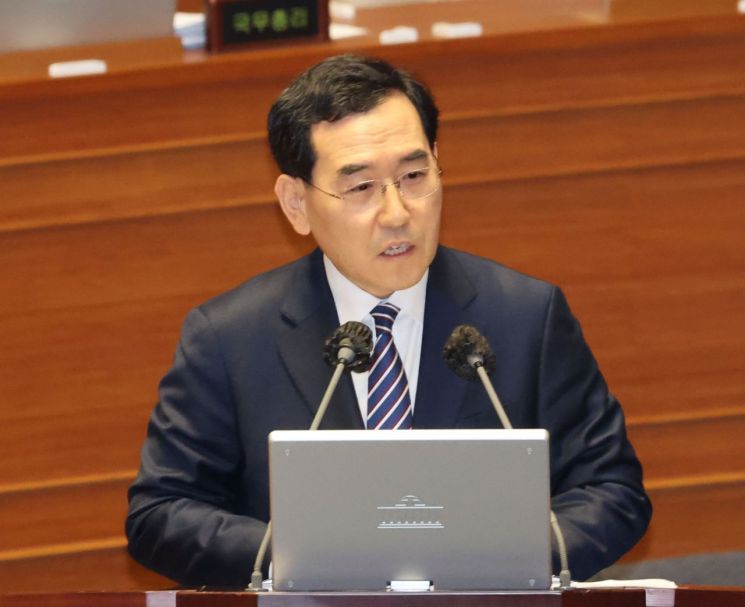
He said, "In response to the global energy crisis, we will further strengthen energy security and innovate the energy system. To this end, we will expand reserves of oil, gas, and critical minerals, and increase energy self-sufficiency through the simultaneous expansion of nuclear power and renewable energy."
The government judges that resolving the massive deficits of energy public enterprises through a gradual increase in electricity and gas prices is urgent. As the Russia-Ukraine war prolongs and international energy prices soar, Korea Electric Power Corporation (KEPCO) is estimated to have recorded a record deficit of about 30 trillion won last year alone. During the same period, Korea Gas Corporation also incurred an operating loss (accounts receivable) of about 9 trillion won, making it impossible to delay price normalization any longer.
Instead, the government plans to strengthen support to alleviate heating cost burdens for vulnerable groups. Minister Lee explained, "Along with the unavoidable increase in gas prices, the surge in winter heating demand has increased the heating cost burden on the public. We will carefully implement policies to ensure thorough and substantial support for vulnerable groups." He added, "We will improve the social security information system to eliminate blind spots so that eligible heating cost support recipients do not miss out due to lack of knowledge about qualifications or application methods."
Regarding this year's economic outlook, he said, "There are concerns about a twin cliff of exports and investment due to the global economic slowdown and increased investment costs caused by high interest rates and high inflation. New trade barriers such as the EU's Carbon Border Adjustment Mechanism (CBAM) and supply chain blockades will also pose burdens on South Korea, which has an export-oriented industrial structure."
© The Asia Business Daily(www.asiae.co.kr). All rights reserved.
![Clutching a Stolen Dior Bag, Saying "I Hate Being Poor but Real"... The Grotesque Con of a "Human Knockoff" [Slate]](https://cwcontent.asiae.co.kr/asiaresize/183/2026021902243444107_1771435474.jpg)
















