Gwangju Nam-gu Purchased Digital Works Worth 79 Million KRW in 2013 and 2017
Repair Costs of 30 Million KRW After Only 4-5 Years of Installation... Criticism Over Waste of Public Funds
Related Budget Remains Unsecured for Years Due to Lack o
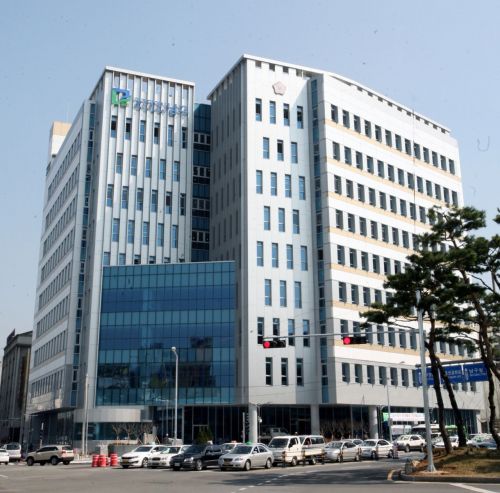
[Asia Economy Honam Reporting Headquarters Reporter Park Jin-hyung] The Nam-gu Office building in Gwangju Metropolitan City is like a gallery. The artworks hung throughout the building, including the civil service office, provide a unique experience. To offer residents opportunities to enjoy culture and arts, the office purchases and exhibits works by locally based artists.
Nam-gu owns a total of 162 artworks as shared assets, including 60 pieces of art created by disabled artists. The price range per piece varies from 50,000 to 100,000 KRW.
Among these, some artworks worth tens of millions of KRW were purchased with public funds but are not actually displayed to residents and are instead stored away in warehouses, raising criticism of 'wasteful spending.'
According to Nam-gu on the 9th, the district purchased two works by artist Lee Inam in two separate instances in 2013 and 2017: the 'Digital 8-Panel Folding Screen' (60 million KRW) and 'Bakyeon Waterfall' (19 million KRW), respectively.
The 'Digital 8-Panel Folding Screen' is media art that connects eight LED monitors to vividly depict traditional landscape paintings. 'Bakyeon Waterfall' is a work that reinterprets the classical piece by Joseon Dynasty’s representative painter Gyeomjae Jeong Seon from a modern perspective, visually emphasizing the energy of the cascading water.
The digital 8-panel folding screen purchased in 2013 was installed in the office building but broke down in 2018, and the Bakyeon Waterfall, purchased in 2017 and installed at the entrance of the Nam-gu Multipurpose Gymnasium, broke down in 2021. Both works have been used for only 4 to 5 years and are now stored away in a warehouse. The digital 8-panel folding screen has been kept in storage for over five years.
These artworks, purchased with tens of millions of KRW of public funds, are neglected and fail to provide residents with opportunities to enjoy cultural life.
Moreover, an additional tens of millions of KRW in public funds are needed for repairs, which is an even bigger problem. Nam-gu estimates that repairing these two works will require between 30 million and 35 million KRW.
Unlike traditional paintings on canvas, these works combine modern technology and are implemented through media devices, so they require repairs approximately every five years, similar to replacing consumables.
Nam-gu is caught in a dilemma: leaving the expensive artworks neglected invites criticism for reckless purchasing, but repairing them requires tens of millions of KRW, making it difficult to decide on a course of action.
This issue appears to have arisen because maintenance costs were not carefully considered at the time of purchase, leading to criticism that it is a result of complacent administration.
In fact, a Nam-gu official admitted, "If we had known that repair costs would be this high when purchasing the works, we would have considered it more thoroughly."
Nam-gu has agreed to repair the works to utilize them, but even this is not easy.
During the 8th Nam-gu Council, efforts were made to secure the budget, but the repair costs of tens of millions of KRW were met with reactions calling it a 'bombshell bill,' and the budget was not secured.
In the current 9th council, opinions among the budget and accounts review committee members are divided, so securing the budget is expected to be difficult.
One budget committee member pointed out, "In a situation where vulnerable groups are struggling due to heating cost shocks, spending tens of millions of KRW to repair artworks does not meet residents’ expectations."
Another committee member said, "Since this is a public effort to create an environment where people can access culture and arts, it is necessary to negotiate with the artist to adjust the repair costs reasonably. It is time to unite efforts to utilize the works of this representative local artist instead of letting them rot as they are."
In response, a Nam-gu official stated, "We will focus on securing repair funds through the supplementary budget in April."
© The Asia Business Daily(www.asiae.co.kr). All rights reserved.

















